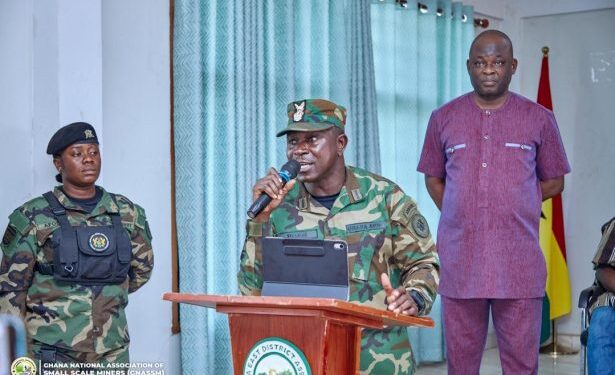
The fight against illegal mining has recorded significant gains, with the National Anti-Illegal Mining Operations Secretariat reporting the seizure of 94 excavators, the destruction of nearly 3,000 changfans, and the arrest of 237 individuals as of early March 2026.
Providing an operational update at the NAIMOS Editors’ Forum and quarterly press briefing, the Director of Operations, Dominic Buah, said the figures reflect sustained efforts to dismantle illegal mining networks across the country.
“I will delve into a few achievements to show what NAIMOS has been able to achieve. These metrics were developed up to the first week of March. Since then, a lot more has been added.”
NAIMOS Director of Operations, Col. Dominic Buah
He explained that the operations have maintained a strike rate of 87.7 percent, a measure used to evaluate the success of field engagements. According to him, each successful seizure, arrest, or destruction contributes to this performance benchmark.
A significant proportion of those arrested are foreign nationals, with Dominic Buah highlighting the involvement of organized networks facilitating illegal mining activities.
“The majority of them are foreigners. I must say the majority are Chinese,” he stated, adding that the situation has drawn concern from diplomatic authorities.
He disclosed that there are coordinated systems that bring foreign nationals into the country and deploy them directly to illegal mining sites. According to him, these operations often rely on the support of local collaborators.
“There is a network or cabal that traffics these individuals who come and are sent straight to the bush. That is our own citizens who collaborate with them,” he said, stressing the need for stronger internal enforcement and vigilance.
Decline in Excavator Presence
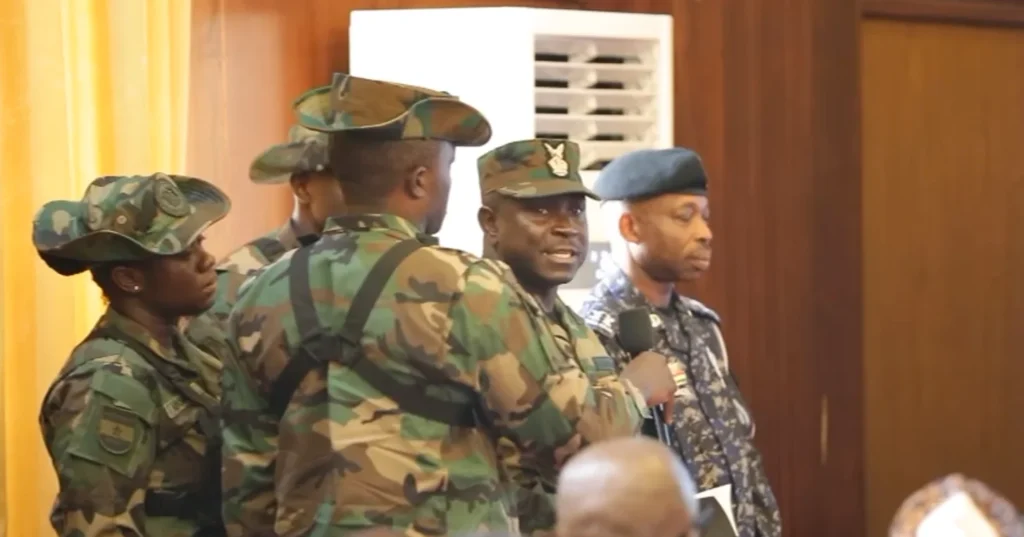
The operations have led to a noticeable reduction in the presence of heavy machinery at illegal mining sites. Dominic Buah indicated that excavators, once widely used in such activities, are becoming less visible.
“In the past, we used to meet between 10 and 20 excavators at a site. Now, you hardly meet any. The ones you find are often already immobilised”.
NAIMOS Director of Operations, Col. Dominic Buah
Despite this progress, he cautioned that illegal miners continue to adapt, finding new ways to repair and reuse damaged equipment. This ongoing cycle, he noted, requires constant monitoring and rapid response strategies.
Beyond enforcement, NAIMOS has initiated efforts to restore affected environments and repurpose seized equipment for productive use. A key collaboration has been established with the Ghana Integrated Iron and Steel Development Corporation to remove and recycle metal debris from polluted water bodies.
Col. Buah disclosed that operations are currently underway along the Ankobra River, where teams are collecting remnants of destroyed changfans and other metallic waste.
“They are packing all the damaged changfan metal fabrications from the waterways. We move from one water body to another to clear the scrap”.
NAIMOS Director of Operations, Col. Dominic Buah
Recovered materials are being processed for reuse, while certain equipment, particularly pumping machines, are being redirected for agricultural purposes through the Ministry of Agriculture. Some of these have already been distributed to farmers to support irrigation and improve productivity.
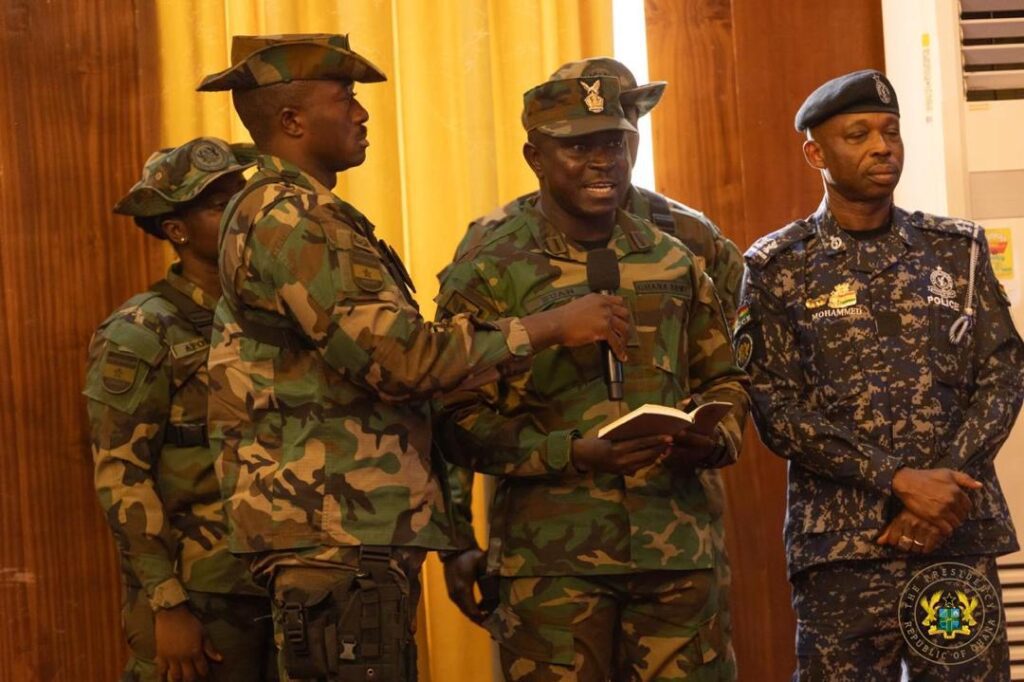
“We want to ensure that these machines are not sent back to illegal mining sites but are repurposed for good use,” he added. Vehicles seized during operations are also being integrated into official use once legal processes are completed, enhancing operational capacity.
Rising Security Threats in Mining Areas
The crackdown has also exposed growing security risks associated with illegal mining activities. According to Dominic Buah, at least 59 weapons have been confiscated from illegal miners, raising concerns about escalating violence.
He recounted incidents in which personnel came under attack, including one case where a soldier was shot but survived. “We had an encounter where one of my soldiers was shot. Fortunately, he is recovering,” he revealed.
He warned that NAIMOS would respond firmly to any threats against its personnel, emphasizing the right to self-defense in the face of armed resistance. “We will not stand by and watch people use weapons against us. We are better trained, and anybody who dares will be dealt with,” he cautioned.
The latest figures and operational updates reflect a broader national effort to tackle illegal mining, widely known as galamsey, which has long posed environmental, economic, and security challenges.

Through coordinated enforcement, environmental restoration, and resource management strategies, NAIMOS aims to weaken illegal mining networks while promoting sustainable alternatives.
Col. Dominic Buah stressed that the fight requires sustained commitment and collaboration across agencies and communities. He indicated that future quarterly updates will provide a clearer picture of progress, as operations continue to expand and adapt to emerging tactics used by illegal miners.
The government’s approach, combining enforcement with recovery and repurposing, signals a shift toward a more structured and long term response to illegal mining.
READ ALSO: Ghana’s Power Sector Faces Higher Risk as Demand Outpaces Infrastructure