The Government has announced that 2026 will not be a year for major renegotiation of public sector conditions of service, as it moves to establish an Independent Emoluments Commission (IEC) to reform Ghana’s compensation system and create a more transparent, equitable and financially sustainable framework for determining public sector pay.
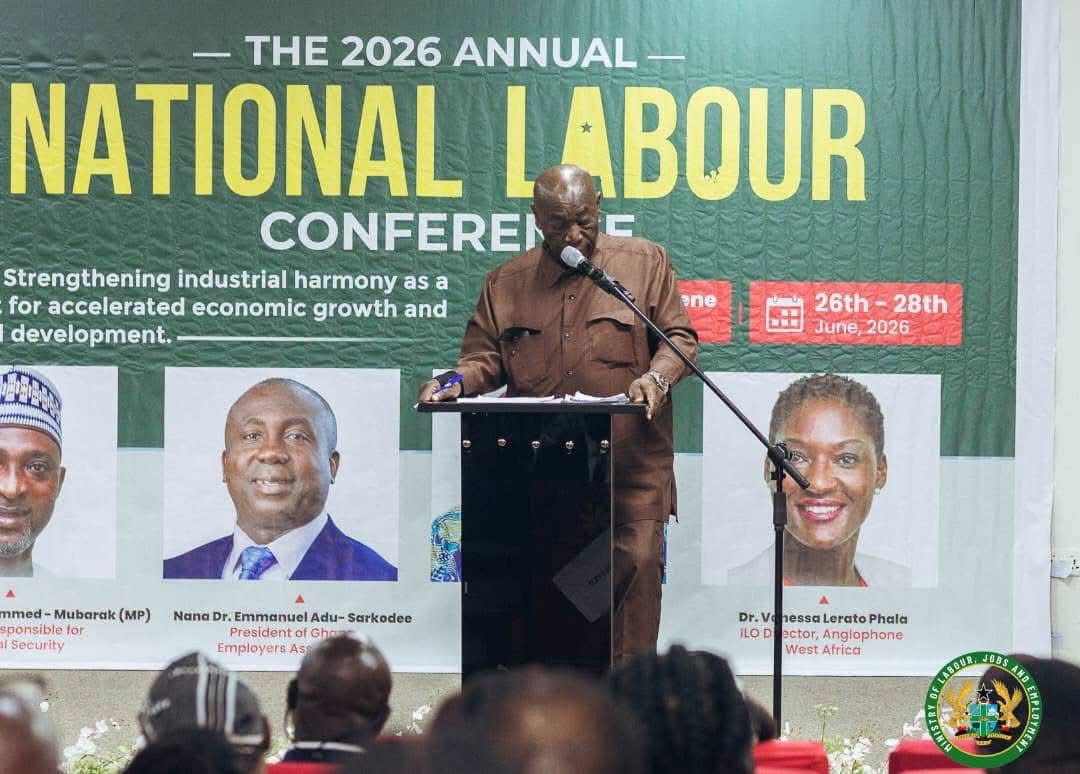
Vice President Professor Jane Naana Opoku-Agyemang, speaking on behalf of President John Dramani Mahama at the 2026 Annual National Labour Conference in Ho, said the decision forms part of broader structural reforms aimed at restoring stability to Ghana’s remuneration system, preserving industrial harmony, and strengthening fiscal discipline.
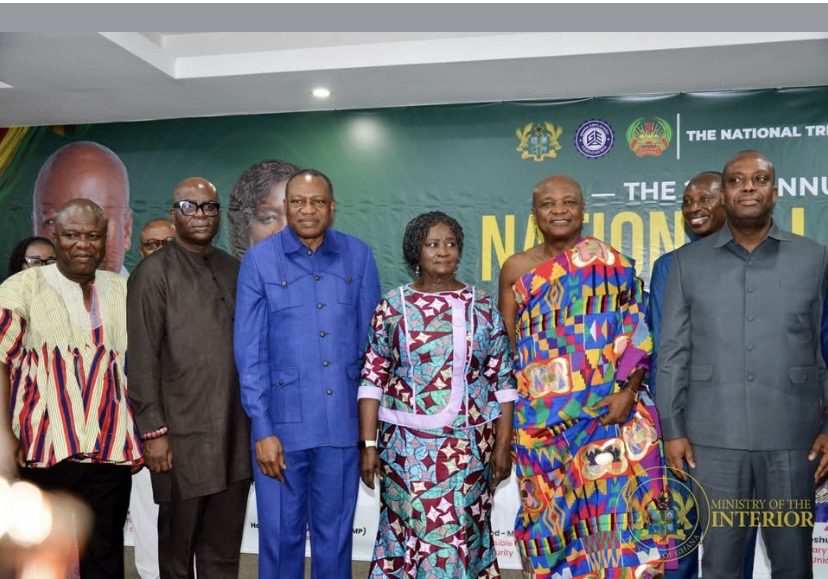
Held under the theme, “Strengthening Industrial Harmony as a Catalyst for Accelerated Economic Growth and National Development,” the conference brought together government officials, organised labour, employers, security agencies and other stakeholders to deliberate on labour relations, productivity and the future of work in Ghana.
“The establishment of the Independent Emoluments Commission is a deliberate intervention to stabilise the compensation system and build strong institutional foundations while ensuring continuity and industrial harmony.”
Vice President Professor Jane Naana Opoku-Agyemang
She explained that years of public sector salary disparities, fragmented negotiations and repeated labour agitations have placed considerable pressure on the country’s finances, making comprehensive reforms necessary.
Government Suspends Major Renegotiations
Addressing delegates, the Vice President announced that Government had proposed suspending major public sector negotiations on conditions of service throughout 2026 while the new compensation framework is being developed.
“In the interest of stability and responsible fiscal management, Government has also proposed that 2026 will not be a year for major renegotiation of conditions of service across the public sector,“
Vice President Professor Jane Naana Opoku-Agyemang
Instead of broad salary negotiations, Government intends to introduce targeted improvements in selected allowances while foundational reforms to the national emoluments system are completed.
“Targeted and modest improvements in two selected allowances will be implemented as an internal measure while the foundational reforms to our emoluments systems are completed.”
Vice President Professor Jane Naana Opoku-Agyemang
She noted that the approach had been discussed extensively with organised labour and was intended to manage expectations without undermining industrial peace.
“The rationale is to help manage expectations and preserve industrial harmony.”
Vice President Professor Jane Naana Opoku-Agyemang
Independent Commission to Reform Public Sector Pay
Central to Government’s reform agenda is the establishment of the Independent Emoluments Commission, which is expected to become the principal institution responsible for determining and regulating compensation across the public sector.
The Vice President said the Commission represents a deliberate response to longstanding weaknesses in Ghana’s salary administration, including disparities that have emerged since the introduction of the Single Spine Salary Structure more than a decade ago.
“Public sector disparities, labour agitations and fragmentation in the governance of emoluments have placed significant strain on our economy.”
Vice President Professor Jane Naana Opoku-Agyemang
The proposed Commission is expected to introduce a more structured, research-based and transparent approach to salary administration, reducing inconsistencies while ensuring that public sector remuneration remains fair and economically sustainable.
Providing further details during the conference, the Chief Executive of the Fair Wages and Salaries Commission, Dr. George Smith-Graham, disclosed that the IEC would operate as an independent constitutional body with clearly defined responsibilities.
According to him, the Commission will monitor allowances, conduct job evaluation and grading exercises, certify covered emoluments before payment, maintain a national register of public sector compensation and provide policy advice to Parliament, Cabinet, the Minister for Finance and other public institutions on salary matters.
“The IEC will ultimately become a constitutional body after a national referendum.”
Dr. George Smith-Graham
He explained that the design of the Commission incorporates lessons learned from previous salary reforms, including challenges experienced under the Ghana Universal Salary Structure (GUSS) and the Single Spine Salary Structure.
Industrial Harmony Essential for Economic Growth
The Vice President stressed that strengthening industrial harmony remains essential to Ghana’s broader economic transformation agenda.
She noted that a stable labour environment benefits not only workers but also employers, investors and the national economy by promoting productivity, confidence and sustainable growth.
Rather than viewing labour relations solely through the lens of salary negotiations, she encouraged stakeholders to embrace dialogue, cooperation and institutional reforms capable of delivering lasting solutions.
The conference, she said, presents an opportunity for Government, organised labour and employers to collectively redefine the country’s social contract.
“This conference should be a moment for government, employees and workers all of us to reflect on a new social contract for our own future,”
Prof. Opoku-Agyemang
Vice President Calls for Greater Focus on Informal Sector Workers
Beyond reforms affecting public sector employees, Prof. Opoku-Agyemang urged policymakers to pay greater attention to workers within Ghana’s informal economy.
Quoting data from the International Labour Organization (ILO), she observed that nearly four out of every five Ghanaian workers operate outside the formal employment sector.
“Seventy-eight percent of our workers are in the informal sector. Who should speak for them?”
Prof. Opoku-Agyemang
She noted that while organised labour continues to play a critical role in national development, millions of traders, artisans, farmers and self-employed workers often have limited social protection and inadequate representation in national labour policy discussions.
The Vice President therefore called on labour unions, employers and Government to ensure that future labour reforms adequately address the needs of informal sector workers.
She also encouraged organised labour and the private sector to support Government’s 24-Hour Economy policy by embracing innovation, productivity and flexible work arrangements capable of creating more employment opportunities.
Security, Productivity and Labour Stability
Speaking on the conference sub-theme, “The State of Security in Ghana and the Sub-Region,” Deputy Minister for the Interior Hon. Ebenezer Okletey Terlabi assured participants that Ghana’s security environment remains stable despite evolving regional threats.
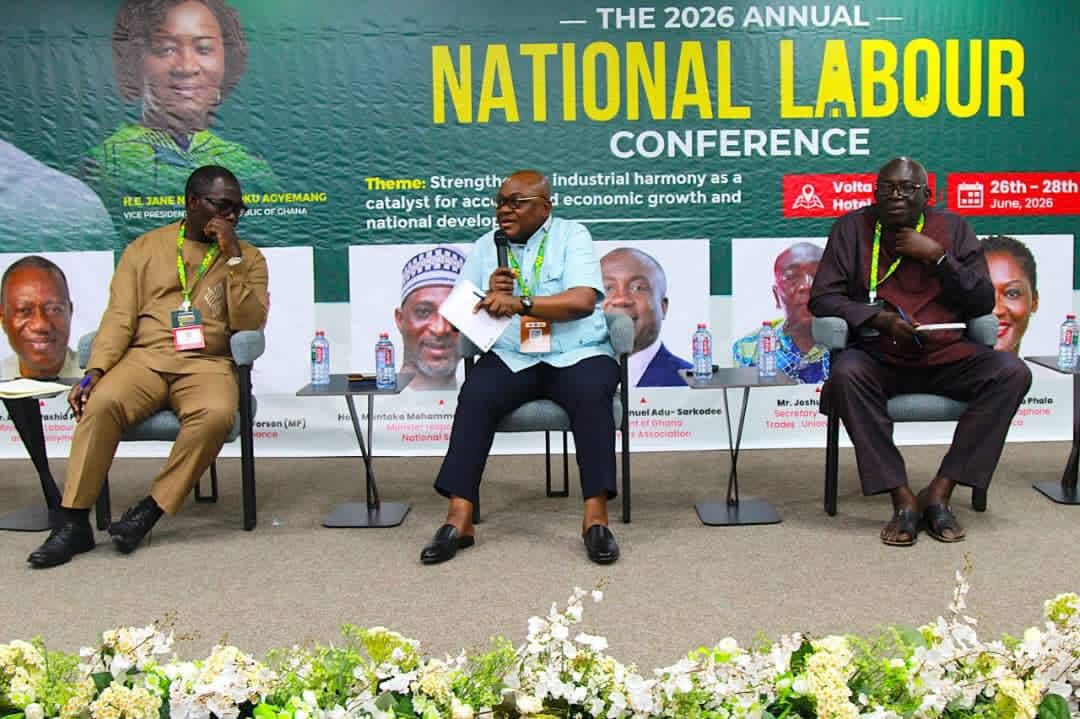
He said Government continues to strengthen border surveillance, intelligence gathering, firearms administration and private security regulation while advancing legislative reforms such as the Community Service Bill and the proposed Parole Bill to modernise the country’s criminal justice system.
Hon. Terlabi further urged organised labour to contribute to national security through vigilance, responsible citizenship and social cohesion.
Labour Conference Sets Reform Agenda
The 2026 Annual National Labour Conference concluded with renewed emphasis on strengthening industrial harmony, improving labour relations and modernising Ghana’s compensation architecture through institutional reforms.
Government maintains that establishing the Independent Emoluments Commission will create a more predictable, transparent and accountable framework for determining public sector remuneration while helping to reduce recurring labour disputes and improve fiscal planning.
As discussions on the proposed Commission continue, the Vice President reaffirmed Government’s commitment to balancing the welfare of workers with the country’s economic realities, stressing that lasting industrial peace depends on fairness, dialogue and strong institutions capable of commanding public confidence.
READ ALSO:NHIA Launches Faith Drive to Boost Health Insurance Access Across Ghana