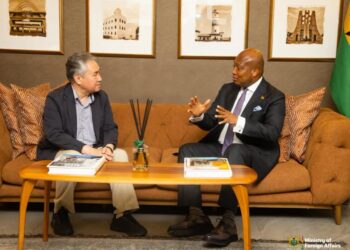
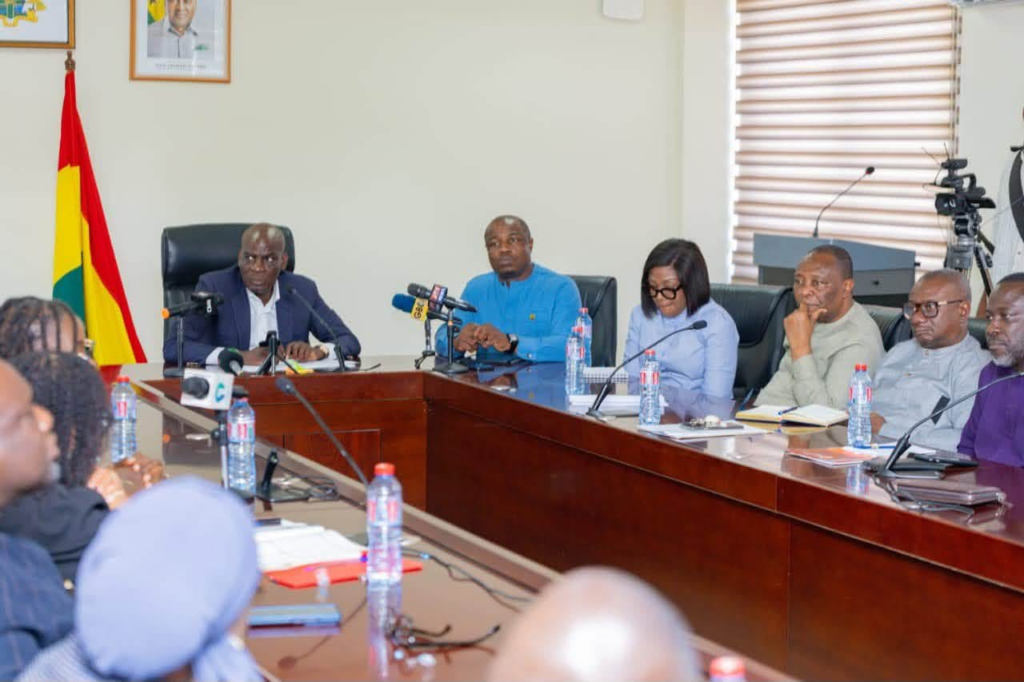
Education Minister Appeals to GAUA to Call Off Ongoing Strike, as the Minister for Education, Hon. Haruna Iddrisu, met with representatives of the Ghana Association of University Administrators (GAUA) and university management on Tuesday, in a fresh push to end the industrial action that has stalled administrative operations on campuses across the country.
The engagement brought government, union and institutional leadership to the same table for the first time in weeks, opening space for a candid exchange on the issues driving the strike, among them salary adjustments, market premium, job evaluation, staff equivalences, conditions of service, outstanding allowances and retirement arrangements.
Speaking at the meeting, the Minister appealed directly to striking staff to suspend the action and return to the negotiating table, framing dialogue as the only route to a lasting resolution.
“I am appealing to our administrative and professional staff to consider calling off this strike and coming back to the table. Government is ready to engage the Ministry of Finance, the Fair Wages and Salaries Commission and every relevant institution to get these concerns addressed.”
Minister for Education, Hon. Haruna Iddrisu
He stressed the need to restore peace and stability on university campuses, particularly with the new academic year approaching, and pointed to the progress made in rebuilding the academic calendar after the disruptions caused by COVID-19, urging all parties to safeguard those gains rather than let the strike erode them.

Union Pushes for Fresh Job Evaluation
Among the most consequential issues on the table was GAUA’s demand for a new job evaluation exercise. The union argued that existing salary and grading arrangements were built on assessments conducted years ago and no longer capture the actual scope of duties now carried by administrative and professional staff.
The Minister welcomed the proposal, indicating his willingness to engage the Fair Wages and Salaries Commission on the feasibility of commissioning a fresh evaluation, a move that could reshape how administrative roles are classified and remunerated going forward, though he was careful not to commit to a firm timeline given the number of agencies that would need to be involved.
Research Allowance Payment Hinges on Data Submission
The long-outstanding one-time research allowance also came up for discussion. The Minister assured GAUA representatives that government remained committed to settling the payment, referencing a letter dated 24 April 2026 from Deputy Finance Minister Thomas Ampem, which requested validated and disaggregated beneficiary data before disbursement could proceed.
He directed that the outstanding information be compiled and forwarded to the Ministry of Finance for validation and processing without further delay, and gave his word to personally track progress on the matter.
“The delay is largely about getting the right data to Finance for validation. Once that is submitted, I will personally follow up to ensure the allowance is processed and paid.”
Hon. Haruna Iddrisu
The exchange suggested that, at least on this particular grievance, the bottleneck may be more administrative than financial, a distinction university management appeared keen to have on record as talks continue.
Staff Equivalences Rooted in History
The long-running question of staff equivalences also featured prominently in the discussions. Prof. Anamoah, speaking to the historical context behind the arrangements, explained that the equivalence system was established to formally recognise the complementary contributions of different categories of staff within the university structure, rather than to elevate one group over another.
“These equivalences did not emerge from nowhere. They reflect years of deliberate effort to give recognition to the different roles our staff play, and we must not let that history be lost in the current tension.”
Prof. Anamoah
He urged all parties to approach the matter with an understanding of its origins, cautioning against allowing it to harden into a source of institutional division at a time when unity between staff categories is needed most.
Further concerns were raised regarding the placement of senior administrative and professional staff, including Registrars, Executive Registrars, Finance Directors and other senior officers, with union representatives warning of possible knock-on effects for both salary structures and eventual pension entitlements. The Minister took note of the concerns and committed to having the relevant matters examined further, without pre-empting the outcome of that review.
Management Renews Call for Return to Work
University management used the occasion to renew their own appeal to striking staff, urging a return to duty while negotiations continue, and citing the mounting toll of the strike on admissions, administration, teaching support and other core university functions as the action drags into a critical period on the academic calendar.

In his closing remarks, the Minister urged all sides to exercise restraint and avoid inflammatory statements capable of escalating tensions, insisting that the purpose of the engagement was to pursue a durable, negotiated settlement rather than a temporary truce.
Both government and university stakeholders indicated that further consultations would follow in the coming days as efforts continue to end the standoff before the new academic year gets underway.
READ MORE: GTEC Gives Senior Management Officials 48 Hours to Return to Work