The Ghana Association of University Administrators (GAUA) is calling on government to intervene urgently in an ongoing labour dispute, warning that it will completely halt procurement, payment processing, admissions, examination timetables, and ICT operations across the country’s public universities if its demands are not met.
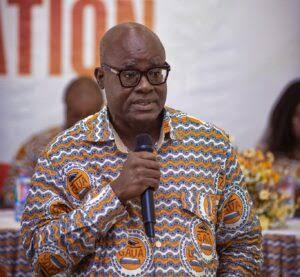
Speaking on the matter, University of Ghana chapter President Michael Owusu Ansah explained that while the industrial action may not appear disruptive at its early stages, the withdrawal of administrative services will eventually bring key university processes to a standstill if government fails to act on the issues raised.
Mr. Owusu Ansah was careful to clarify that the Association does not intend to disrupt university business or academic processes for its own sake, but stressed that its members have laid out clear demands that must be met before the industrial action can be called off.
“It may initially look like the strike is not biting. We don’t intend to disrupt the university business and the university processes, but we have made our demands.”
Mr. Owusu Ansah
According to the Mr. Owusu Ansah, the demands centre on three key issues, the implementation date for an agreement previously reached with government, the retirement age applied to administrative staff, and the award of market premiums, all of which the Association insists must be addressed without further delay.
On the first demand, he was unequivocal that the implementation date already agreed upon, April 1st, must be honoured exactly as negotiated, with no room for further postponement.
The insistence on this specific date suggests that previous assurances or timelines set by government may have already lapsed or come under threat of revision, prompting the Association to draw a firm line on the matter as part of its broader set of non-negotiable conditions.
No Discrimination on Retirement Age
The Association’s second demand concerns the retirement date for its members, with Mr. Owusu Ansah insisting that all administrative staff must be allowed to retire at the end of the academic year, without any form of discrimination in how the policy is applied across the university system.
This demand appears to reflect concerns that some categories of staff may be treated differently from others when it comes to retirement timing, a disparity the Association considers unacceptable and wants addressed as part of any resolution to the dispute.
The third major demand raised relates to the award of market premiums, with the representative noting that the Association has raised concerns about disparities in how these premiums are allocated among staff. The Association is therefore calling, at minimum, for a review of how market premiums are awarded, insisting that government must not discriminate against administrative staff in this regard.
Taken together, the three demands, on implementation timing, retirement age, and market premium disparities, represent what the Association considers the immediate, non-negotiable conditions that must be satisfied before the strike can be suspended.
Warning of Escalating Impact on University Operations
He cautioned that although the effects of the strike may not be immediately visible, administrative staff perform a range of essential functions within university institutions that, once withdrawn, will inevitably affect broader university operations over time.
“There are things staff do in the organisation that we are not going to do, and once we don’t do it, it will ultimately affect the university operations.”
Mr. Owusu Ansah
This warning underscores the potentially far-reaching consequences of the standoff, given that procurement, payment processing, admissions, examination scheduling, and ICT support represent core administrative functions without which universities would struggle to operate normally, particularly as many institutions approach critical points in their academic calendars.
Government Intervention Sought to Avert Wider Disruption
With the Association maintaining a firm stance on its three key demands, the onus now falls on government to respond swiftly to avert what could become a significant disruption to university administration nationwide.
Should the dispute remain unresolved, the escalating withdrawal of administrative services threatens to affect not only day-to-day university operations, but also processes critical to students and staff alike, including admissions and examination scheduling, at a time when many institutions are navigating demanding academic timelines.
For now, the Association has signalled that it intends to press ahead with its industrial action until its demands are fully met, leaving government with a narrowing window to engage and resolve the dispute before its impact deepens across the country’s public university system.
READ MORE: Arabic Still An Optional Language — Media Relations Officer For Education Ministry