Ghana’s remarkable economic turnaround in 2025, powered largely by a historic gold export boom and increase in cocoa production, is now facing renewed uncertainty as global commodity markets turn volatile.
With gold accounting for nearly two-thirds of total export earnings and cocoa still critical for rural livelihoods, any sharp swings in primary export prices could quickly test the resilience of the country’s recovery.
In 2025, Ghana recorded its strongest export performance ever. Total merchandise export earnings surged to a record US$31.1 billion, up sharply from US$19.1 billion in 2024.
Gold alone generated approximately US$20 billion — nearly double the US$10.3 billion earned the previous year. This made gold responsible for roughly 65% of all export receipts, far outpacing cocoa (US$3.8 billion) and oil (US$2.6 billion).
The boom was driven by a combination of higher global gold prices, record production reaching around 6 million ounces, and successful formalization of the artisanal and small-scale mining (ASGM) sector through the Ghana Gold Board (GoldBod).
Small-scale gold exports alone contributed over US$10 billion in some estimates, injecting much-needed foreign exchange and helping the cedi become one of Africa’s best-performing currencies.
This gold windfall delivered tangible macroeconomic benefits. It fueled a massive current account surplus of about US$9.35 billion (8.1% of GDP) in 2025, supported a sharp build-up in gross international reserves to around US$13.8–14.5 billion (equivalent to nearly 6 months of import cover), and contributed to public debt falling to approximately 45% of GDP.
The strong external position also eased pressure on the cedi and allowed the Bank of Ghana to maintain low inflation, which dropped to around 3.3% by early 2026.

Cocoa’s Persistent Pain
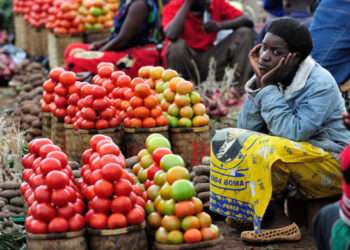
While gold dominated the headlines, cocoa, traditionally Ghana’s iconic export, continued to expose structural vulnerabilities. Global cocoa prices experienced extreme volatility, surging to record highs in 2024 before collapsing sharply in late 2025 and early 2026 amid expectations of a global surplus.
In response, the government slashed the official farmgate price paid to cocoa farmers by nearly 30% for the remainder of the 2025/26 season, reducing it from around US$5,300 per tonne to approximately US$3,580 per tonne.
Similar drastic cuts were implemented or considered in Côte d’Ivoire. These reductions sparked concern among the roughly one million smallholder farming families who depend on cocoa for their income.
Cocoa earnings still rose to US$3.8 billion in 2025 thanks to earlier high prices and some volume gains, but the sector now grapples with liquidity challenges, potential smuggling risks, and farmer discontent. The contrast is stark: gold brought macroeconomic stability, while cocoa volatility directly threatens rural economies and social cohesion.

The Double-Edged Sword of Commodity Dependence
Gold, cocoa, and oil together still constitute the overwhelming majority of Ghana’s exports, often over 80%. This heavy reliance on a narrow range of primary commodities creates a classic “resource curse” dynamic.
When prices rise, as gold did in 2025, the economy enjoys windfall gains: stronger reserves, a stable currency, lower borrowing costs, and improved investor confidence.
However, the reverse is equally true. Analysts and the IMF have warned that a significant drop in gold prices, for instance, a 30% decline, could reduce export earnings, weaken the cedi, slow reserve accumulation, and pressure fiscal balances.
The Bank of Ghana governor has explicitly cautioned that gold price volatility “could hit Ghana hard,” especially as the country aims to sustain its recovery into the rest of 2026.
Early 2026 data already shows mixed signals. While gold production targets for 2026 remain ambitious (around 6.5 million ounces), proposed changes to mineral royalty rates (potentially introducing a sliding scale up to 12% tied to prices) could affect investment and output. Meanwhile, cocoa faces surplus pressures and subdued global demand, limiting its ability to act as a buffer.
Risks to Growth and Stability in 2026
Ghana’s economy grew by approximately 6% in 2025, with non-oil sectors showing particular strength. The 2026 budget shifts focus toward sustained growth, job creation, and economic transformation under initiatives like the 24-Hour Economy policy. Yet downside risks from primary export volatility remain prominent.
A sustained gold price correction could: Shrink the current account surplus; Slow reserve build-up under the ambitious Ghana Accelerated National Reserve Accumulation Policy (targeting 15 months of import cover by 2028); Increase pressure on the cedi and imported inflation; and complicate fiscal consolidation efforts.
Cocoa weakness, on the other hand, risks widening rural-urban income gaps, fueling social tensions, and undermining agricultural diversification efforts.
Positive offsets exist. Improved formalization of mining, diversification into services and ICT, and AfCFTA opportunities provide some resilience. Strong fiscal discipline and the ongoing IMF-supported programme have also restored credibility.
Reducing Vulnerability
To break the cycle of boom and bust, Ghana must accelerate economic diversification by channeling its resource wealth into long-term productive capacity. This includes investing gold windfalls into key sectors such as agro-processing, manufacturing, technology, and infrastructure, which can generate sustainable jobs and value.
Equally important is deepening local value addition in both gold and cocoa through refining and chocolate production, allowing the country to capture more value within its borders rather than exporting raw commodities.
At the same time, strengthening fiscal rules will be essential to ensure that windfall revenues are saved during commodity price booms and deployed during downturns to stabilize the economy.
Supporting smallholder farmers with better risk management tools, including crop insurance and diversified income streams, will also enhance resilience at the grassroots level.
While policymakers are increasingly aware of these challenges and have made progress by shifting from debt-financed reserves to gold-backed accumulation, achieving true economic stability will require a decisive move away from dependence on raw commodity exports.
To break the cycle of boom and bust, Ghana must accelerate economic diversification by channeling its resource wealth into long-term productive capacity. This includes investing gold windfalls into key sectors such as agro-processing, manufacturing, technology, and infrastructure, which can generate sustainable jobs and value.
Equally important is deepening local value addition in both gold and cocoa through refining and chocolate production, allowing the country to capture more value within its borders rather than exporting raw commodities.

At the same time, strengthening fiscal rules will be essential to ensure that windfall revenues are saved during commodity price booms and deployed during downturns to stabilize the economy. Supporting smallholder farmers with better risk management tools, including crop insurance and diversified income streams, will also enhance resilience at the grassroots level.
While policymakers are increasingly aware of these challenges and have made progress by shifting from debt-financed reserves to gold-backed accumulation, achieving true economic stability will require a decisive move away from dependence on raw commodity exports.
All in all, circumnavigating 2026 successfully will require prudent macroeconomic management, continued fiscal discipline, and bold steps toward diversification. If Ghana can translate its commodity windfalls into broader, more resilient growth, it can finally reduce the haunting influence of primary export volatility. Failure to do so risks repeating familiar cycles of euphoria followed by painful adjustment.
READ ALSO: GSE Closes For Easter With Mixed Fortunes And Rising Index