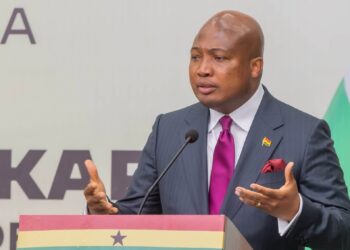
President John Dramani Mahama has announced plans to convene an emergency cabinet meeting to address the sharp rise in petroleum prices triggered by escalating tensions between Iran and Israel.
Speaking at the Kwahu Business Forum under the theme “The Future of Business: The Role of the Financial Sector,” the President acknowledged growing public concern over fuel costs and assured that the government is actively considering interventions.
The global situation, he explained, has pushed crude oil prices from about 68 dollars per barrel to nearly 120 dollars, with direct consequences for domestic fuel prices. Petrol and diesel prices have surged beyond earlier levels, placing pressure on households and transport operators.
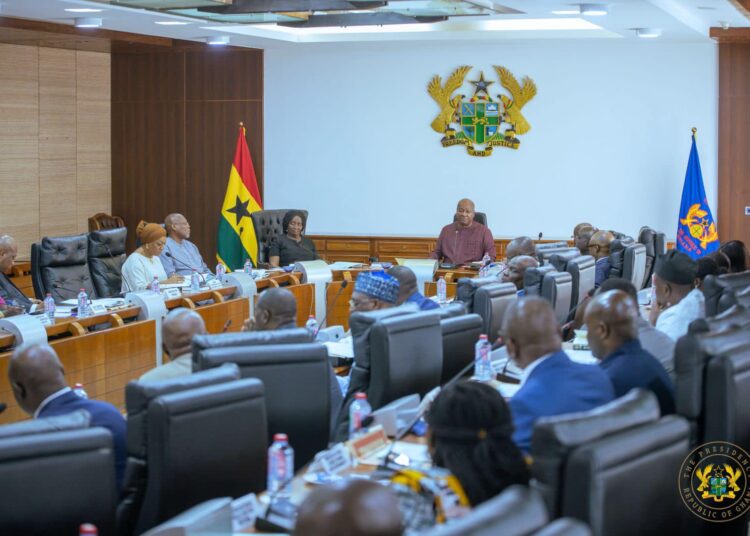
“I’ve called for an emergency cabinet meeting to decide some measures we can take to cushion the petroleum price while we expect that the war comes to an end,” he stated, emphasizing that the government is exploring options to stabilise prices in the short term.
Proposed Adjustments to Stabilise Prices
The President indicated that government may introduce targeted adjustments within the petroleum pricing structure, particularly around levies and margins, to ease the burden on consumers. These interventions are expected to provide temporary relief while authorities monitor global developments.

“There are some tweaking we can do in terms of levies and margins and other things in order to maintain a stable price,” he explained, noting that such measures are necessary given the external nature of the shock.
Mahama also expressed appreciation to transport unions for exercising restraint despite rising operational costs. He acknowledged that fare increases have been contained, largely due to cooperation between government and industry stakeholders.
“I want to express my sincere gratitude to the transport unions for being very patient with us,” he said, urging continued collaboration as efforts are made to stabilise the situation.
Economic Resilience Under Pressure
Despite the global uncertainty, the President maintained that Ghana’s economy is better positioned to withstand shocks compared to previous years. He stressed that while the current crisis presents challenges, it does not threaten the overall stability of the economy.
“I must assure you that this economy is more resilient than it was in the past,” he said, adding that there is no indication that the ongoing conflict will derail economic progress.
He highlighted the country’s improved external buffers, including nearly six months of export cover and adequate petroleum reserves. According to him, Ghana has about six weeks of fuel stock, with ongoing replenishment ensuring continuity of supply.
“There’s no danger that we would have queues at filling stations,” he assured, addressing concerns about potential shortages. The President’s remarks also reflected broader improvements in the economic environment, which he said provide a cushion against external shocks.
He noted that business confidence has rebounded, supported by rising investment levels and improved access to credit. “I’m happy to report that the business environment is much, much, much better than it was before,” he said, pointing to increased foreign direct investment and stronger domestic participation.

He explained that reduced government borrowing has eased pressure on the financial sector, allowing banks to extend more credit to businesses. With treasury bill rates declining, financial institutions are increasingly turning to the private sector for lending opportunities.
Lower Interest Rates and Inflation
President Mahama highlighted the significant drop in interest rates as a key driver of economic recovery. Borrowing costs, which previously stood at around 32 percent in 2024, have now fallen to single-digit levels in some cases.
“Today, I heard of somebody who borrowed at 10 percent, 9 percent,” he noted, describing the shift as transformative for businesses seeking capital. He also pointed to declining inflation as a factor enhancing price stability and predictability.
Lower inflation, he said, enables businesses to plan more effectively and reduces uncertainty in the market. Another major development cited by the President is the stabilisation of the Ghanaian currency, which has contributed to a more predictable investment climate.

He explained that the stronger cedi has reduced the cost of imports, particularly in terms of duties and levies calculated in local currency. “Today, you are paying the equivalent of about 10.9 cedis to the dollar,” he said, noting that this represents a significant improvement compared to previous years.
The reduction in import costs, he added, should eliminate incentives for under-declaration of goods at the ports. He urged importers to comply with regulations, emphasizing that the current exchange rate environment offers fairer conditions.
Balancing Stability and External Risks
While expressing optimism about the economy’s trajectory, the President acknowledged that global shocks remain a constant risk. He stressed the importance of building resilience through sound macroeconomic management and strategic planning.
“As we said, shocks will come. You cannot predict external events, but you must create an economy that is able to withstand those shocks”.
President John Dramani Mahama
The emergency cabinet meeting, he explained, is part of a broader effort to respond proactively to emerging risks while maintaining economic stability. The government’s approach focuses on balancing immediate relief measures with long-term sustainability.

The Kwahu Business Forum provided a platform for the President to outline both the challenges and opportunities facing the economy. His remarks underscored a commitment to protecting consumers while sustaining the gains achieved through recent economic reforms.
READ ALSO: Mahama: Business Confidence is Back, Credits Improved Macroeconomic Stability