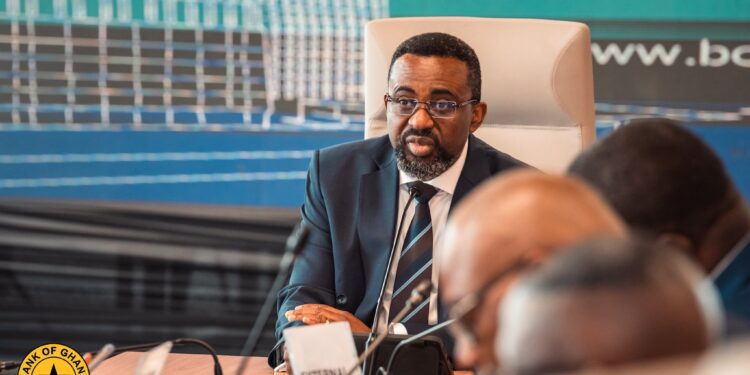
The Bank of Ghana has delivered a message of confidence as the country prepares to exit its International Monetary Fund programme.
In a bold statement that has calmed anxious investors and citizens alike, the central bank declared that Ghana’s hard-won economic recovery remains firmly protected even after the IMF support ends. This assurance comes at a critical moment when many fear a return to old habits of fiscal indiscipline.
For years, Ghanaians have watched their economy swing between periods of stabilisation and painful crises. The current Extended Credit Facility programme with the IMF, which began in 2023, helped restore order after a severe downturn marked by high inflation, currency depreciation, and rising debt. As the programme nears its conclusion, expected around the second quarter of 2026, concerns have mounted that the government might slip back into excessive spending and borrowing.
Critics point to Ghana’s economic history, which shows repeated lapses following the end of previous IMF-supported programmes. Many worry that without external oversight, fiscal slippages could push the economy back to the brink of malaise. These fears have sparked intense public debate about whether Ghana can truly stand on its own feet.
Bank of Ghana Steps Up With Strong Assurance
In its official Frequently Asked Questions document, the Bank of Ghana directly addressed these worries. The central bank acknowledged the nation’s past challenges with policy slippages after stabilisation efforts.
However, it firmly stated that both the Bank and the Government are strongly committed to maintaining prudent monetary policy, fiscal discipline, and sound macroeconomic management beyond the programme’s life.
This commitment is not just words. The BoG emphasised its goal to embed macroeconomic stability deeply into Ghana’s domestic policy framework. Key supports include the fiscal responsibility provisions, the operational independence of the Bank of Ghana, and continued close coordination between fiscal and monetary authorities. These institutional safeguards aim to make stability a permanent feature rather than a temporary fix tied to IMF conditions.
Robust Policy Measures to Sustain Stability
The Bank of Ghana outlined several practical steps designed to safeguard the economy against future shocks. Its policy framework focuses on building resilience to external pressures, such as swings in global commodity prices that have historically hurt Ghana’s export earnings.
Central to this strategy is the continued pursuit of price stability through prudent monetary policy. The BoG is also strengthening the foreign exchange market framework and actively rebuilding external buffers by accumulating reserves. These measures help mitigate the impact of sudden external disruptions.
On the fiscal side, the Government is pushing ahead with consolidation efforts and reforms to enhance domestic revenue mobilisation. Improvements in public financial management and support for export diversification will broaden the economy’s sources of foreign exchange, reducing heavy dependence on volatile commodities like gold, cocoa, and oil.
Domestic Gold Purchase Programme as a Game Changer
One innovative initiative highlighted by the Bank is the Domestic Gold Purchase Programme. This programme allows the central bank to build reserves using domestically sourced gold rather than relying solely on international market fluctuations. By purchasing gold locally, Ghana reduces vulnerability to global price cycles.
Recognising that holding large amounts of gold can expose reserves to price volatility, the BoG employs active reserve management strategies. These include portfolio rebalancing, selective divestment of bullion when appropriate, and the use of hedging tools to protect the external position and ensure long-term financial stability.
Such forward-thinking approaches demonstrate the Bank’s determination to create a more resilient economic structure that can withstand pressures even without IMF backing.
Learning From the Past to Secure the Future
Ghana’s economic journey has taught valuable lessons. Previous stabilisation programmes delivered temporary relief but often failed to prevent a return to unsustainable policies once the external support faded. This time, the authorities appear determined to break that cycle.
The BoG’s message carries extra weight because it comes from an institution with operational independence and a clear mandate to maintain price stability. Combined with government efforts on revenue and spending discipline, these elements create a stronger foundation for sustained progress.
Investors and citizens have reason for cautious optimism. Recent improvements in inflation trends, reserve levels, and overall macroeconomic indicators under the current programme provide a solid platform. The challenge now lies in translating this momentum into enduring habits of prudence and coordination.
What This Means for Ordinary Ghanaians
For businesses and households, the assurance of post-IMF stability could translate into greater confidence in planning for the future. Lower uncertainty around inflation and exchange rates supports investment, job creation, and improved living standards.
However, success will depend on continued vigilance from both the Government and the central bank. Any deviation from the path of fiscal rectitude could quickly erode the gains achieved so far.
The Bank of Ghana’s firm stance sends a clear signal: Ghana is preparing to exit the IMF programme not with fear, but with a well-prepared domestic framework ready to take over the responsibility of safeguarding economic stability.
As the nation enters the second quarter of 2026 approaches, all eyes will remain on how effectively these commitments are implemented. The coming months will test whether Ghana can finally move beyond the boom-and-bust pattern that has characterised much of its recent economic history.
With strong institutional safeguards, innovative reserve-building strategies, and a renewed focus on diversification, there are genuine grounds to believe that this time the recovery can endure. Ghana’s economy stands a real chance of proving that it is indeed safe from any post-IMF disaster.
READ ALSO: Afreximbank Unleashes $10bn Crisis Shield