Ghana is on the verge of exiting its International Monetary Fund (IMF) Extended Credit Facility (ECF) programme, with the final review underway in late April 2026 and completion targeted for August.
The three-year, approximately $3 billion arrangement approved in May 2023 came after a severe economic crisis that culminated in a sovereign debt default in December 2022.
But beneath the surface of this apparent recovery lies a more uncomfortable question: is the IMF programme truly saving Ghana, or merely delaying a deeper economic reckoning? Critics argue that while the intervention has restored a degree of macroeconomic stability, it has done so through painful austerity measures, rising taxes, and constrained public spending that risk stifling long-term growth.
Supporters, however, insist that without the programme, the economy could have spiralled into far worse instability. As Ghana inches toward programme completion, the real test will not be the exit itself, but whether the country can sustain growth, rebuild resilience, and avoid slipping back into the very vulnerabilities the IMF sought to address.
The Precipice: Ghana’s 2022 Economic Crisis
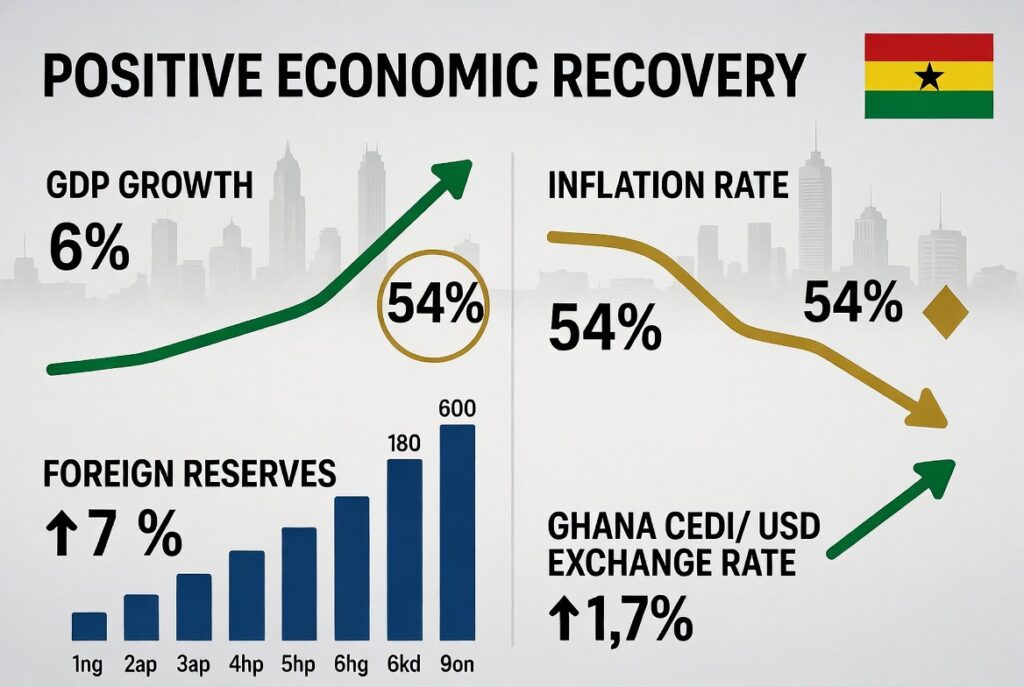
By late 2022, Ghana faced one of its worst economic crises in decades. Public debt exceeded 90-100% of GDP when including contingent liabilities from state-owned enterprises. Inflation peaked at 54.1% in December 2022, the cedi depreciated sharply, and foreign reserves were critically low. The government declared a moratorium on most external debt payments, effectively defaulting, which was the first such event in sub-Saharan Africa in years.
Contributing factors included fiscal expansion ahead of elections, the COVID-19 pandemic, the Russia-Ukraine war’s impact on commodity prices and global financing conditions, mismanagement, and long-standing weaknesses such as revenue shortfalls, energy sector debts, and over-reliance on cocoa, gold, and oil exports.
Consequently, growth slowed dramatically to around 3.1% in 2023. Without external support, debt servicing consumed a massive share of revenue, crowding out essential spending and risking banking sector instability.
IMF Intervention: Reforms and Conditionality
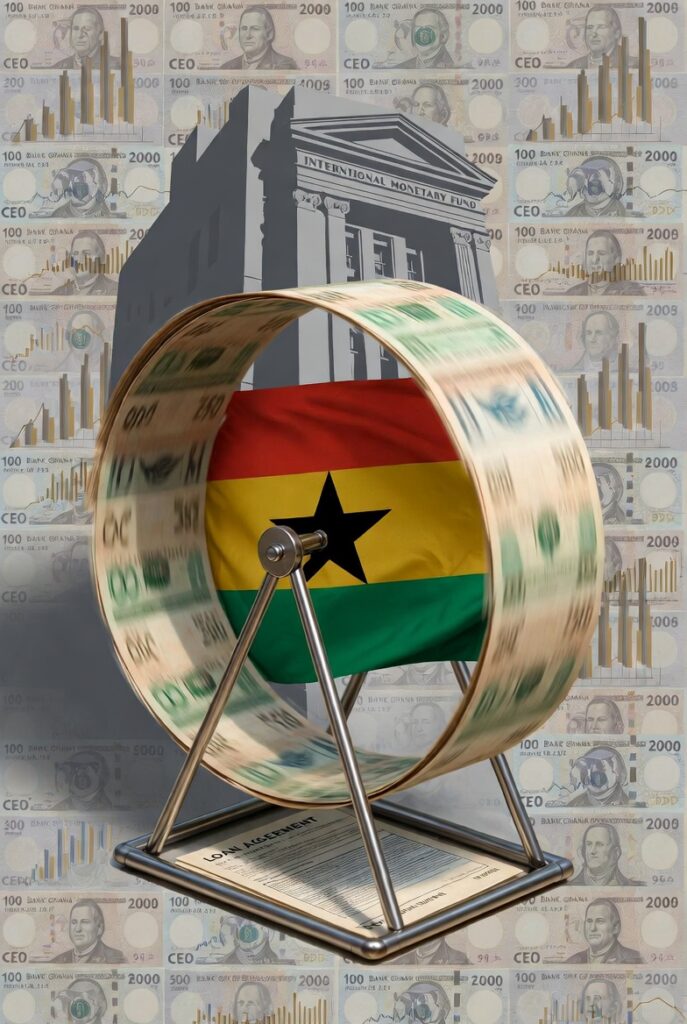
The IMF programme provided critical liquidity and a credible framework for adjustment. Key pillars included aggressive fiscal consolidation to achieve primary surpluses, comprehensive debt restructuring (domestic debt exchange in early 2023 followed by external negotiations under the G20 Common Framework with commercial and bilateral creditors), monetary tightening by the Bank of Ghana, and structural reforms targeting revenue mobilization, public financial management, and energy sector viability.
In return, Ghana received disbursements totaling nearly $2.8 billion by the fifth review in December 2025. The programme enforced discipline that domestic politics had repeatedly undermined.
Measurable Gains: Stabilization Delivered
Outcomes have been impressive in the short term. Inflation plummeted from over 50% to around 3.2-3.8% by early 2026, with some reports noting 13 consecutive months of decline.
The cedi emerged as Africa’s best-performing currency in 2025, appreciating more than 40% against the US dollar. GDP growth rebounded strongly, reaching approximately 5.7% in 2024 and 6% in 2025, driven by services, agriculture, and improved confidence.
International reserves strengthened significantly (reaching levels covering 3-5.7 months of imports in various reports), and debt-to-GDP fell sharply from crisis peaks to about 45.3% in 2025, though the IMF projects a rise to 53% by end-2026 as new borrowing resumes on a more sustainable base.
Investor sentiment improved, and the programme facilitated market access restoration. These results demonstrate that IMF-supported policies successfully stabilized a collapsing economy.
The Counterargument: A Recurrent Cycle?
Critics argue the programme represents another chapter in a familiar pattern rather than a permanent fix. Ghana has engaged with the IMF for roughly 40 out of its post-independence decades, with multiple programmes since the 1980s Structural Adjustment era and more recent ones in 2015 and earlier.
Academic analyses, such as those examining programmes from 1995-2015 and beyond, consistently show short-term macroeconomic improvements i.e. lower inflation, temporary debt relief, and growth rebounds, followed by slippage once external oversight ends.
Fiscal discipline often erodes amid election cycles, wage pressures, and populist spending, while structural vulnerabilities (low tax-to-GDP ratio, SOE inefficiencies, commodity dependence, and governance gaps) persist. Austerity measures have also carried social costs, including impacts on public services and the informal sector, even if social spending protections were included.
Historical evidence suggests IMF programmes frequently “kick the can down the road” without addressing root causes of profligacy and weak institutions.
Post-Exit Risks and the Sustainability Test
As Ghana prepares to exit, possibly with an Independent Fiscal Council to replace IMF oversight, the real test begins. Maintaining primary surpluses, prudent borrowing, revenue-enhancing reforms, and energy sector cleanup will be essential.
Projections indicate steady but moderate growth around 4.8-5.9% in 2026, yet risks remain: global shocks, domestic political pressures, and the temptation to relax fiscal rules ahead of future elections.
Without genuine ownership of reforms, diversification, anti-corruption efforts, and stronger domestic resource mobilization, the gains could prove reversible, leading to the next crisis within years. The programme bought valuable time; whether it translates into lasting resilience depends on Ghanaian leadership and institutions.

Time Bought, Ownership Required
The IMF programme clearly prevented immediate economic collapse in 2022-2023 and delivered substantial stabilization by 2026. It restored credibility, tamed inflation, stabilized the currency, and set debt on a more sustainable trajectory.
However, Ghana’s long history of repeated IMF engagements warns that external conditionality is no substitute for domestic fiscal and governance maturity. The programme saved Ghana from the brink, but it may only delay collapse if the country fails to internalize the discipline.
Successful exit in 2026 should mark the beginning of self-reliant economic management, not a return to old habits. The coming years will determine whether this chapter ends as a success story or another cautionary tale.
READ ALSO: Financial Stocks Index Climbs as Equities Post Mixed Results