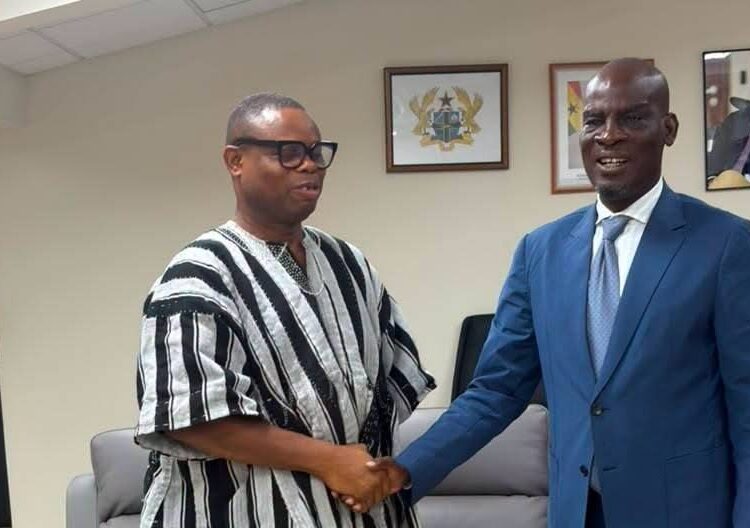
The IMANI Center for Policy and Education and the Ministry of Education have held a policy engagement designed around a practical objective: identifying the critical weaknesses within Ghana’s education system and determining where independent policy work can support the government in closing them.
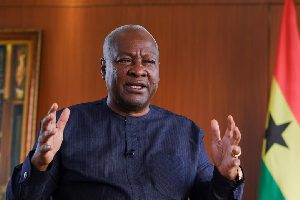
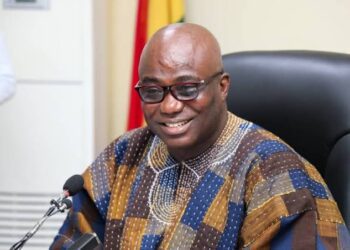
The IMANI delegation, led by Founding President and Chief Executive Officer Franklin Cudjoe alongside Writer and Associate Kay Codjoe and Digital Transformation Specialist and Associate John Sitsofe Mensah, was received by Education Minister Haruna Iddrisu and Deputy Minister Dr Clement Abas Apaak.
The engagement moved beyond a general exchange of views, producing what both sides described as a working basis for continued collaboration between the ministry and the policy think tank.
Hon Iddrisu used the engagement to highlight the areas he considers to require particular policy attention, placing the infrastructure deficit in basic education foremost among them.
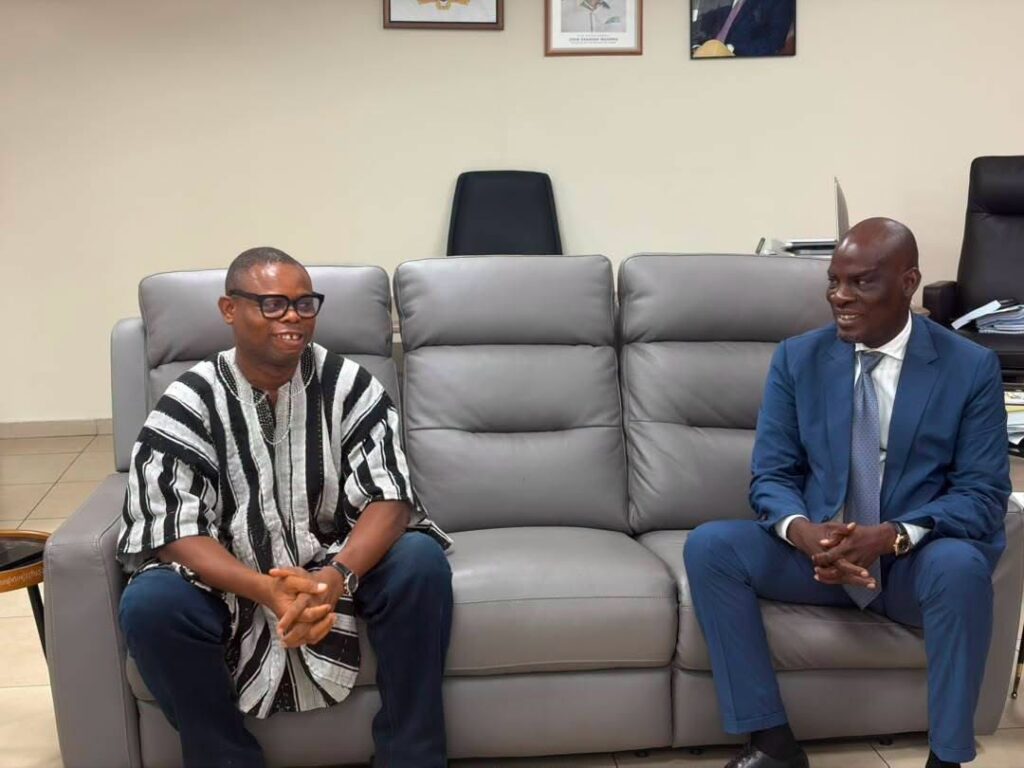
The 2025 Auditor-General’s findings supplied the scale of the problem: 10,730 public basic schools across 13 regions lack classroom blocks, affecting 3,050,808 pupils. For the Ministry, this figure goes directly to the quality and accessibility of basic education nationwide.
Teacher Deployment Beyond the National Numbers
The Minister identified teacher supply and deployment as a second major concern, one he framed as extending well beyond simple national headcounts. The challenge, he said, is not limited to how many teachers Ghana employs, but whether those teachers are distributed according to actual need, particularly across underserved schools and communities.
Effective deployment therefore requires better school-level data, clearer staffing requirements and stronger mechanisms for retaining teachers where shortages persist. Sanitation and the broader school environment featured prominently in the discussion.
Water, toilets, hygiene facilities and safe learning spaces, the Minister argued, are basic requirements of a functioning education system and must form part of infrastructure planning from the outset, rather than being treated as secondary considerations added once classrooms themselves are built.
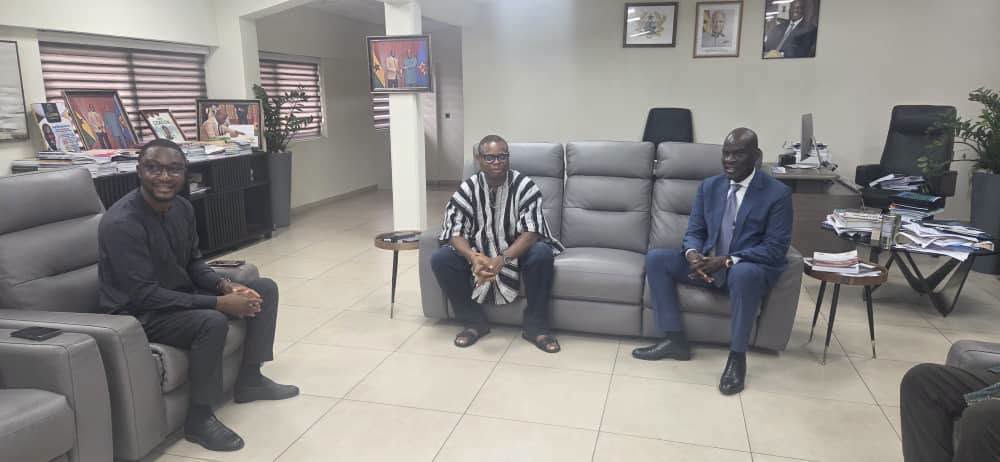
The discussion also addressed discipline within schools, which the Minister presented as a shared responsibility involving students, teachers, parents, school authorities and the wider community. He argued that traditional authorities, religious leaders and opinion leaders also have a role to play in restoring standards and reinforcing responsibility across the system.
An Unfinished Constitutional Obligation
Another significant issue raised was the unfinished obligation of Free Compulsory Universal Basic Education.
While Free Senior High School has expanded access to secondary education, Hon Iddrisu stressed that basic education remains the foundation of the system and requires corresponding investment in infrastructure, learning outcomes and teaching quality if that constitutional commitment is to be considered genuinely fulfilled.
On scholarships, the Minister highlighted the transition to the Ghana Scholarships Authority and the need to harmonise publicly funded scholarship schemes under a more transparent and accountable framework, aiming for clearer prioritisation, better coordination and stronger public confidence in how scholarships are administered.
He also called for greater attention to special and inclusive education, including stronger GETFund support, and urged a review of the role and capacity of domestic bursars and matrons, whose responsibilities directly affect food management, sanitation and student welfare within schools.
From Dialogue to Evidence-Based Action
The meeting established more than a list of concerns. It created a working basis for collaboration between the two institutions.
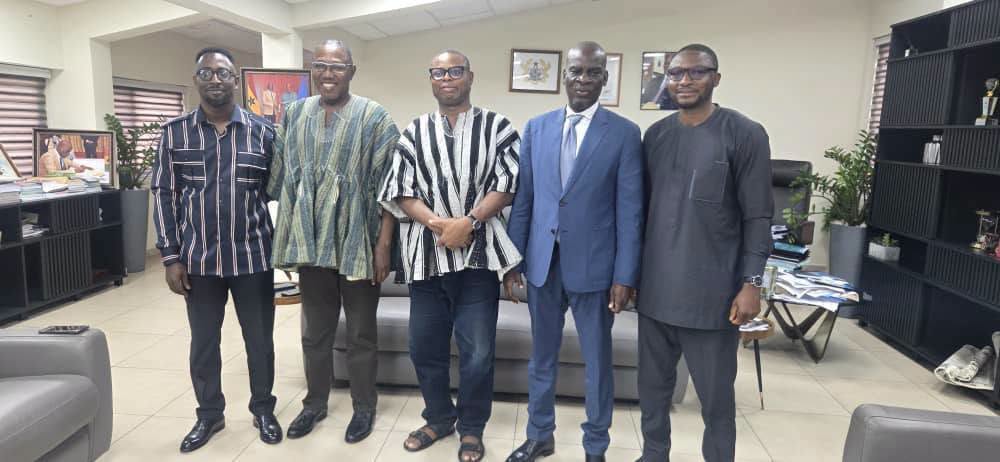
IMANI Center for Policy and Education is expected to work with the Ministry to examine these areas in greater depth, identify the underlying policy and implementation gaps, interrogate the available data and develop practical policy options capable of supporting the Ministry’s reform priorities.
The next phase must convert the dialogue into evidence, measurable interventions and results, a standard both sides will ultimately be judged against as the collaboration moves from discussion into implementation.
READ ALSO: GoldBod’s US$1.315bn FX Split Channels Dollars to Market, Reserves