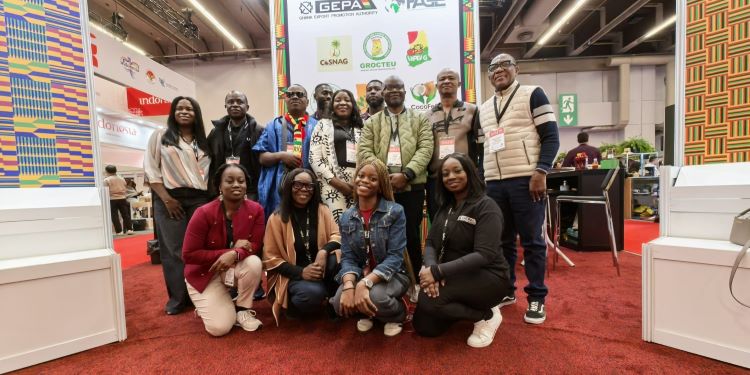
In the sprawling halls of the Enercare Centre in Toronto, the Ghana Export Promotion Authority (GEPA) has moved the needle from mere participation to aggressive market penetration, with a clear strategy at SIAL Canada 2026: exhibition is a vanity metric; conversion is the only reality.
Led by CEO Francis Kojo Kwarteng Arthur Esq., the Ghanaian delegation transformed the national pavilion into a high-stakes hub of industrial diplomacy, where the focus shifted from displaying products to closing the loop on global supply chains.
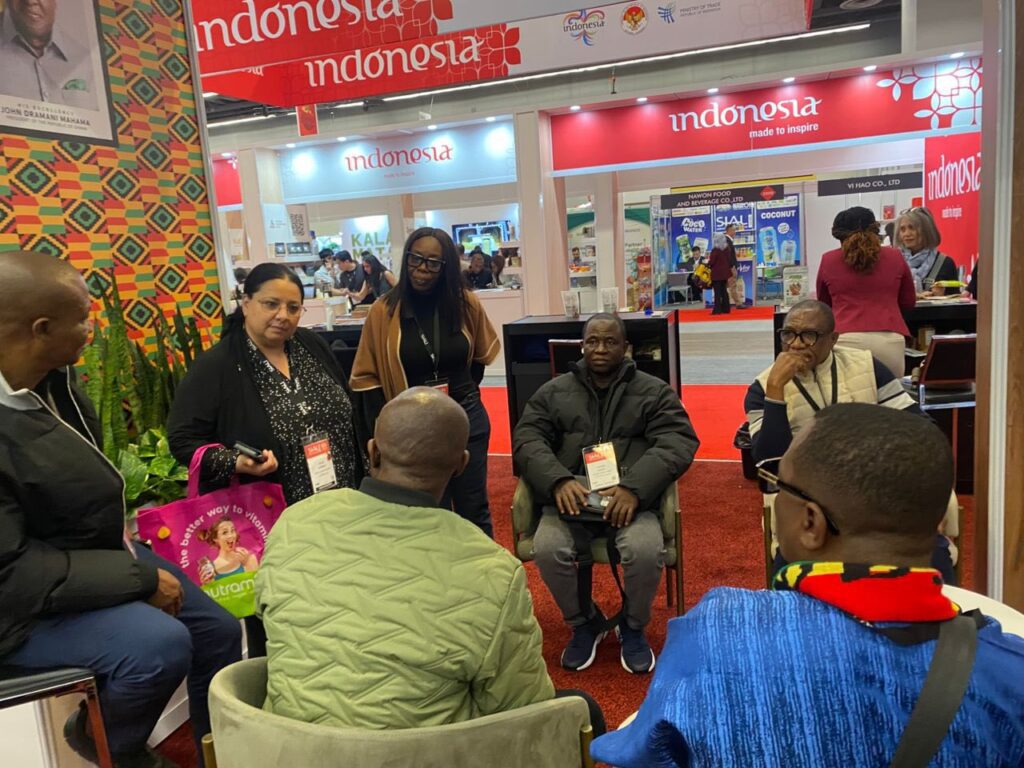
“Ghana’s presence at SIAL Canada went beyond exhibition; it was about building real connections and setting the stage for growth. On the sidelines of the fair, CEO Francis Kojo Kwarteng Arthur Esq. held a brief but impactful meeting with exporters, stressing the need to treat every contact as a real business opportunity”
Ghana Export Promotion Authority
For Ghana, SIAL Canada was a necessity to secure a permanent foothold in the competitive North American market for its Non-Traditional Exports (NTEs).
As the nation seeks to reduce its reliance on raw commodity exports, the promotion of processed and value-added NTEs has become a frontline economic priority, making GEPA’s engagement in Toronto a critical venture for Ghana’s export diversification agenda.
At SIAL Canada, GEPA’s presence meant presenting Ghana not just as a source of raw materials but as a sophisticated manufacturing partner capable of meeting stringent Canadian food safety and quality standards. The success of this mission was grounded in a directive from the top: “treat every business card as a binding contract waiting to happen.”
The centerpiece of GEPA’s tactical deployment was the impactful sideline meeting between CEO Francis Kojo Kwarteng Arthur Esq. and the participating exporters, as it reflected the authority’s result-oriented philosophy.
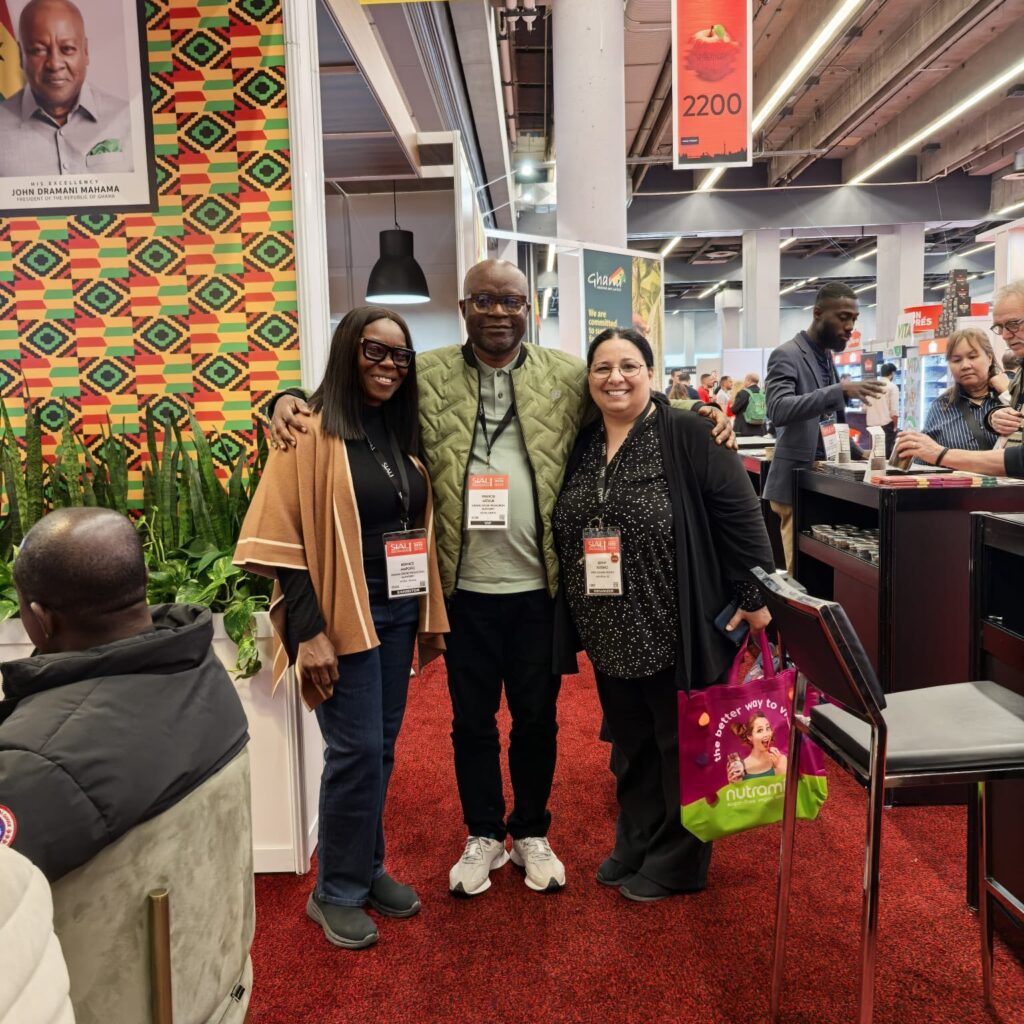
The CEO issued a stern reminder that the real work begins when the fair ends, and emphasized that the gap between a contact and a contract is filled by the discipline of follow-up. He dubbed this the hard logic of modern trade, where a lead that isn’t pursued within forty-eight hours is a lost asset.
Framing follow-up as a national economic duty, the CEO professionalized the Ghanaian export psyche, noting that the GEPA mandate is no longer about the steady flow of visitors, but about the quality of the “post-fair engagement.”
This shift ensures that the taxpayer-funded investment in international exhibitions yields a measurable Return on Investment (ROI) in the form of increased foreign exchange inflows and job creation within the domestic NTE sector.
Proof of Concept
One of the most revealing highlights of SIAL Canada 2026 was the success of an exporter named Anne, whose experience now serves as a “proof of concept,” for GEPA’s push toward data-driven market entry.
While many exhibitors rely on the visual appeal of their packaging or the novelty of their products, Anne’s table became a high-traffic destination because of “pre-fair intelligence.” GEPA revealed that a Canada-based research team had already vetted her products, creating a ready-made appetite before she even landed in Toronto.
“Their prior market research on her products translated into strong interest, driving referrals and increased traffic to her table and the Ghana stand, a clear example of how data-backed insights can open doors in international markets”
Ghana Export Promotion Authority
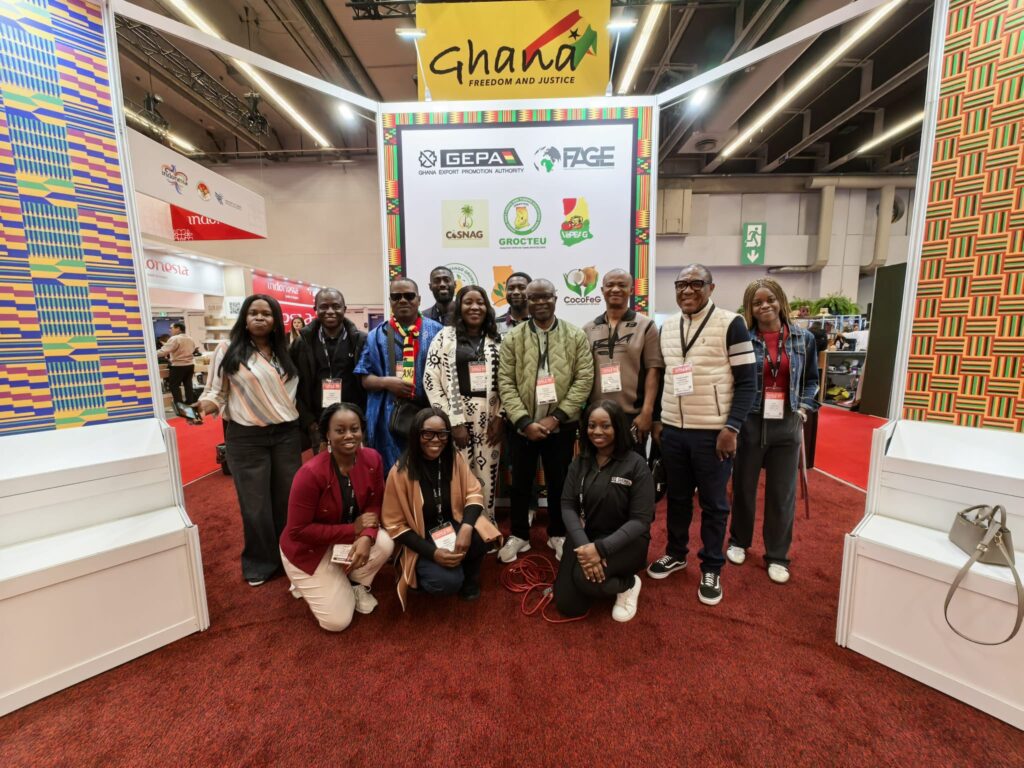
This data-backed door approach is a departure from traditional trade fair aesthetics. It proves that when Ghanaian exporters leverage local market research to align their products with the specific tastes, regulations, and price points of the host country, the result is frictionless entry.
GEPA highlighted that Anne’s referrals were not accidental; they were the result of a calculated alignment between Ghanaian supply and Canadian demand, and provided the blueprint for future delegations: research first, exhibit second.
Furthermore, the presence of key international partners at the Ghana stand provided the necessary institutional validation for GEPA’s strategy.
The visit by Jenny Putrino, a significant partner in the North American trade ecosystem, signaled that Ghana’s efforts are being noticed at the highest levels of Canadian trade circles. Her commendation of the CEO’s leadership and her excitement for Ghana’s “stronger return” in 2027 suggests that a long-term, multi-year roadmap is already in place.
For GEPA, this partnership synergy is vital for overcoming the trust deficit that often hampers emerging market exporters.
The broader context of SIAL Canada is Ghana’s aggressive pursuit of NTE growth. The authority recognizes that the North American market – with its diverse diaspora and rising interest in exotic health foods – is a prime target for Ghanaian agro-processors.
From organic cocoa products to fortified tubers and indigenous spices, the products displayed at SIAL Canada were the high-value assets that will provide the economic resilience Ghana needs to withstand global commodity price shocks.
The “steady flow of visitors along the walkways” to the Ghana stand was a visual confirmation of the global appetite for African value-added products. As the GEPA delegation departs Toronto, the focus shifts to the post-exhibition offensive.
The insights gained from the Canada-based research teams and the leads generated across the walkways must now be translated into shipping manifests and bank transfers.
The leadership of Francis Kojo Kwarteng Arthur Esq. has set a high bar for accountability, making it clear that GEPA will be tracking these leads as part of the national NTE growth metrics for 2026 and 2027.
READ ALSO: Bank of Ghana Reveals Bold Recapitalisation Roadmap As It Rejects Insolvency Fears