Executive Secretary of the Public Interest and Accountability Committee (PIAC), Isaac Dwamena, has called on the Government of Ghana to strategically pivot its utilization of petroleum revenues toward the development of non-oil sectors to ensure long-term economic resilience.
Mr. Dwamena argued that Ghana must emulate successful global models where oil-producing nations have leveraged their finite hydrocarbon wealth to build robust, self-sustaining industries like tourism and large-scale agriculture.
By treating petroleum receipts not as a primary consumption source but as a foundational catalyst for broader industrialization, the nation can safeguard its financial future against the eventual depletion of oil reserves or the decline of global demand.
This shift in fiscal strategy is essential for creating a diversified economy where the growth of secondary sectors eventually outstrips the direct contributions of the extractive industry, providing a more stable and inclusive developmental trajectory for all citizens.
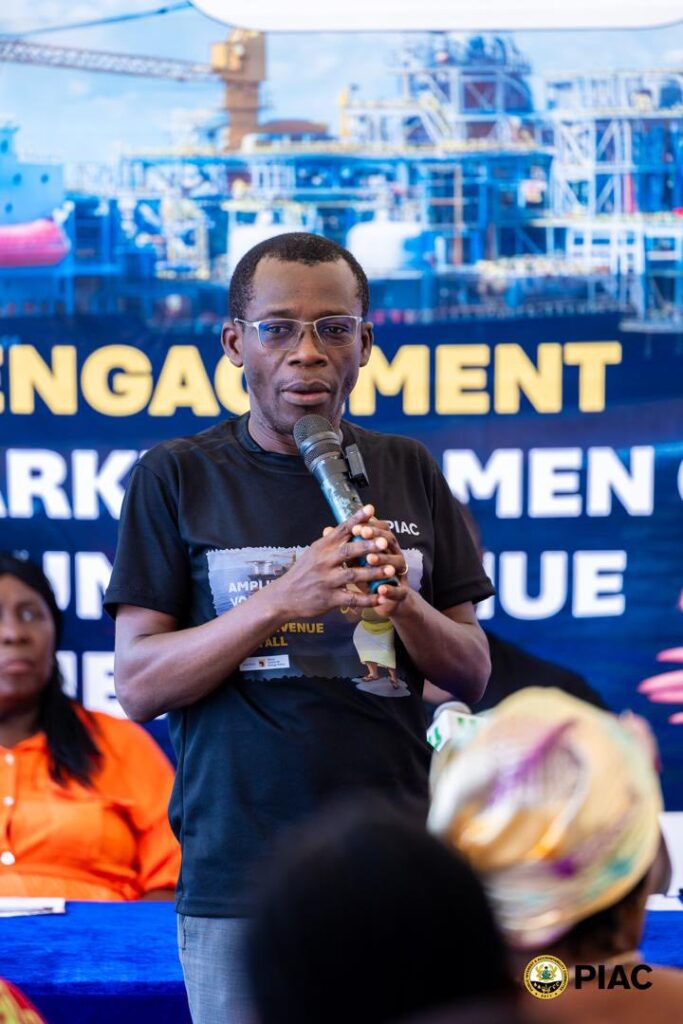
“If we are even using it to just develop agric, for example, I’m just citing an example, we could use that to build, I mean, big farms. And let’s say, that would be the base of industrialisation. So that when we have grown enough to feed, then what we use for industrialisation, we export.”
Isaac Dwamena
The push for a more targeted allocation of oil wealth stems from the observation that countries which have successfully escaped the “resource curse” did so by creating landmark projects that serve as permanent pillars of their economies.
Mr. Dwamena highlighted that when petroleum revenue is funneled into specific, high-impact areas such as modernized agriculture, it provides the necessary raw materials to trigger a nationwide industrial revolution.
Agricultural Transformation as Industrial Catalyst
The integration of petroleum revenue into the agricultural value chain represents one of the most viable pathways for Ghana’s economic diversification and the enhancement of its petroleum benefits.
By dedicating a significant portion of the Annual Budget Funding Amount (ABFA) to large-scale irrigation, mechanized equipment, and seed technology, the government can transform subsistence farming into a high-yield commercial venture.
This approach addresses the volatility of the energy market by creating a “secondary engine” for the economy that is not subject to the same price fluctuations as Brent crude.
When the agricultural sector becomes the primary supplier for domestic industries, the cost of production for manufactured goods decreases, making Ghanaian exports more competitive on the global market.
Mr. Dwamena emphasizes that this model of reinvestment ensures that the benefits of the petroleum sector are “felt in every household” through lower food prices and increased job opportunities in the processing and logistics sectors, effectively multiplying the value of every dollar earned from oil production.
Landmark Infrastructure and Educational Excellence
Beyond the fields and factories, the PIAC Executive Secretary envisions a future where petroleum receipts are synonymous with world-class infrastructure and human capital development.

The proposal to “remove schools and factories” from the general budget and fund them through dedicated petroleum allocations suggests a desire for high-impact, visible projects that can serve as benchmarks for accountability.
Investing in technical and vocational education specifically tailored to the energy and green transition sectors ensures that the Ghanaian workforce is prepared for the evolving global economy.
This creates a sustainable cycle where oil wealth trains the next generation of engineers, scientists, and entrepreneurs who will eventually manage a post-oil economy.
By building “landmark” educational facilities, the state provides a permanent social return on the extraction of its non-renewable resources, ensuring that the legacy of the oil era is marked by a more knowledgeable and skilled population rather than just depleted wells and environmental debt.
Maximizing Benefits Through Economic Resilience

A comprehensive diversification strategy significantly enhances the total benefit Ghana derives from its petroleum sector by reducing the national economy’s vulnerability to external shocks.
As the global community moves toward a green transition, the long-term value of fossil fuels remains uncertain, making it imperative to “build the base” of the future economy now.
Diversification ensures that even if oil prices plummet or production levels stall, the country’s industrial, agricultural, and educational sectors remain functional and productive.
This fiscal discipline, as advocated by PIAC, encourages the government to move away from using oil money for recurrent expenditure and toward capital investments that yield compounding returns over decades.
Ultimately, the success of Ghana’s petroleum management will not be measured by the total volume of barrels produced, but by the strength and diversity of the sectors that thrive long after the pumps have stopped.
By following these statutory recommendations and prioritizing strategic reinvestment, Ghana can achieve a sovereign wealth status where the “petroleum base” successfully births a new, diversified, and prosperous national identity.
READ ALSO: Ghana Remains Well Positioned for Energy Investment – Hamis Ussif