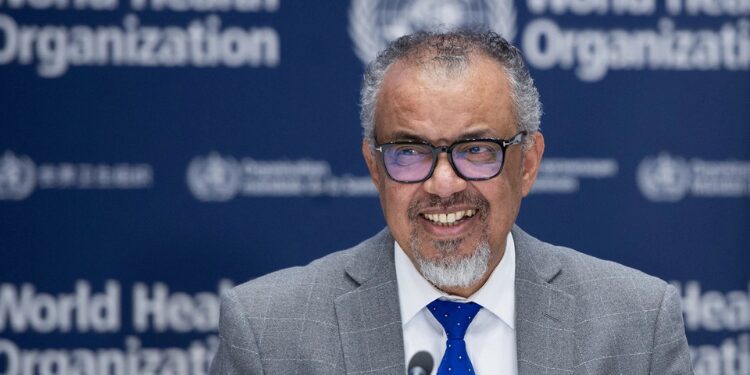
Director-General of the World Health Organization (WHO), Tedros Adhanom Ghebreyesus, has moved to reassure residents of Tenerife that the risk of infection remains low ahead of the tightly controlled arrival of the cruise ship MV Hondius, where a hantavirus outbreak has already resulted in three deaths.
Tedros Adhanom Ghebreyesus stressed that the situation is not comparable to the COVID-19 pandemic, urging calm as the vessel approaches the Canary Islands.
“I know you are worried. The pain of 2020 is still real, and I do not dismiss it for a single moment. But I need you to hear me clearly: this is not another COVID.”
Tedros Adhanom Ghebreyesus
The Dutch-flagged expedition vessel is expected to arrive in the port of Granadilla in the early hours of Sunday, with disembarkation scheduled to begin around. The arrival has sparked concern among residents, prompting Spanish authorities and the WHO to detail extensive containment measures designed to prevent any community exposure.
Six cases of hantavirus have been confirmed among passengers, including one of the three fatalities recorded during the ship’s journey from South America. The virus involved is the Andes strain, a rare variant capable of limited human-to-human transmission, though infection typically occurs through contact with infected rodents.
According to the WHO, Dr Freddy Banza-Mutoka is already on board the MV Hondius, working alongside Dutch physicians to monitor passengers and conduct exposure assessments. Officials report that no new symptomatic cases have been identified in recent checks.
Spanish authorities have outlined strict protocols for the ship’s arrival. Passengers will remain on board until they are transferred in sealed vehicles through a controlled corridor to repatriation flights. All individuals involved in the transfer process, including drivers and logistics staff, will wear protective FFP2 masks.
Spanish Health Minister Mónica García confirmed that passengers will be disembarked in groups according to nationality, with Spanish citizens expected to leave first. Each passenger will be allowed only a sealed bag containing essential items such as documents, phones, and basic personal belongings.
The operation has faced local political tension, with regional leaders questioning why the final phase was not conducted in Cabo Verde. Despite this, WHO praised Spain’s decision to accept the vessel, calling it an act of “solidarity and moral duty.”
Flights have also been arranged to return passengers to countries including the UK, US, France, Germany, Belgium, and Ireland, while EU aircraft will transport remaining European nationals.
Cruise Ship Hantavirus Outbreak “Not the Start of Another Pandemic“
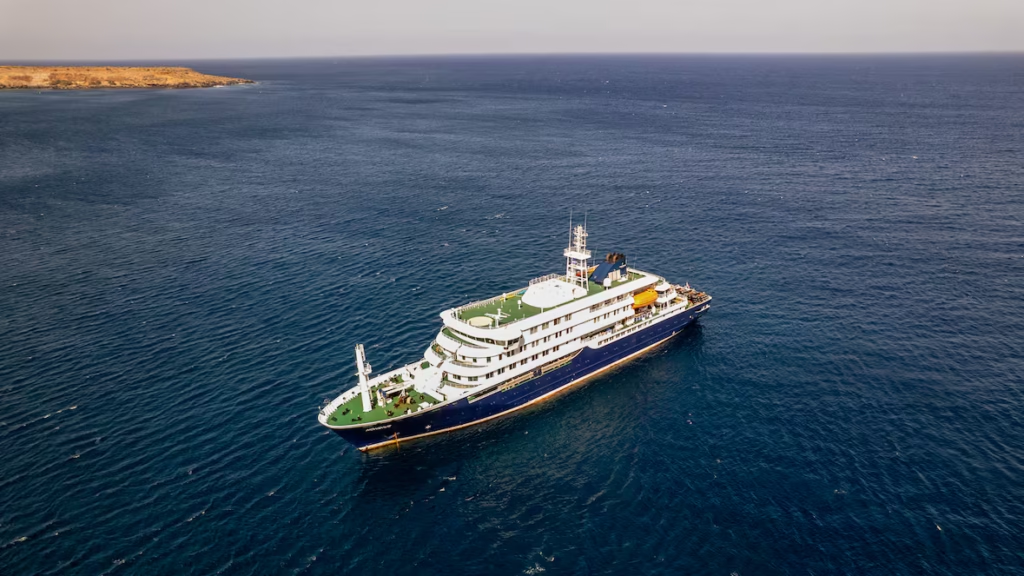
Meanwhile, the deadly hantavirus outbreak aboard the Dutch-flagged cruise vessel MV Hondius in the Atlantic Ocean has triggered an international health response spanning multiple continents, but the World Health Organization (WHO) has moved to reassure the public that the incident poses a low global risk and is “not the start of another COVID pandemic.”
The outbreak, which has so far claimed three lives and left several others ill, was first detected after passengers developed severe respiratory symptoms during a voyage from Argentina to Cabo Verde.
United Kingdom raised the initial alert to WHO under the International Health Regulations (IHR), prompting rapid coordination among global health authorities.
WHO Director-General Tedros Adhanom Ghebreyesus confirmed that “At this stage, the overall public health risk remains low,” emphasizing that the situation is contained and closely monitored.
According to the WHO, Hantaviruses are typically transmitted from rodents to humans through contact with contaminated urine, saliva, or droppings. While most strains do not spread between humans, the Andes variant found in parts of South America has been documented to allow limited human-to-human transmission, usually through prolonged close contact.
Director for Epidemic and Pandemic Management, Dr Maria Van Kerkhove, indicated that “This is not SARS-CoV-2. This is not the start of a COVID pandemic. Hantaviruses have been around for quite a while. We know this virus. It does not spread the same way that coronaviruses do.”
Investigations indicate that the first known patient began showing symptoms on April 6 and later died on board the vessel. His wife, who became ill after evacuation to South Africa, also died, with laboratory tests confirming hantavirus infection. Another passenger died earlier this month, while one patient in intensive care is reportedly improving. Additional cases have been treated in hospitals across South Africa and the Netherlands.
WHO confirmed that no passengers or crew currently aboard the vessel are showing symptoms. However, officials caution that further cases could still emerge due to the virus’s incubation period of up to six weeks.
In response, an international operation has been launched involving Spain, the Netherlands, South Africa, Cabo Verde, the United Kingdom, Argentina, and the European Centre for Disease Prevention and Control.
READ ALSO: Magyar Sworn In As Hungary’s Prime Minister