31 Squadron has bid farewell to its last known Second World War serviceman, marking the end of a living link to one of Australia’s most active wartime air operations units, which saw around 1,600 personnel serve during the conflict.
Ron Leckie, a Beaufighter navigator who flew long-range strike and patrol missions across Australia’s northern approaches and into the Pacific theatre, died on April 30 at the age of 104. His passing brings a symbolic close to a generation of airmen who took part in some of the most intense aerial operations of the Second World War.
Leckie’s military service began in 1941 when he joined the Army and was assigned to the 111th Anti-Tank Corps. Following Japanese submarine activity off Australia’s east coast, he was deployed to Bondi Beach for months of coastal surveillance. In 1942, he transferred to the Royal Australian Air Force, where he trained as aircrew and was posted to 31 Squadron
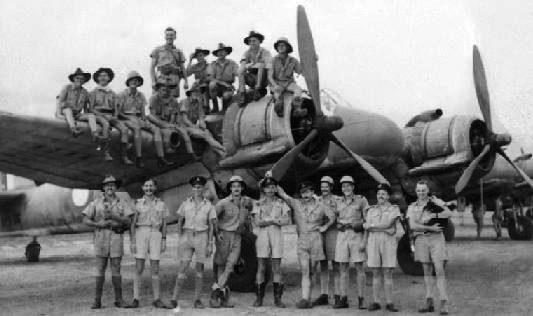
Flying aboard the Bristol Type 156 Beaufighter, a twin-engine heavy strike aircraft used for long-range patrols and maritime attack missions, Leckie took part in offensive operations across the South West Pacific. On December 27, 1944, his crew carried out a strike mission over Sulawesi in Indonesia, destroying a bridge and multiple buildings. The attack involved the release of four 500-pound bombs, the firing of 12 rockets and sustained cannon fire using 1,440 rounds from the aircraft’s 20mm weapons.
By the time Japan surrendered on August 15, 1945, Leckie had accumulated 653 hours of operational flight time. His wartime service continued briefly after the conflict ended, when he joined the Allied occupation force in Japan. During this period, he visited Hiroshima, where one of the atomic bombs had been dropped.
Leckie remained connected to military remembrance throughout his life. He turned 104 on Anzac Day earlier this year but was unable to attend the national march for the first time, a milestone that marked the gradual fading of Australia’s Second World War veteran generation.
Commanding Officer of 31 Squadron, Squadron Leader Lisa Casey, paid tribute to his service and legacy.
“Ron’s passing marks the close of a profoundly important chapter in the history of 31 Squadron and more broadly, the loss of a living connection to those who served during the Second World War.”
Squadron Leader Lisa Casey
During the war, 31 Squadron played a significant combat role, completing 2,660 offensive sorties and recording multiple successes against enemy aircraft, ground targets and naval vessels.
By the end of the conflict, the unit had destroyed or damaged dozens of aircraft and ships, contributing to Allied air superiority in the region.
Leckie’s military heritage also stretches further back through his family. His father, Harry Leckie, served in the First World War with 1 Squadron of the Australian Flying Corps in Egypt and Palestine. Trained as a photographer, he contributed to aerial reconnaissance missions, producing intelligence imagery used to map and monitor enemy positions.
After the First World War, Harry Leckie helped bring together former squadron members in Melbourne, an effort that ultimately contributed to the formation of what would become the RAAF Association of Australia.
With Ron Leckie’s passing, 31 Squadron now carries forward its history without any surviving Second World War veterans, preserving their legacy through records, remembrance and institutional memory rather than living testimony.
31 Squadron Continues Its Operational Legacy in Modern Air Power Role
31 Squadron, one of the Royal Australian Air Force’s long-standing units, continues to operate today as a critical component of Australia’s modern air mobility and operational support capability, building on a wartime legacy that spans more than eight decades.
Today, 31 Squadron is based at RAAF Base Williamtown in New South Wales, where it operates the Boeing C-17A Globemaster III, a strategic airlift aircraft designed for rapid global transport of troops, equipment and humanitarian supplies.
The squadron’s current mission reflects a shift from combat strike operations to strategic mobility, logistics support and rapid response capability.
The unit plays a central role in the Australian Defence Force’s ability to project power and deliver assistance both domestically and internationally. Its aircraft are regularly deployed for humanitarian relief missions, disaster response operations, and support for military deployments abroad.
In recent years, 31 Squadron has been involved in a range of operations including disaster relief efforts in the Pacific region, evacuation missions, and the transport of essential supplies during crises. Its ability to operate over long distances with heavy payloads has made it a key asset in Australia’s response to natural disasters and international emergencies.
The squadron’s operational tempo remains high, with crews trained to deliver rapid response capability across a variety of mission types. Aircrew and ground personnel undergo continuous training to ensure readiness for both military and humanitarian operations, reflecting the dual-use nature of modern air mobility forces.
While its aircraft and mission set have changed dramatically since the Second World War, 31 Squadron continues to carry forward the traditions and values established by its early members.
READ ALSO: Shakira and Burna Boy Team Up for “Dai Dai”