
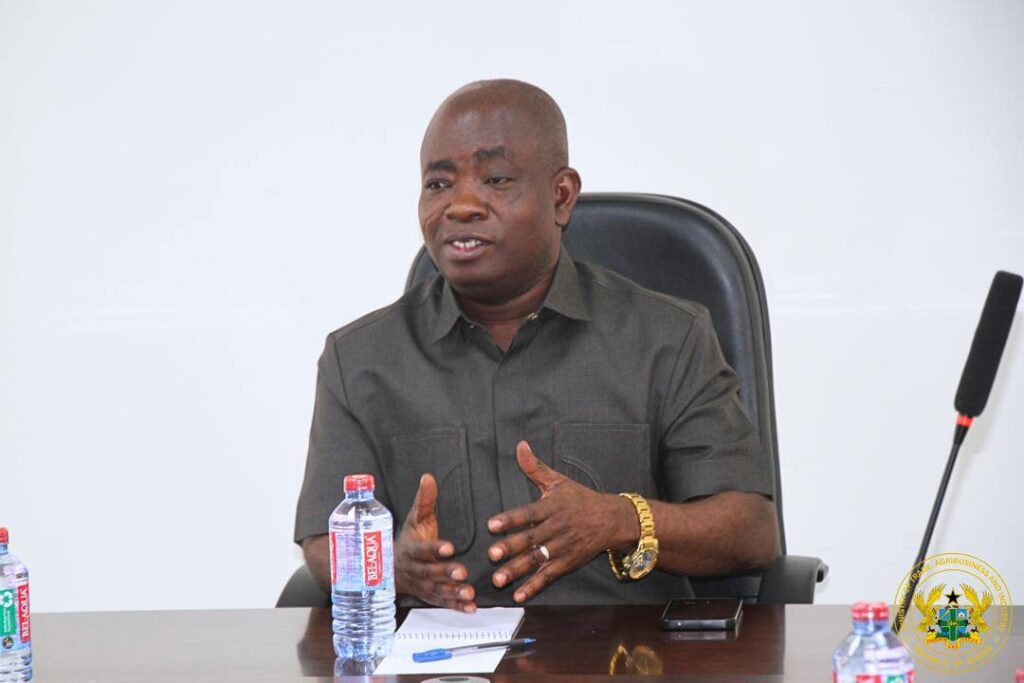
The Deputy Minister for Trade, Agribusiness and Industry, Hon. Sampson Ahi, has issued a direct ultimatum to Ghana’s financial sector to overhaul its credit architecture and reclassify tree crop investments as high-growth industrial manufacturing, at a recently convened high-stakes roundtable dialogue.
The Ministry of Trade, Agribusiness and Industry (MoTAI) declared that the era of treating cashew and oil palm production as simple subsistence farming is over. The intervention is significant for its consistency in advancing the government’s industrial reset agenda, bridging the funding gap that has left Ghana’s most lucrative tree crops starved of the long-term capital necessary for global competitiveness.
“Our Industrial Reset is no longer just a blueprint; it is an active transformation of our productive sectors. We are aggressively shifting from simply increasing agricultural yields to building a robust industrial agribusiness ecosystem capable of driving economic transformation”
Ministry of Trade, Agribusiness and Industry
With the government no longer content with marginal increases in agricultural yields, the new mandate is the creation of a sophisticated, vertically integrated agribusiness ecosystem. Shifting the narrative from agri-lending to high-growth manufacturing, MoTAI is attempting to shock the banking sector into recognizing the industrial potential of the cashew and oil palm value chains.
The Deputy Minister, Hon. Ahi, made it clear that the current financial models – defined by high interest rates, short repayment windows, and rigid collateral requirements – are fundamentally incompatible with the biological and economic realities of tree crop development.
The fundamental tension identified during the roundtable is the “gestation mismatch that has paralyzed private investment in the sector,” as tree crops like cashew and oil palm require several years of capital-intensive maintenance before they reach peak commercial productivity.
Traditional Ghanaian commercial banks, however, remain tethered to short-term lending cycles that favor quick-turnover retail trade over industrial gestation. This structural misalignment has created a vacuum where processing facilities stand idle and expansion remains stagnant despite overwhelming market demand.
To counter this, the government is demanding that financial institutions, insurance firms, and development partners design innovative products tailored to these long-term cycles. The proposal includes “longer-tenor” loans and robust risk-sharing mechanisms that prevent the entire burden of failure from falling on the smallholder or the processor.
The government’s logic dictates that if the financial sector provides the breathing room for these industries to mature, the resulting export earnings will provide a massive, stable return on investment that far outstrips the volatile gains of traditional short-term lending.
$660 Million Target
The economic stakes of this financial pivot are outlined in stark figures provided by the Tree Crop Development Authority (TCDA). Projections indicate that with the right regulatory environment and processing infrastructure, the cashew industry alone has the potential to inject more than $660 million into the national economy annually.

In the context of a volatile Cedi and persistent trade deficits, this figure represents more than just sector growth; it is a tool for currency stabilization. Capturing more of the value chain through domestic processing, Ghana can move away from being a mere exporter of raw nuts and become a dominant player in the global processed-kernel market.
Hon. Sampson Ahi highlighted that the government’s plan is the primary vehicle for bridging the rural-urban economic divide, establishing processing hubs in cashew and oil palm growing regions to create industrial jobs that keep wealth within the communities that produce the raw materials.
However, this vision is contingent upon the financial sector’s willingness to move past the perceived risk of agriculture. The Ministry is effectively challenging the Bank of Ghana and private insurers to provide the safety nets – such as input credit schemes and specialized insurance – that will make these high-growth sectors palatable to even the most conservative lenders.
The Tree Crop Development Authority, led by CEO Mr. Andy Okrah, is the operational arm of this industrial offensive. During the dialogue, Mr. Okrah reaffirmed that the TCDA is already implementing the regulatory interventions necessary to make the sector bankable.
This includes strengthening the value chains by improving the traceability of products and ensuring that farmers are adhering to the global quality standards required by international buyers, reducing the operational noise and variability in the sector and lowering the risk profile for potential investors and lenders.
“We need actionable commitments, innovative products for smallholders, public-private partnerships for processing infrastructure and policy recommendations that can be fast-tracked to transform these sectors”
Mr. Andy Okrah, TCDA CEO
The Authority’s focus on export diversification is a direct response to the nation’s over-reliance on traditional commodities like cocoa and gold. Cashew and oil palm are being positioned as the new frontier of Ghanaian industrial might, but only if the institutional collaboration between MoTAI, the TCDA, and the central bank remains airtight.
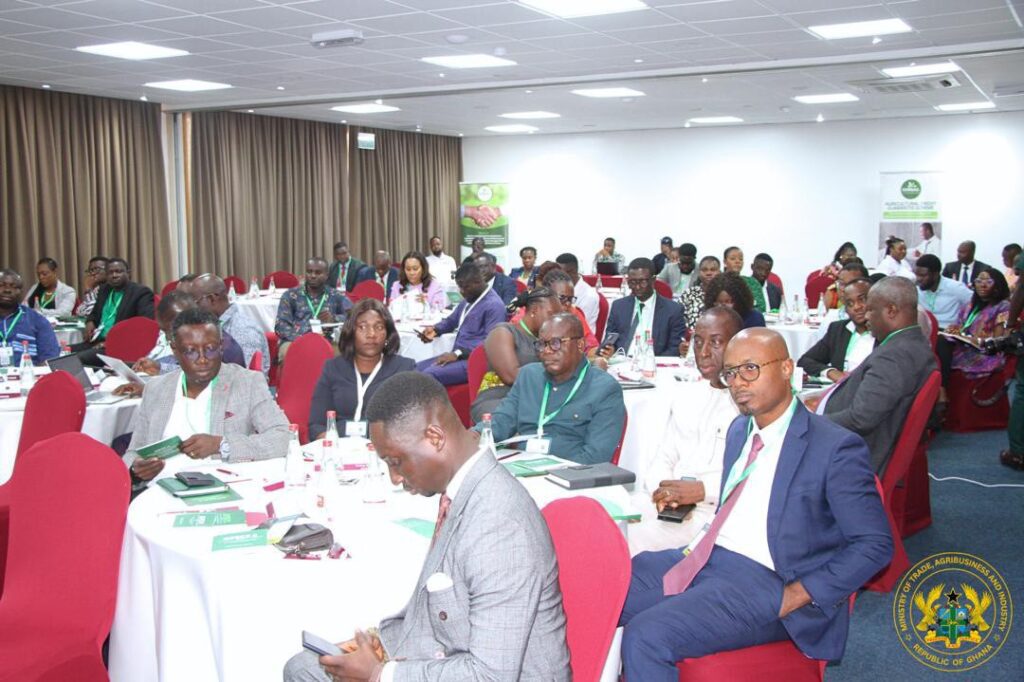
The roundtable concluded with a demand for actionable commitments rather than the vague promises that have previously characterized such dialogues. The Deputy Minister’s tone suggested that the government is prepared to fast-track policy recommendations that penalize financial inertia and reward industrial agribusiness investment.
The call is now for the financial sector to respond with products that reflect the reality of tree crop production. For the Ministry of Trade, Agribusiness and Industry, the $660 million annual cashew target is a benchmark that will be used to measure the success of this financial reform.
READ ALSO: Ghana Targets Full Vaccine Financing by 2030