The Spanish health ministry has announced that a Spanish passenger evacuated from MV Hondius has tested positive for hantavirus.
The person is one of the 14 Spaniards evacuated from the cruise ship at the center of a hantavirus outbreak and put in quarantine.
The passenger with the new confirmed case of hantavirus was in quarantine in a military hospital in Madrid, where 13 other Spanish nationals evacuated on Sunday, who all tested negative for the virus, also are staying.
“The patient who tested provisionally positive yesterday has been confirmed positive for hantavirus. The patient presented with a low-grade fever and mild respiratory symptoms yesterday, but is currently stable and shows no evident clinical deterioration.”
Spanish health ministry statement
Spain’s health ministry announcement came as the World Health Organization said it has now confirmed 11 cases, including three people from the cruise who died.
The Director of the World Health Organization, Tedros Adhanom Ghebreyesus, who was in Madrid, said all 11 confirmed cases are among passengers or crew of the MV Hondius cruise ship, including three people who died.
The WHO has so far confirmed nine cases of the Andes variant of the virus, among them a French woman and a US national who tested positive after being evacuated from the ship.
The MV Hondius, which was sailing from Argentina to Cape Verde, found itself at the centre of the outbreak after three passengers; a Dutch couple and a German national, died from hantavirus. Although usually spread by wild rodents, hantavirus can be transmitted person-to-person in rare cases of close contact.
Speaking at a press conference with Spain’s Prime Minister, Pedro Sánchez, the WHO Chief also paid tribute to the Spanish government and the people of Spain for responding to the plight of those onboard the ship after authorities in Cape Verde refused it permission to dock.

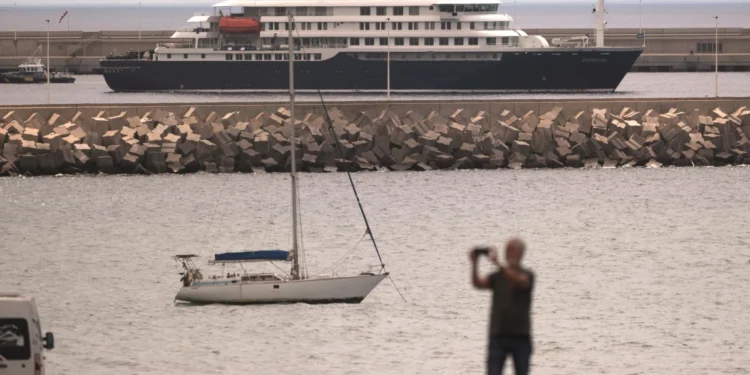
More than 120 passengers and crew members were evacuated from Tenerife in a carefully coordinated operation on Sunday and Monday.
Despite objections from the regional government of the Canary Islands, Spain’s central government allowed the MV Hondius to anchor in port in Tenerife, and then, briefly, to dock, as it oversaw the evacuation operation. The final two planes carrying passengers and crew left the Canary island on Monday night and arrived in the Netherlands early on today.
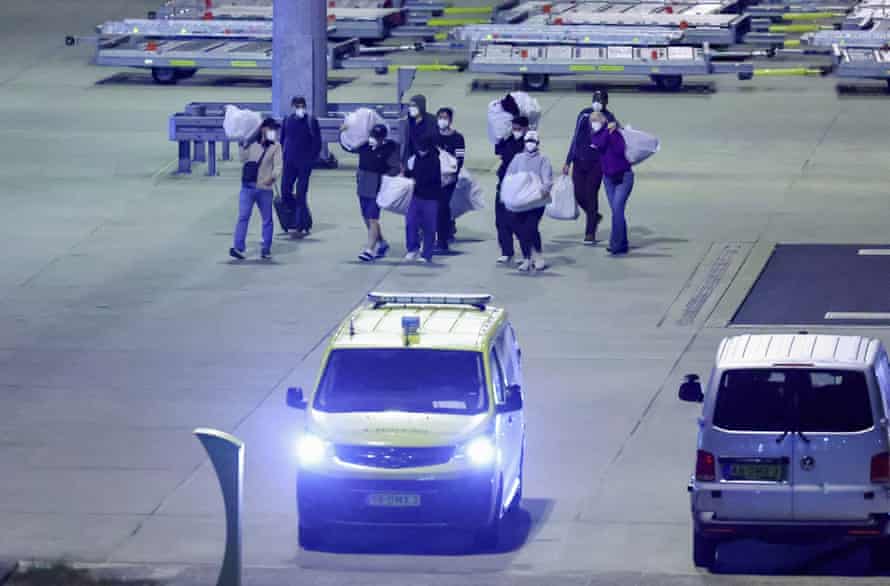
With the evacuation of all passengers and many crew members completed, the MV Hondius is now sailing back to the Netherlands, where it will be cleaned and disinfected. The ship, which refuelled and restocked in Tenerife, is now sailing back to port in Rotterdam with a crew of 25 as well as a doctor and nurse.
“I’d like to thank Spain and, especially, Prime Minister Pedro Sánchez, for the outstanding leadership and coordination. I know this is a model – and I hope other countries also learn from this – not just the obligation part but the compassion and solidarity that Spain has shown.”
Tedros Adhanom Ghebreyesus
He added that in a “divided and divisive world, kindness and taking care of each other” were important. Sánchez iterated the same sentiment, saying,“This world doesn’t need more selfishness, nor more fear.” “What it needs is countries that show solidarity and want to move forward,” he added.
The Spanish Prime Minister also offered his condolences once again to the family of a Guardia Civil officer who died of a heart attack while taking part in the evacuation on Sunday.
Countries Told To Prepare For More Hantavirus Cases
Additionally, the Head of the World Health Organization told the press conference in Madrid that countries should prepare for more hantavirus cases.
Tedros Adhanom Ghebreyesus urged authorities to follow the WHO’s advice and recommendations, which include a 42-day quarantine and constant monitoring of high-risk contacts.
“At the moment, there is no sign that we are seeing the start of a larger outbreak, but of course the situation could change and, given the long incubation period of the virus, it’s possible we might see more cases in the coming weeks.”
Tedros Adhanom Ghebreyesus
Tedros said that more cases were likely to appear because of the degree of interaction between the passengers onboard the ship before the alarm was raised and the first case confirmed in a passenger on 2 May.
“We would expect more cases because, as you may remember, the index case – the first case in the ship was on 6 April … [and] there was a lot of interaction, actually, with the passengers. And as you know, the incubation period is also six to eight weeks.
“So because of the interaction while they were still in the ship – especially before they started taking some infectious prevention measures – because of the interaction, we would expect more cases because of some of what happened during the travel.”
Tedros Adhanom Ghebreyesus
Tedros said that individual countries were now responsible for their citizens after the evacuation. “I hope they will take care of the patients and the passengers, helping them and also protecting their citizens as well,” he said, adding, “That’s what we expect.”
READ ALSO: Refugee Athletes to Compete at the African Senior Athletics Championship in Accra