Africa is entering a defining moment in the evolution of global finance, with the continent increasingly positioned as a leader in digital financial innovation.
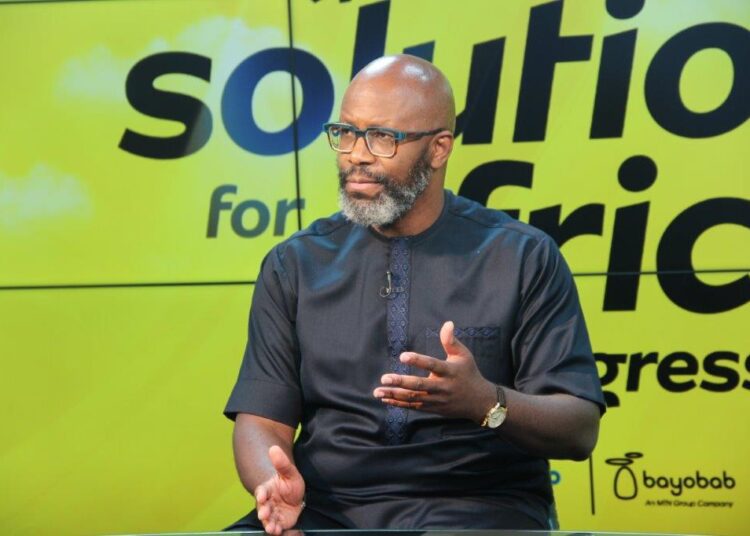
This was the strong message delivered by MTN Group Chief Executive Officer and President, Ralph Mupita, during a fireside conversation at the 2026 3i Africa Summit in Accra.
Speaking with broadcaster Bernard Avle at the Destiny Arena, Mupita expressed confidence in Africa’s ability to shape the next generation of financial services, citing the continent’s impressive progress in mobile money adoption, financial inclusion, and technology-driven innovation.
His remarks come at a time when Africa’s digital economy is experiencing rapid expansion, with fintech companies, telecommunications firms, regulators, and investors all playing a critical role in building a more connected and financially inclusive future.
Africa’s Digital Finance Journey Gains Momentum
According to Ralph Mupita, Africa’s financial services ecosystem has moved far beyond traditional banking structures and basic mobile payments. He noted that the success of mobile money platforms across the continent has created a strong foundation for a broader and more sophisticated digital finance revolution.
He explained that Africa is transitioning from simple mobile payment solutions into a more integrated financial ecosystem powered by advanced digital tools.
“We are moving from mobile money to true digital finance. Across Africa, we have seen tremendous growth in financial inclusion, but the next phase will be defined by more sophisticated, app-based, and technology-driven financial systems.”
Ralph Mupita
His comments reflect the growing influence of African markets in redefining how financial services are designed, delivered, and accessed.
Beyond Payments Into a New Financial Era
Mupita emphasized that the future of digital finance in Africa will extend far beyond person-to-person transfers and merchant payments.
He explained that the next stage of innovation will include digital lending, international remittance solutions, embedded financial services, and emerging technologies such as artificial intelligence and blockchain applications.
According to him, these technologies will create smarter, faster, and more inclusive financial systems capable of serving both urban and underserved rural populations.
Industry experts at the summit agreed that Africa’s youthful population, rising smartphone penetration, and expanding internet connectivity make the continent uniquely positioned to lead in digital transformation.
For Mupita, Africa’s financial future is not about catching up with developed markets but about creating entirely new models of financial access.
“Africa is poised to lead in the global digital finance evolution. The scale of adoption, the pace of innovation, and the unique market dynamics we are seeing across the continent position us strongly for the future.”
Ralph Mupita
Telecommunications Driving Financial Inclusion
One of the strongest themes from Mupita’s presentation was the role telecommunications companies have played in bridging financial access gaps across Africa.
He noted that telecom operators have successfully connected millions of previously unbanked individuals to financial services, often in regions where traditional banking institutions struggled to establish a presence.
By leveraging mobile infrastructure, telecom-led platforms have enabled customers to save, transfer, pay, and transact with greater convenience and affordability.
“Telecom-led platforms have been critical in democratizing access to financial services. They have enabled us to reach customers at scale and at a cost structure that traditional models struggled to achieve.”
Ralph Mupita
This approach has fundamentally changed the financial landscape in many African countries, empowering small businesses, farmers, traders, and households to participate in formal financial systems.
Regulation Will Define Sustainable Growth
While celebrating Africa’s progress, Mupita also stressed that long-term growth in digital finance will depend heavily on supportive regulatory frameworks.
He called for greater regulatory certainty, stronger consumer protection mechanisms, and policy environments that encourage responsible innovation.
According to him, striking the right balance between innovation and oversight will be critical as digital finance becomes increasingly complex. “The key is balance, between enabling innovation and protecting consumers. Regulation must be clear, forward-looking, and supportive of responsible growth,” he said.
His comments come as many African regulators continue to explore frameworks around virtual assets, open banking, digital currencies, tokenisation, and artificial intelligence.
3i Africa Summit Shapes the Future
Now in its third year, the 3i Africa Summit has become one of the continent’s most influential platforms for fintech dialogue and policy engagement.
Built around the pillars of Innovation, Investment, and Impact, the summit brings together policymakers, financial institutions, fintech founders, investors, regulators, and technology leaders from across Africa and beyond.
This year’s summit focused on key themes including digital public infrastructure, blockchain applications, tokenisation, artificial intelligence, and the future of integrated financial systems.
Held under the theme “The Next Frontier: Shaping Africa’s Integrated FinTech Future,” the 2026 summit was organized by the Bank of Ghana, the Ghana Interbank Payment and Settlement Systems, and the Global Finance & Technology Network, with support from MobileMoney Fintech Ltd.
A Defining Moment for Africa
As conversations around financial technology continue to evolve globally, Africa’s growing influence is becoming impossible to ignore.
With millions already participating in digital financial ecosystems and innovation accelerating across markets, leaders like Ralph Mupita believe the continent is not merely adapting to change but actively defining it.
For Africa, the next frontier in finance may not lie in imitation, but in innovation built around the continent’s own realities, opportunities, and ambitions.