

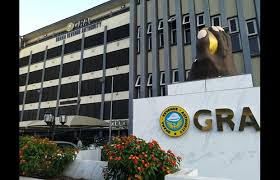
The Ghana Revenue Authority (GRA) has announced that it collected approximately GHS 1 billion in revenue during the month of April 2026, stating that the revenue collection reflects ongoing improvements in tax administration efficiency, compliance systems, and targeted digital reforms.
Commissioner-General Anthony Kofi Sarpong disclosed the monthly performance figures at the 10th Ghana CEO Summit, where he framed domestic revenue mobilization as the central pillar of Ghana’s broader development agenda, particularly as the country looks to deepen economic transformation and systematically minimize its historical reliance on external financing networks.
Speaking to an audience of private sector executives and state officials, Mr. Sarpong positioned that the GHS 1 billion mobilization achieved in April as early evidence of enhanced fiscal discipline and optimized compliance frameworks across the national revenue ecosystem.
While the performance demonstrates the immediate fiscal capacity of a modernized and digitally driven tax administration, the Commissioner-General emphasized that the Authority is continuing to push for broader structural reforms to lock in recent revenue gains, expand the current tax base, and support national priorities without adding friction to the domestic business environment.
“Education and development of Ghana rest and thrive on the provision of relevant enablers, including infrastructure, energy, a well-trained and equipped workforce, and efficient public services”
Anthony Kofi Sarpong, Commissioner-General of the GRA
According to the Commissioner-General, a key operational driver behind the April revenue performance is the deployment of advanced automation tools across the country’s primary trading corridors, revealing that the introduction of the Publican Artificial Intelligence (AI) system at the ports has significantly optimized customs compliance tracking.
The specialized AI integration has also successfully blocked persistent revenue leakages that previously hindered maritime trade collections, allowing the Authority to achieve structural efficiency gains that were impossible under legacy, manual tracking systems, enabling real-time monitoring of valuations and documentation.
The transition toward automated port enforcement matches a broader institutional effort to fund critical national enablers through reliable, non-debt revenue streams, as sustaining these digital systems is directly tied to the state’s capacity to maintain public services and economic infrastructure.
Fair Market Competition
Addressing corporate leaders at the summit, Mr. Sarpong outlined a conceptual shift in how the state views fiscal policy, asserting that modern tax reform must be anchored strictly on fairness, technology, productivity, and national sovereignty, rather than being treated purely as an instrument for revenue extraction.
A primary objective of the GRA’s current digital drive is to eliminate the severe market distortions that occur when non-compliant operators evade their civic obligations, which forces compliant companies to carry an unfair financial burden.
The Authority’s current enforcement framework is to expand the tax base and improve collection efficiency via digital tracking, rather than increasing fiscal pressure on existing, verified taxpayers.
Under legacy enforcement models, compliant businesses faced a distinct disadvantage when competing against operators completely outside the tax net. The GRA intends to use its upgraded digital infrastructure to identify unregistered entities, thereby evening out market dynamics and protecting formal enterprises from unfair competition.

“The compliant business pays its share, while the non-compliant business does not. The gap between the two becomes a competitive penalty paid by firms that are actually doing the right thing. We want this era of tax reform to be about ensuring that those who pay are no longer being competed against by those who do not”
Anthony Kofi Sarpong, Commissioner-General of the GRA
To sustain the revenue collection trends recorded in April, the GRA has commenced a comprehensive review of Ghana’s underlying tax laws, noting that many of these fiscal statutes are now over a decade old, making them outdated in relation to modern digital commerce and contemporary corporate structures.
The ongoing legislative revision aims to modernize these codes, making them highly practical, relevant, and capable of permanently closing compliance gaps that legacy legal loopholes have historically permitted.
This administrative shift is focused on improving the collection efficiency of existing laws rather than introducing new taxes. The GRA will block out external financing volatilities by anchoring state expenditures to verified domestic collections.
Mr. Sarpong warned that global financing channels are becoming structurally unreliable and closed off, converting domestic revenue mobilization from a basic fiscal metric into an essential requirement for national economic sovereignty.
“Our aspiration for a reset and transform economy is not attainable if we fail to mobilize the needed domestic revenue as one of the most important catalysts for national development,” Sarpong noted, adding that a credible tax system functions directly as a factor of production for Ghanaian industry.

As these systemic reforms deepen across the revenue ecosystem, the GRA expects the combination of legal updates and tools like the Publican AI system to maintain stable revenue paths through the remaining quarters of 2026.
The Authority has re-affirmed that establishing an efficient, transparent, and fair tax system is crucial to supporting Ghana’s long-term economic transformation and reducing structural dependence on external capital markets.