The Commissioner-General of the Ghana Revenue Authority (GRA), Mr. Anthony Kwasi Sarpong, has announced that the Authority and the Ministry of Finance have brokered a critical de-escalation agreement with the nation’s most powerful trade associations, ending a period of intense industrial friction over the deployment of the Publican AI system.
According to him, the consultative meeting resulted in the immediate suspension of industrial action by a massive coalition, including the Ghana Union of Traders Association (GUTA), the Ghana Institute of Freight Forwarders (GIFF), and the Association of Ghana Industries (AGI), shifting the battlefield from the ports to a newly formed, operationally focused Joint Business Committee Forum.
At the heart of the conflict is the “operational shock” caused by the rollout of Publican AI in Customs operations. While the GRA views the AI as a necessary surgical strike against revenue leakage, the trading community has characterized it as a source of valuation volatility and “appeals limbo.”
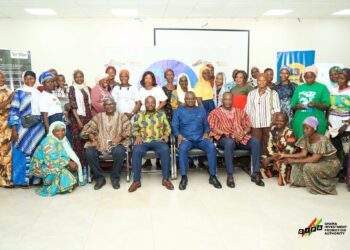
“Others at the multi-party consultative meeting were representatives of the Association of Customs House Agents Ghana (ACHAG), the Freight Forwarders Association of Ghana (FFAG), the Association of Customs Brokers (CUBAG), the Ship Owners and Agents Association of Ghana (SOAGG), the Trade Advocacy Group Ghana, and the Exporters and Importers Association”
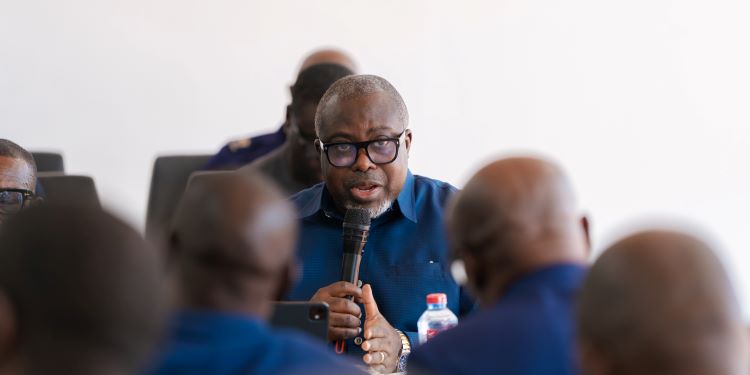
Mr. Anthony Kwasi Sarpong, Commissioner-General of the GRA
For all stakeholders, the meeting’s agreement represented a tactical compromise: the GRA maintains its technological mandate but commits to specific, time-bound concessions to protect the liquidity and turnaround times of legitimate traders. The most significant concession won by the trade associations was the establishment of a 48-hour appeals resolution standard.
“All appeals lodged by importers, freight forwarders, and other affected operators are to be reviewed and resolved within a maximum of forty-eight (48) hours from submission”
Mr. Anthony Kwasi Sarpong, Commissioner-General of the GRA
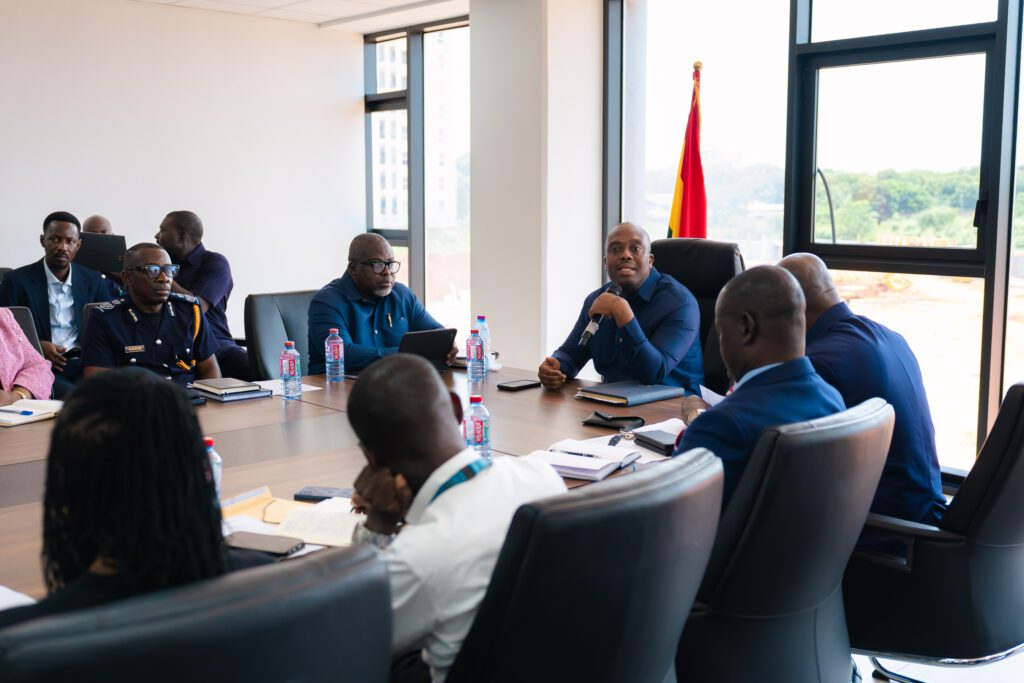
One of the primary frictions reported by importers and freight forwarders was the tendency for the Publican AI to trigger “valuation red flags,” which would essentially freeze goods in the system while human officers reviewed the discrepancies.
To resolve this, the GRA not only promised a two-day resolution window but committed to increasing the number of officers assigned to its Appeals Unit to meet this capacity, signaling a transition from public protest to technical negotiation.
This move addresses the “capital-at-rest” problem that has plagued the initial weeks of the rollout – where assets were held idle rather than being in motion to generate returns. For a freight forwarder or an importer, a delay at the port is not just a logistical inconvenience; it is a direct financial loss.
The GRA is attempting to lower the risk premium of doing business under the new AI regime. For the Authority, hitting this benchmark will effectively decouple revenue protection from operational gridlock.
Joint Business Committee Forum
The consultative meeting also saw the dissolution of the previously proposed Technical Committee in favor of a smaller, more specialized Joint Business Committee Forum. This restructuring is geared towards a consultative process that isn’t too bloated to address the real-time “glitches” inherent in a machine-learning deployment.
Mr. Sarpong noted that the new Forum will be a rapid-response unit, tasked with developing its own “Terms of Reference” and identifying a definitive timeframe for resolving outstanding implementation challenges. This pivot to leaner governance is a clear signal that both the GRA and the trade unions recognize the need for technical agility.
As Publican AI is a dynamic system that learns from data patterns, its governance must be equally dynamic. The Forum will serve as the primary conduit for progress updates, ensuring that the trading community is no longer reacting to systemic changes but is actively involved in the “calibration” of the AI’s valuation logic.
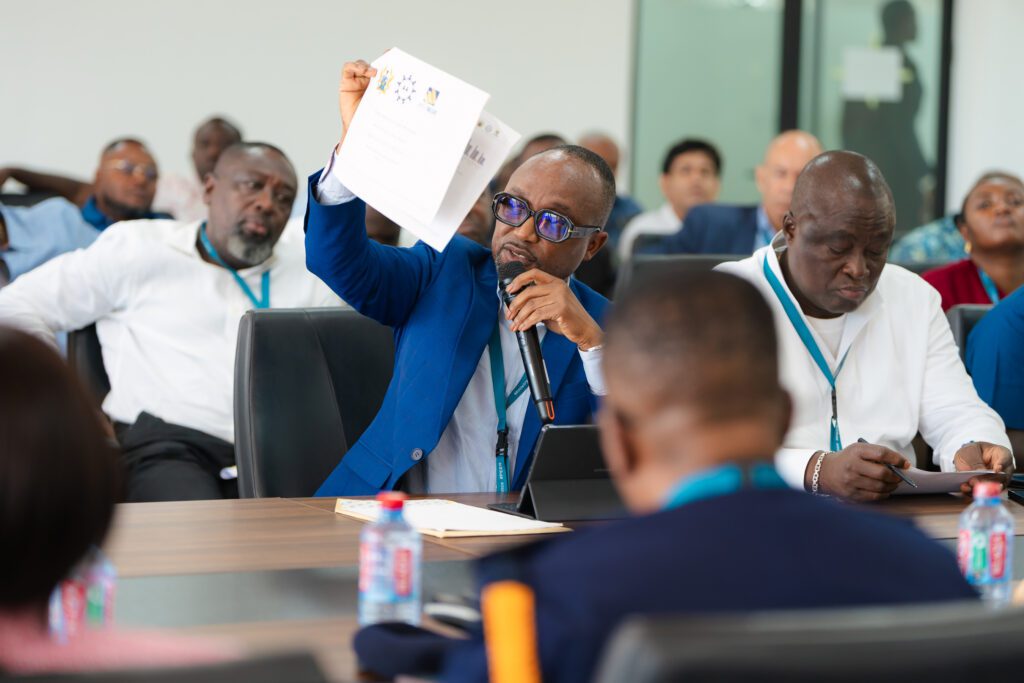
While the GRA instituted these salves and was willing to compromise on operational speed, Commissioner-General Anthony Kwasi Sarpong was uncompromising on the necessity of the system itself.
The Authority’s defense of Publican AI is built on a staggering fiscal reality: over the last five years, under-declared imports have cost the Ghanaian state more than GH₵11 billion. This is revenue that the GRA argues is essential for funding critical public infrastructure – schools, hospitals, and roads – that the trading community itself relies upon.
Mr. Sarpong highlighted the early performance metrics of Publican AI, which provide a powerful counter-argument to the unions’ claims of inefficiency. Since deployment, Customs revenue has surged by 50%, and 75% of all declarations (three out of every four) are now clearing the system faster than under the previous manual or semi-automated regimes.
For the GRA, these numbers prove that the system is working exactly as intended: it is accelerating legitimate trade while creating a harsh environment for those attempting to bypass valuation standards.
Vehicle Exclusion and Continued Engagement
In a strategic move to prevent the conflict from spreading to the highly sensitive automotive sector, the GRA clarified that Publican AI has not been extended to vehicle imports. Existing clearance procedures for vehicles will remain in force until further notice.
This exclusion serves as a buffer zone, allowing the GRA and the Joint Business Committee Forum to troubleshoot the system on general containerized cargo before attempting to automate the complex, multi-variable valuations associated with the vehicle trade.
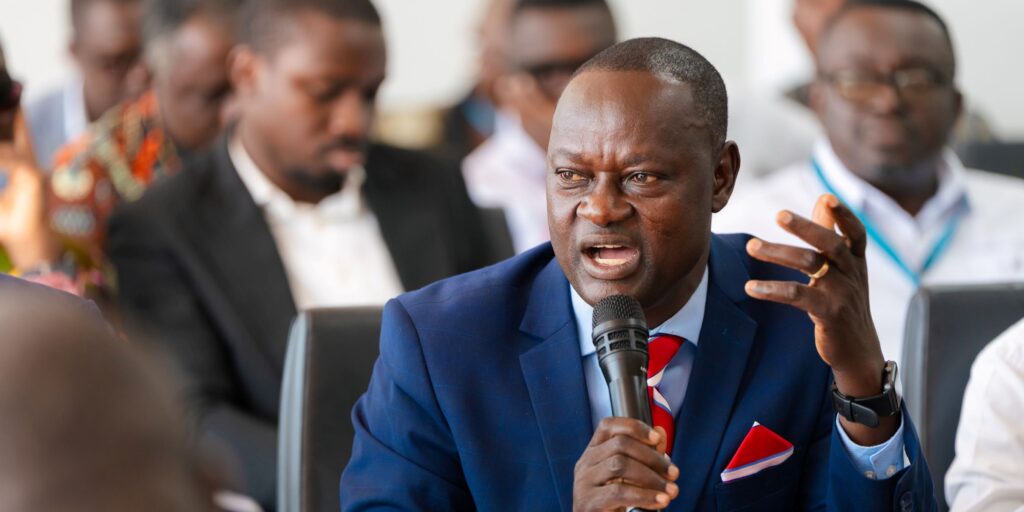
The GRA also noted that the successful outcome of the consultative meeting hinges on the “good faith” participation of the groups involved, shifting the rhetoric from a top-down enforcement to a more collaborative, stakeholder-responsive tone.
Acknowledging that the concerns of the trading community are legitimate opened a window of cooperation that was previously shut by the threat of industrial action. Though the suspension of industrial action is a significant victory for the Ministry of Finance and the GRA, it is a fragile one.
The success of the Joint Business Committee Forum will be judged by its ability to turn time-bound commitments into actual port-side results. The 48-hour appeals standard is now the yardstick by which the trading community will measure the GRA’s sincerity.
READ ALSO: Newmont Leadership Meets President Mahama, Discuss Sustainable Sector Growth