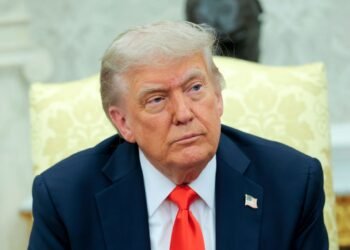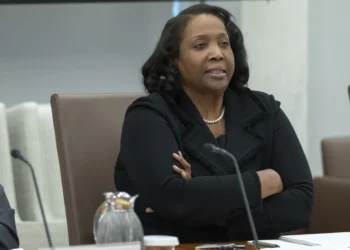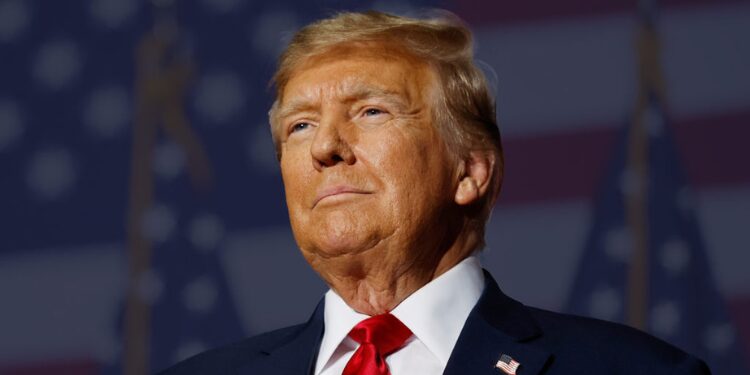
A U.S. federal judge has declined to immediately block President Donald Trump’s executive order tightening rules on mail-in voting, ruling that a legal challenge brought by Democrats was premature, while leaving open the possibility of future court intervention as the policy moves toward implementation.
U.S. District Judge Carl Nichols in Washington stated that, the Democratic Party’s request for a preliminary injunction against Trump’s March 31 order did not meet the threshold for immediate judicial action, noting that federal agencies had not yet taken steps that would cause direct harm.
“The government had not yet produced any flawed citizenship lists and the Postal Service had not yet implemented any new rules.”
Carl Nichols
The order at the centre of the dispute directs federal agencies to compile lists of confirmed U.S. citizens eligible to vote in each state, while also instructing the U.S. Postal Service to restrict mail-in ballot delivery to voters listed on state-approved mail voting rolls. It further requires states to preserve election-related records for five years and authorises the use of federal databases to assist in voter eligibility verification.
The case has sparked sharp political controversy, with Democrats accusing the administration of attempting to restrict voting access ahead of a highly contested election cycle.
Senate Minority Leader Chuck Schumer and other plaintiffs argued that the executive order could risk disenfranchising millions of voters by relying on potentially outdated or inaccurate federal data.
The ruling does not address the legality of the executive order itself, focusing instead on timing and procedural grounds.
Judge Nichols emphasised that the case could be revisited once federal agencies begin implementing the measures in practice.
Mail-In Voting Row Escalates as Trump Election Order Faces Dual Lawsuits
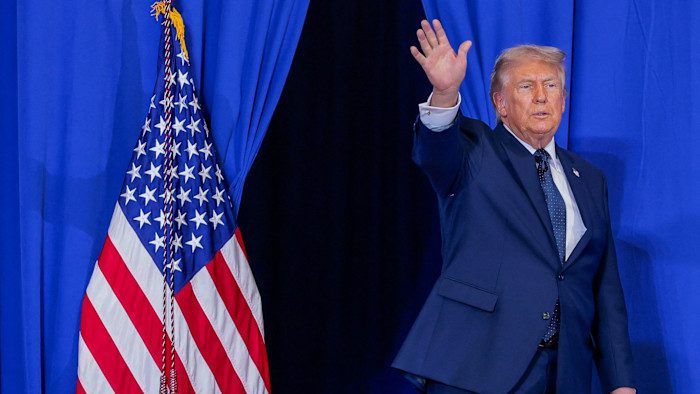
The legal challenge comes at a politically charged moment in the United States, as Trump’s Republican Party prepares for closely contested midterm elections in which control of both houses of Congress is at stake.
Trump has repeatedly criticised mail-in voting, despite using postal ballots himself in past elections. He has long claimed, without evidence, that mail voting contributed to widespread fraud in the 2020 presidential election, which he lost.
Although he has publicly described mail-in ballots as “cheating,” Trump cast his own vote by mail in a recent special election in Florida and also used an absentee ballot in the 2018 midterm elections.
The executive order outlines several major changes to election administration, including instructions for agencies to rely on data from the Department of Homeland Security and the Social Security Administration to build citizenship verification lists.
It also directs postal authorities to adjust delivery procedures for ballots and requires tighter coordination between federal and state election systems.
Democrats argue that these measures could interfere with states’ constitutional authority to manage elections, warning that the federal government is overstepping its role. They also claim that the reliance on federal databases risks incorrectly identifying eligible voters as ineligible due to errors or outdated records.
In his ruling, Judge Nichols noted that since no agency had yet acted on the order in a way that directly affected voters or states, the plaintiffs had not demonstrated immediate harm that would justify an emergency injunction.
“The executive order does not command plaintiffs to do anything, and no agency has yet acted pursuant to the order in a way that could harm plaintiffs.”
Meanwhile, the United States Justice Department argued that the lawsuit was premature, maintaining that the court should not intervene before the policy is formally implemented.
A separate but similar lawsuit has also been filed by a coalition of Democratic-led states in Boston federal court. That case is being overseen by U.S. District Judge Indira Talwani, who is expected to hear arguments on June 2.
The parallel legal battles highlight the growing national dispute over voting rules in the United States, particularly the role of mail-in ballots, which became widely used during the COVID-19 pandemic and have remained a point of political contention ever since.
While today’s ruling represents an early procedural win for the Trump administration, the broader legal and constitutional questions surrounding the executive order remain unresolved, setting the stage for further courtroom clashes in the weeks ahead.
READ ALSO: We Inherited a Collapsed Mine – Heath Goldfield Managing Director Recounts