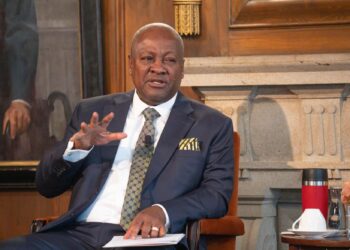

The Accra High Court has concluded the criminal trial involving Ashanti Regional Chairman of the New Patriotic Party, Bernard Antwi Boasiako, popularly known as Chairman Wontumi, and two others, in the Samreboi illegal mining case and scheduled judgment for July 3, 2026.
Deputy Attorney General and Minister for Justice, Dr Justice Srem Sai, confirmed the development after proceedings on June 3, 2026, stating that the defence had completed its case and the final witness had been discharged. This marked the formal end of the trial phase in the matter.
The case, The Republic v Bernard Antwi Boasiako & 2 Others, involves Wontumi, Kwame Antwi, and Akonta Mining Company Limited, all of whom are facing charges relating to alleged illegal mining activities at Samreboi in the Western Region.
The Office of the Attorney General filed six counts under the Minerals and Mining Act, 2006 (Act 703), as amended by Act 995. The charges focus on allegations that the accused persons unlawfully assigned mineral rights without ministerial approval and facilitated unauthorized small-scale mining activities commonly known as galamsey.

Prosecutors allege that third parties were allowed to operate within Akonta Mining’s concession without the required written approval from the Minister responsible for mines, contrary to statutory requirements governing mineral concessions in Ghana.
Progression of the Trial
The trial commenced in October 2025 when the accused persons were arraigned before the High Court in Accra. In February 2026, the prosecution closed its case after calling four witnesses, including former workers at the mining site, a state investigator, and an expert from the Minerals Commission.
In March 2026, the court, presided over by Her Ladyship Justice Audrey Kocuvie Tay, dismissed a submission of no case filed by the defence. The court ruled that the prosecution had established a prima facie case, requiring the accused persons to open their defence.
The defence later sought a stay of proceedings at the Court of Appeal in April 2026, but the application was dismissed, allowing the trial to continue at the High Court.
Defence Case and Closure
In May 2026, Chairman Wontumi testified in his own defence and called several witnesses, including former Western Regional Minister Kwabena Okyere Darko. The defence maintained its position throughout cross examination, contesting the allegations brought by the state.
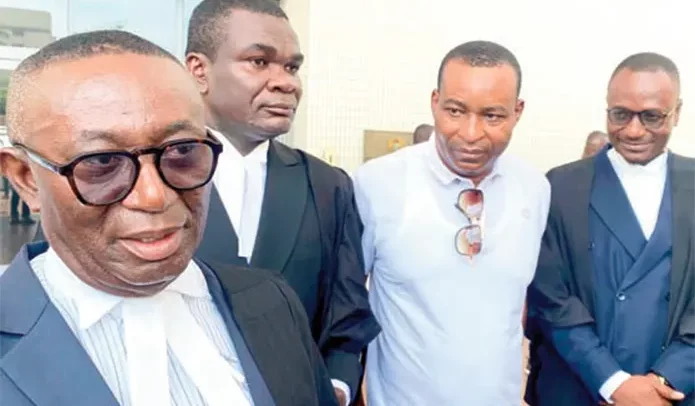
By June 2026, both sides had completed the presentation of evidence and witness testimony. The High Court subsequently closed the trial and fixed July 3, 2026, for judgment.
Dr Srem Sai, speaking after the proceedings, confirmed that the case had reached its final stage following the discharge of the last defence witness. He noted that the court would now proceed to evaluate the evidence before delivering its ruling.
Awaiting Court Decision
The Samreboi galamsey case is one of several legal matters involving Chairman Wontumi and has attracted significant public attention due to its political and environmental implications. The trial forms part of broader state efforts to clamp down on illegal mining activities and enforce compliance with mining regulations.
With proceedings concluded, attention now turns to the High Court’s upcoming ruling, which is expected to have significant implications for the enforcement of mining laws and ongoing national efforts to combat galamsey.
With the High Court now set to deliver its judgment on July 3, 2026, the case moves into its final legal phase, leaving the accused persons with limited procedural options pending the ruling.

If the court finds the defendants guilty on any or all counts, they retain the constitutional right to appeal to the Court of Appeal, and subsequently to the Supreme Court on points of law.
Such an appeal could challenge both the interpretation of the Minerals and Mining Act and the evidentiary basis of the judgment. If acquitted, the prosecution may also consider appellate review, depending on the grounds set out in the ruling.
At this stage, however, all arguments have been exhausted at trial level, and the outcome now rests solely with the court’s evaluation of the evidence presented during proceedings.
READ ALSO: Inflation Hits 3.7% as Food Costs Surge