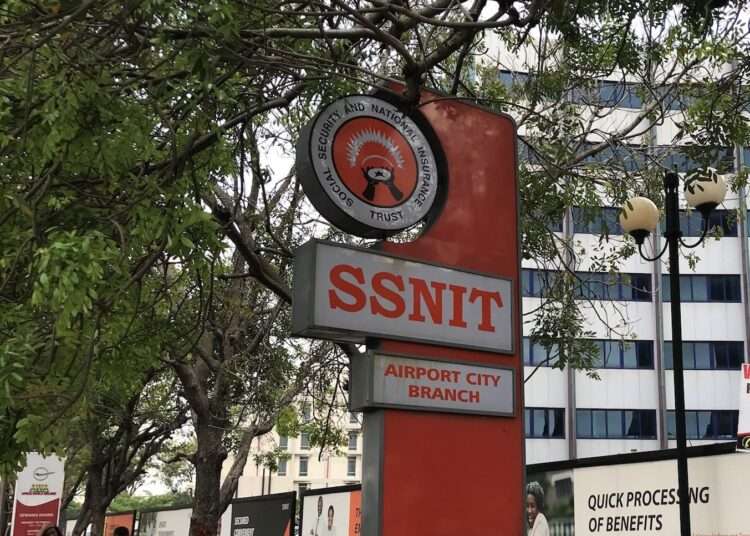
The Social Security and National Insurance Trust (SSNIT) has announced a remarkable breakthrough in pension administration, cutting the average processing time for pension claims from several months to just seven days.
The achievement marks one of the most significant service delivery improvements in the institution’s history and highlights the growing impact of digital transformation on public sector operations.
The Director-General of SSNIT, Kwasi Afreh Biney, revealed that pensioners who submit all the required documentation can now expect to be enrolled onto the pension payroll within a week, a development expected to bring relief and confidence to thousands of retirees across the country.
A New Era for Pension Processing
For years, pension claim processing has often been associated with lengthy waiting periods, creating anxiety among retirees who depend on timely payments for their livelihood. However, SSNIT says those days are rapidly becoming a thing of the past.
Speaking on the progress made by the institution, Mr. Biney explained that the average turnaround time for processing claims has been drastically reduced due to improvements in operational efficiency and technology adoption.
“So let’s say you’ve gone on pension now, all your documents are right, and you’ve submitted them to us. On average, now it takes us seven days to process your request to be put on the pension payroll to the very end.”
Kwasi Afreh Biney
The announcement represents a major milestone for the pension scheme and signals SSNIT’s determination to provide services that meet the expectations of modern customers.
Behind the Seven-Day Turnaround
Although the process has become significantly faster, Mr. Biney emphasized that SSNIT still carries out all the necessary verification and validation procedures before approving a claim.
“Because remember, we need to do some investigations, we need to pick files, do some validations, and all that. So that’s what it means,” he explained.
The reduction in processing time therefore does not come at the expense of due diligence. Instead, it reflects a more efficient system that enables staff to complete essential checks within a shorter period.
Industry observers say this balance between speed and accountability is critical to maintaining public trust in pension administration while ensuring that deserving beneficiaries receive their payments without unnecessary delays.

Digital Transformation Driving Change
At the heart of SSNIT’s success is a deliberate and sustained investment in digital technology. The institution has been modernizing its operations over the years, introducing digital platforms and automated systems aimed at reducing paperwork, eliminating bottlenecks, and improving customer experiences.
According to Mr. Biney, automation has played a key role in accelerating pension processing and enhancing overall service delivery. “Automation has really helped, but one of the things that I believe we need to work on is the mindset shift as to the use of our digital channels,” he said.
The Director-General stressed that technology investments alone are not enough to achieve the desired outcomes. The willingness of customers to embrace and actively use digital platforms remains equally important.
“If you’ve invested in technology but you haven’t gotten people to accept it and use it, you will not get the benefits that you seek.”
Kwasi Afreh Biney
His comments highlight a common challenge faced by many organizations undertaking digital transformation initiatives. While sophisticated systems can be deployed, their effectiveness ultimately depends on user adoption.
Building a Digital-First Institution
To ensure that its digital investments deliver maximum value, SSNIT has established a dedicated department focused on monitoring, improving, and promoting its digital channels.
The unit’s mandate includes encouraging greater usage among members, gathering customer feedback, and continuously refining digital services to improve convenience and accessibility.
“We currently have set up a department whose core job is to look at our digital channels, to get people to use it, to get feedback and ensure that consistently we are nimble and improving for people to use with ease and convenience.”
Kwasi Afreh Biney
This customer-focused approach demonstrates SSNIT’s commitment to creating a seamless experience for contributors and pensioners alike.
Making Digital the Default Choice
One of the most striking aspects of SSNIT’s strategy is its decision to position digital engagement as the preferred means of accessing services. “We also made a conscious decision that we wanted digital to be the default,” Mr. Biney stated.
The institution is therefore intensifying efforts to educate the public on the benefits of using its online platforms while maintaining traditional face-to-face interactions as a complementary option. “Face to face becomes complementary to the digital use, which is more convenient today,” he said.
The shift reflects broader changes in consumer behavior, where mobile phones and digital platforms have become central to everyday activities.
Meeting Customers Where They Are
Mr. Biney believes that successful service delivery must align with how people live and interact in today’s technology-driven world.
“You wake up in the morning, and probably the first thing you pick up is your phone. You probably will go on WhatsApp.”
Kwasi Afreh Biney
He argued that institutions must design services that fit naturally into customers’ daily routines rather than forcing people to adapt to outdated processes.
“Let’s make it. Let’s look at how we live our lives and offer solutions that mimic how we live. And through that, we bring convenience and service to the people.”
Kwasi Afreh Biney
As SSNIT continues to deepen its digital transformation agenda, the seven-day pension processing milestone stands as evidence of what can be achieved when technology, innovation, and customer-centric thinking come together.