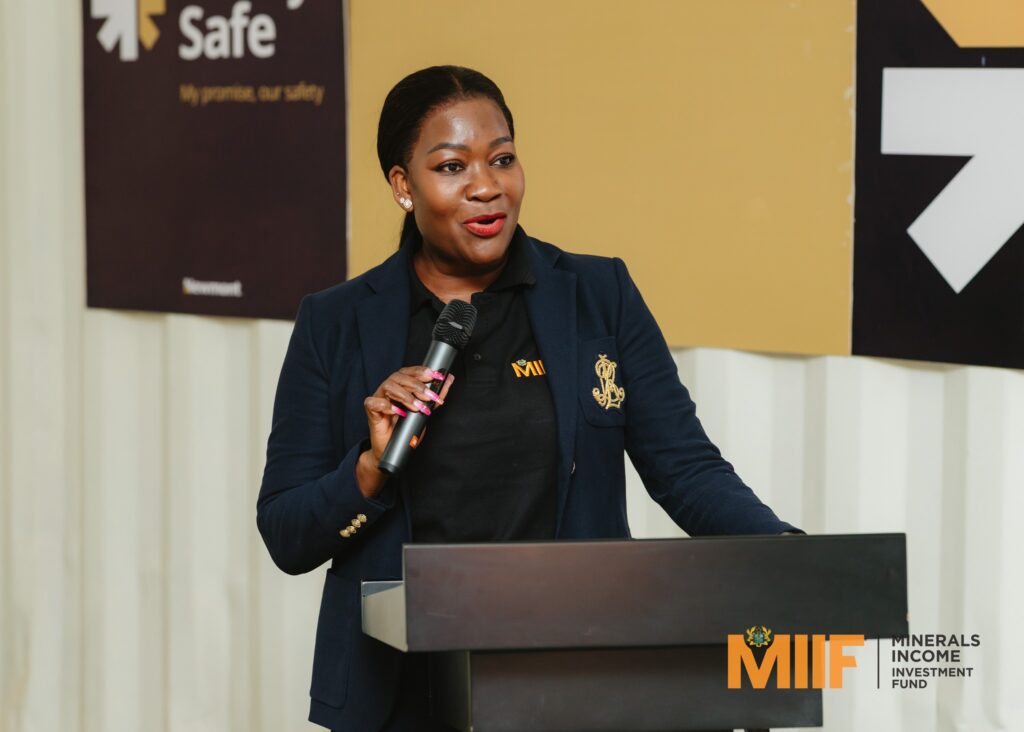
Ing. Wisdom Gomashie, a distinguished mining consultant, has called for the strategic repositioning of the Minerals Income Investment Fund (MIIF) to spearhead Ghana’s local and state participation objectives within the extractive sector.
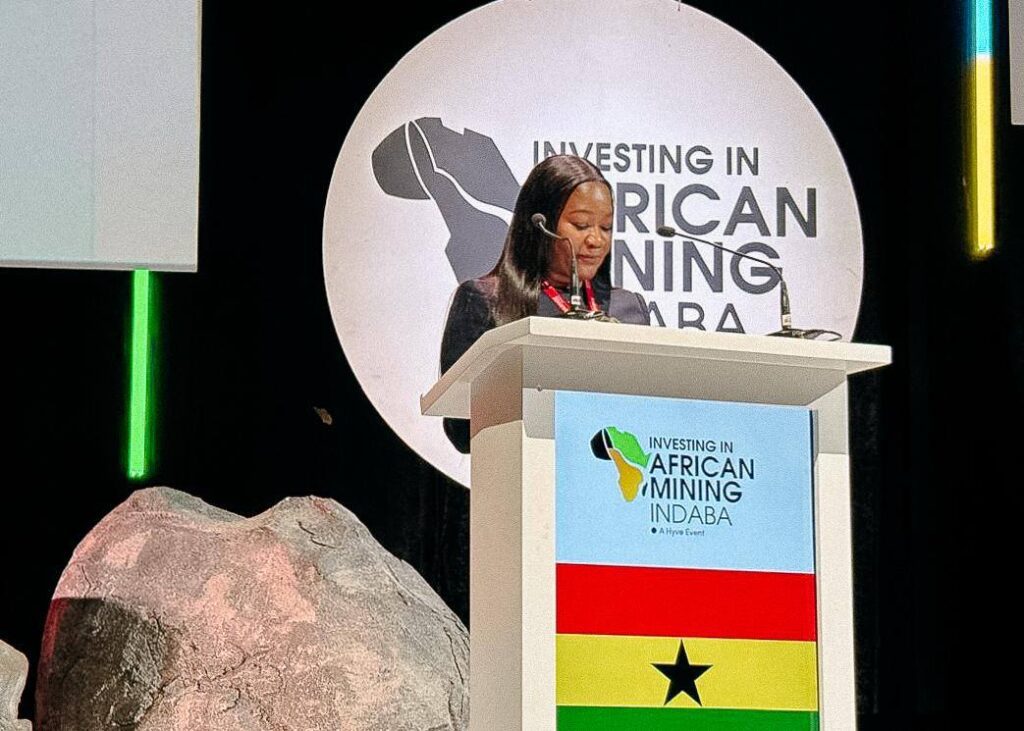
Speaking at the 2026 West Africa Mining & Power Conference (WAMPEX) at the La Palm Royal Beach Hotel in Accra, Ing. Gomashie emphasized that a restructured MIIF is the critical instrument needed to maximize long-term national benefits while preserving a highly competitive investment environment.
This policy pivot is essential to transition the country away from reactive, uncoordinated state interventions and toward an equity-driven framework that actively protects and scales national wealth.
“We must urgently reposition the Minerals Income Investment Fund to play a far more active and strategic role in advancing Ghana’s participation objectives within the mining sector. By studying successful global paradigms like the Debswana and Codelco models, we can structure partnerships that generate substantial long-term value for our citizens. This structured approach will provide a practical, predictable pathway to building local ownership and technical capacity over the next decade.”
Ing. Wisdom Gomashie

Ing. Gomashie noted that Ghana currently operates without a clearly articulated, coherent policy framework detailing how the state and its indigenous businesses intend to scale up direct ownership and operations in modern mining activities.
By transforming MIIF into a dynamic, strategic equity partner rather than a passive collector of sovereign royalties, the state can systematically resolve its underlying deficits in capital mobilization, technical mining expertise, and institutional readiness.
Drawing global parallels, the mining consultant cited Botswana’s iconic Debswana model and Chile’s state-owned powerhouse, Codelco, as compelling blueprints demonstrating how well-structured, transparent partnerships between state vehicles and private multinational investors generate monumental host-country dividends without spooking global capital.
Overcoming The Policy Vacuum in State Participation
Ghana’s contemporary resource governance regime faces structural vulnerabilities due to a lack of policy clarity regarding indigenous ownership expansion.
While regional peers move aggressively to formalize state equity stakes, Ghana’s lack of a formalized implementation strategy hampers its ability to smoothly scale up domestic operational capacity.
Ing. Gomashie strongly cautioned that before the state pursues a larger asset footprint, it must methodically address severe bottlenecks in high-tier capital mobilization and local technical expertise.
Rather than relying on ad-hoc or reactive policy shifts that unnerve foreign markets, the country requires an established framework that mandates structured negotiations.
The consultant proposed that Ghana’s long-term strategy should focus on building equity partnerships with multinational mining firms at predictable, legally defined intervals specifically at the points of new lease approvals, lease renewals, and lease expiries over the next ten years.
This approach guarantees a stable transition window for local engineers and financiers to absorb operational capabilities.
Resolving the Sliding Scale Royalty and Exploration FDI Crisis
The urgency of repositioning MIIF is further compounded by recent, aggressive fiscal adjustments that risk undermining Ghana’s long-term project pipeline.
The government’s recently approved increase in mineral royalties to a higher sliding scale of up to 12% represents a double-edged sword for resource governance.
While the state is entirely justified in its quest to maximize revenue generation during high commodity price cycles, an abrupt escalation of fiscal obligations introduces severe friction when accompanied by tenure insecurity and fluid stabilization arrangements.

This fiscal tightening arrives at a time when Ghana is actively losing ground to neighboring Côte d’Ivoire in attracting greenfield exploration Foreign Direct Investment (FDI).
Data over the past five years indicates a clear capital flight toward more predictable regulatory environments.
Industry projections reveal that if the current restrictive policy trajectory introduced in 2025 remains uncorrected, Ghana risks losing up to 50% of its exploration FDI inflows over the next five to ten years, catastrophic for future mineral discoveries and long-term production revenues.
Striking the Balance: The Path to Mutual Inclusivity
Ultimately, state ownership and private investment are not mutually exclusive.
The panel at WAMPEX, moderated by former Executive Vice President of Gold Fields, Mr. Joshua Mortoti, arrived at a clear consensus: the future competitiveness of the West African sub-region hinges entirely on regulatory predictability.
When supported by policy clarity and institutional transparency, aggressive state participation can directly coexist with robust private capital returns.
For Ghana to reclaim its position as the premier mining hub of West Africa, MIIF must be empowered to act as the commercial bridge between state ambitions and private sector efficiency.
By utilizing international joint-venture frameworks, the nation can secure its fiscal baseline while ensuring that indigenous stakeholders possess real, operational control over their ancestral wealth.
READ ALSO: Massive Capital Push to Deliver Regional Rice Self-Sufficiency by 2035