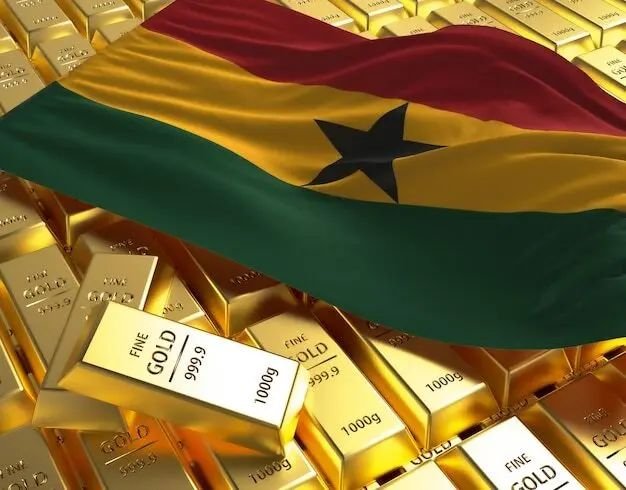
Minerals Income Investment Fund (MIIF) has registered a historic performance for the 2025 financial year, securing a record-breaking GH₵5.43 billion in mineral royalty collections.
This unprecedented milestone represents a 10.8 percent surge over the GH₵4.90 billion accrued in 2024, signaling the most substantial revenue inflow since the sovereign fund’s inception.
This fiscal triumph was primarily propelled by a triple-threat of economic drivers: exceptionally high international gold prices, significantly expanded production capacities, and a rigorous overhaul of internal compliance mechanisms.
“The record performance is a testament to the Fund’s commitment to operational excellence and the strategic management of Ghana’s mineral wealth. It reflects our success in navigating complex market dynamics while ensuring that the state captures its fair share of revenue. This achievement provides a solid foundation for our long-term investment strategy to benefit all Ghanaians.”
Minerals Income Investment Fund (MIIF)

According to data released by the Fund, the strategic integration of nationwide monitoring protocols played a pivotal role in ensuring that mining entities adhered strictly to their payment obligations.
These enforcement measures were instrumental in “reducing payment delays” while simultaneously “improving overall efficiency in royalty collection” across the country’s diverse mineral landscape.
Large-Scale Gold and Manganese Drive Revenue Growth

Gold remains the undisputed titan of Ghana’s extractive sector, with large-scale mining operations providing the essential backbone of the nation’s mineral revenue base.
Royalty receipts from this segment alone climbed to GH₵5.1 billion in 2025 a significant leap from the GH₵4.7 billion recorded in the previous year representing a net increase of nearly GH₵394 million.
This growth was largely supported by the successful ramp-up of major projects, including the Newmont Ahafo North Mine and the Cardinal Namdini project, which bolstered national output at a time when bullion prices remained at elevated levels.
Beyond the gold fields, the manganese subsector emerged as a notable contributor to the year’s fiscal success. Manganese royalties saw a 14.4 percent increase, reaching GH₵212 million compared to the GH₵186 million gathered in 2024.
Officials attributed this “notable growth” to a combination of higher production volumes and enhanced compliance within the subsector.
Conversely, non-precious minerals such as granite, limestone, and salt contributed a marginal one percent to the total revenue, hampered by “competitive pricing pressures” and logistical bottlenecks in Sahelian export markets.
Strategic Impact: How Royalties Benefit the Ghanaian Economy
The GH₵5.43 billion windfall is poised to play a transformative role in Ghana’s macroeconomic stability and long-term development.
As a sovereign wealth fund, Minerals Income Investment Fund (MIIF) utilizes these royalties to diversify the national economy away from a dangerous over-reliance on raw mineral exports.
By channeling these funds into high-growth sectors, the Fund acts as a buffer against the “uncertain market cycles” that often plague commodity-dependent nations.
MIIF’s strategic mandate discloses that these record royalties will be funneled into critical infrastructure and local value-addition projects.
One such initiative is the development of the Ada Songhor salt project, which aims to position Ghana as a leading salt exporter in Sub-Saharan Africa.
Additionally, the revenue supports MIIF’s “Small-Scale Gold Mining Incubation Program,” a revolutionary effort designed to formalize artisanal mining, reduce illegal “galamsey” activities, and provide technical support to local miners, thereby ensuring that mineral wealth trickles down to the grassroots level.
Strengthening the National Fiscal Buffer and Future Investments
In a broader economic sense, the 2025 royalty surge provides the government with much-needed fiscal space to manage national debt and fund public services.
The consistent inflow of foreign exchange from these royalties helps stabilize the Ghanaian Cedi, which has faced pressure from global inflationary trends.
By reinvesting a portion of these earnings into other frameworks and equity interests, MIIF is building a sustainable “intergenerational wealth” fund intended to support future development long after the current mines are exhausted.
Furthermore, MIIF is leveraging these record-breaking collections to spearhead Ghana’s entry into the green energy transition.
Plans are already underway to use mineral income to support the Ghana Automobile Development Plan, specifically targeting the lithium value chain for battery manufacturing.
This forward-looking approach ensures that the “historic GH₵5.43 billion” is not just a statistical achievement, but a catalyst for industrialization, job creation, and the ultimate realization of a “Ghana Beyond Gold.”
READ ALSO: Eduwatch Boss Applauds Parliament’s Move to Make Presidential Charter Optional