Kenya’s Foreign Minister has disclosed that Russia has agreed to stop deploying Kenyan nationals to fight in the war in Ukraine.
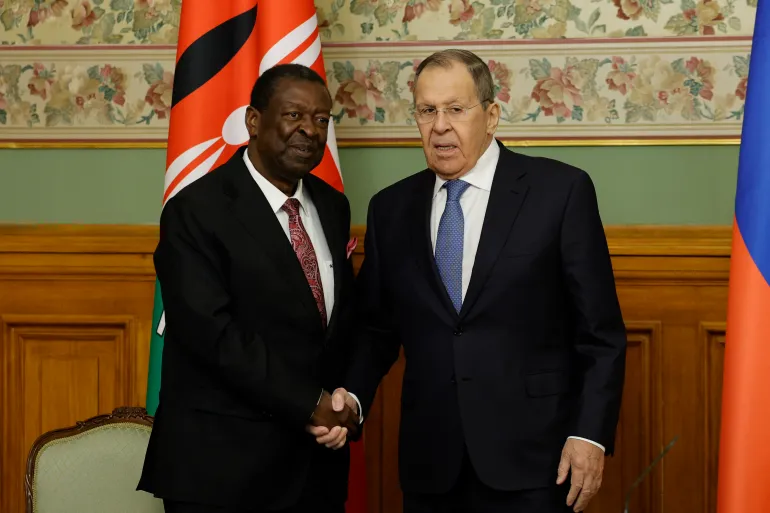
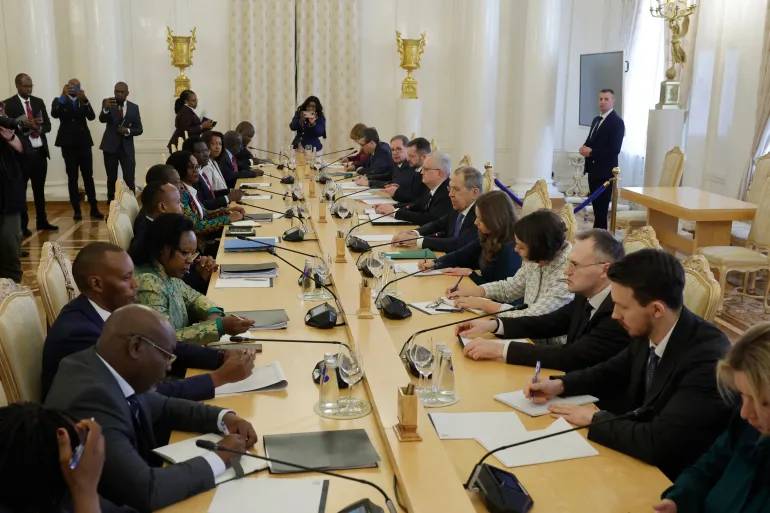
Sitting beside Russian Foreign Minister, Sergey Lavrov after the two held talks in Moscow, Kenyan Foreign Minister Musalia Mudavadi told reporters, “We have now agreed that Kenyans shall not be enlisted through the [Russian] Ministry of Defence.”
“His excellency has conversed with us on the issue of the welfare of Kenyans who are in Russia and more specifically those who are involved in the special operation. There will be no further enlisting.”
Musalia Mudavadi
Mudavadi added that consular services would be organised for those Kenyans requiring assistance through proper diplomatic channels.
During his visit to Moscow, Mudavadi also intends to negotiate an agreement allowing Kenyans easier access to the Russian job market.
“We do not want for any reason our partnership with Russia to be defined from the lens of the special operation [in Ukraine] agenda only. The relationship between Kenya and Russia is much more broader than that.”
Musalia Mudavadi
A Kenyan intelligence report presented to lawmakers in February said that more than 1,000 Kenyans had been recruited to fight on Russia’s side in the war in Ukraine, five times more than authoritietimes more than authorities had previously estimated.
Since launching its full-scale invasion of Ukraine in 2022, Russia has been widely accused of recruiting foreign nationals to fight alongside its army.
Kenyan politicians have described what they say is a network of rogue state officials who have colluded with human trafficking syndicates to recruit Kenyans to fight for Russia in Ukraine, a practice Nairobi said it wanted to stop.
Some Kenyans have said they were lured to fight for Russia with promises of well‑paid civilian jobs, only to find themselves forced into fighting in Ukraine. Mudavadi is also seeking the repatriation of Kenyans who wish to return home.
Last month, he told the BBC that Kenyan authorities had closed more than 600 recruitment agencies suspected of duping Kenyans with promises of jobs overseas.
Mudavadi disclosed that so far 27 Kenyans who had been fighting in Russia have been repatriated, with authorities providing psychological care to address their trauma and “de-radicalise” them.
It is not clear how many Kenyans have died fighting for Russian forces, and Russia has not formally addressed such reports. Relatives who have approached the Russian embassy in Nairobi for answers report being turned away.

Meanwhile, public pressure has also grown. In February, families of Kenyans believed to be fighting in Ukraine held a protest outside parliament in Nairobi, calling for government action and the return of their relatives.
Russian Defence Ministry Looking Into Cases
Lavrov did not mention the agreement in his remarks to the media, but said that the Russian Defence Ministry was looking into cases that had caused “concern among our Kenyan friends”.“Russia is not forcing anyone to enlist,” Lavrov said.
He said that Kenyan citizens had voluntarily signed contracts to fight alongside the Russian army.
More than 1,780 citizens from 36 African countries are believed to be fighting alongside Russian soldiers in Ukraine, according to Ukraine’s estimates in February.
In November, reports emerged that a group of South Africans ages 20-39 had travelled to Russia expecting to receive security training.Instead, they were soon pressed into a paramilitary force and dispatched to the front lines in Ukraine.
In February, South Africa repatriated 17 citizens who said they had been trapped in Ukraine’s Donbas region after being deceived into fighting for Russia.Ukraine has also previously come in for criticism for trying to recruit foreign nationals, including Africans, to fight on its side.
READ ALSO: Guterres Urges Renewed Global Action To Confront Islamophobia