
In a decisive move to fortify the nation’s “Blue Economy,” the Deputy Executive Director (Technical) of the Fisheries Commission, Professor Berchie Asiedu, has called for a radical shift in how the media covers marine conservation and maritime security.
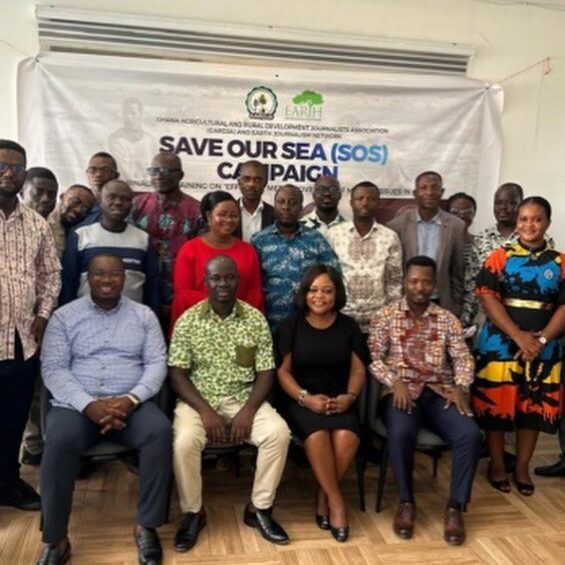
Speaking at a high-level specialized training session in Kumasi, under the banner of the Save Our Sea (SOS) Campaign, Professor Asiedu, challenged journalists to move beyond surface-level reporting and become active vanguard agents in the protection of Ghana’s territorial waters.
“Ghana’s marine environment faces major threats, including climate change, plastic pollution, and illegal, unreported, and unregulated (IUU) fishing, which continue to put pressure on fish stocks and coastal livelihoods. The engagement signalled the Commission’s intent to weaponize information as a tool against such threats.
“The training aimed to strengthen journalists’ capacity to report effectively on marine conservation, fisheries management, and Ghana’s Blue Economy agenda”
Fisheries Commission
The training, organized by the Ghana Agricultural and Rural Development Journalists Association (GARDJA) in collaboration with the Earth Journalism Network, comes at a critical juncture for the Ministry of Fisheries and Aquaculture Development (MoFAD).
As the nation transitions toward a 24-Hour Economy, the marine sector is expected to play a disproportionate role in driving export revenues and ensuring food security. However, Prof. Berchie warned that these economic ambitions are under direct threat from environmental degradation.
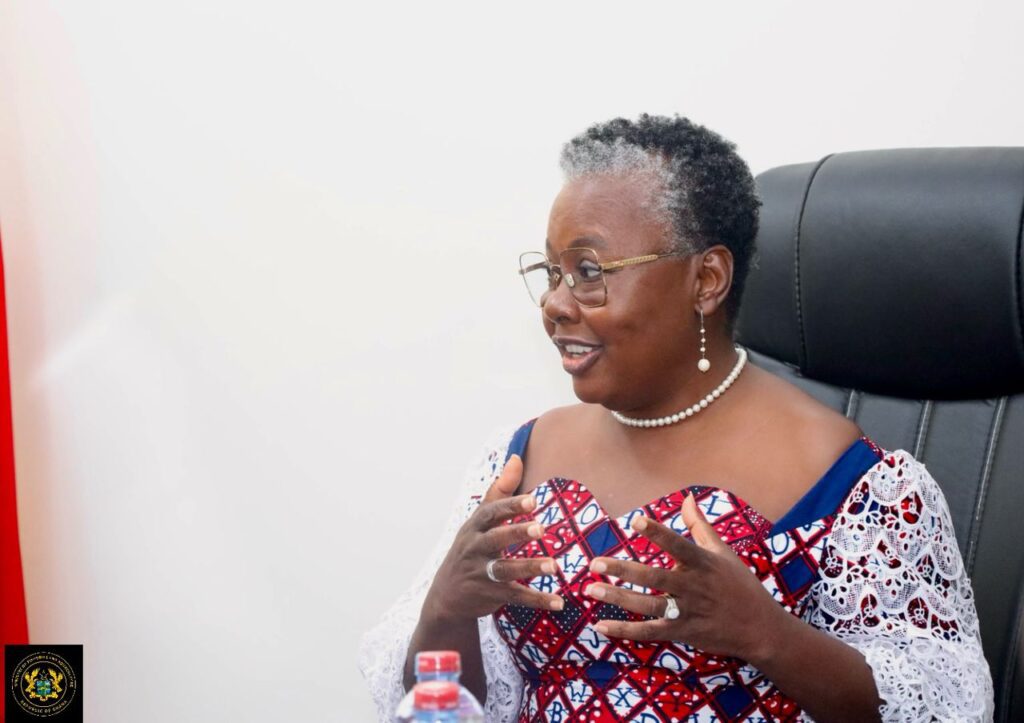
For the Fisheries Commission, the media is not just an observer but a strategic partner necessary to bridge the gap between complex legislative reforms and the coastal communities that must abide by them.
A major highlight of Professor Berchie’s address was the disclosure of ongoing work on the legislative instruments (L.I.s) for the landmark Fisheries and Aquaculture Act, 2025 (Act 1146).
According to the Professor, the new legal framework is designed to provide the state with the “teeth” necessary to bite back against marine criminals and introduces significantly stricter penalties for habitat destruction – including the destruction of mangroves and coral ecosystems. It also provides a more robust mandate for conservation enforcement.
The Deputy Executive Director emphasized that the media’s role is to ensure these new laws are “felt by the public,” acting as a deterrent to those who view the ocean as a lawless frontier.
The transition to Act 1146 represents a fundamental shift in the Industrialization of the fisheries sector, as formalizing conservation measures ensures that the “Blue Economy” remains sustainable for future generations.
The Professor noted that without effective communication of these laws, the risk of resistance from local fishing committees remains high and urged journalists to unpack the complexities of the 2025 Act, explaining how stricter enforcement actually protects the long-term prosperity of the artisanal fisher by “preventing the total collapse of fish stocks due to industrial overreach and illegal transshipment at sea.”
Global Biodiversity Mandate
Ghana’s marine strategy is no longer confined to its own borders; it is now tethered to the global “30×30” biodiversity target. This international commitment requires nations to protect 30% of their land and oceans by the year 2030.
Professor Berchie asserted that meeting this goal is non-negotiable if Ghana hopes to maintain its status as a leader in African maritime governance. Achieving this, however, requires a massive “buy-in” from the populace, which can only be facilitated through consistent, high-impact media coverage.
The Deputy Executive Director explained that a healthy, protected marine environment is a more productive one. By setting aside protected zones where fish can spawn and ecosystems can recover, the nation is effectively building a “biological bank account,” that will pay dividends in the form of increased tuna and shellfish exports.
His call to the media was to frame conservation not as a restriction on economic activity, but as the primary insurance policy for boosting Ghana’s economy in the fisheries sector.
According to the Fisheries Commission, the Kumasi training served as a masterclass in the intersection of environmental science and economic reporting, where journalists were encouraged to look at the “Blue Economy,” through the lens of Prosperity.
Professor Berchie underscored that when a journalist reports on a plastic-choked beach, they are reporting on a direct threat to Ghana’s GDP, calling for more reporting on the entire value chain – from the health of the sea to the efficiency of the landing beach and the quality of the processed fish hitting international markets.
The collaboration between GARDJA and the Earth Journalism Network is a testament to the international interest in Ghana’s marine conservation efforts. As the Commission eyes its targets for the year 2026 and beyond, the need for specialized “Agro-Marine” journalists has never been greater.
Professor Berchie concluded by noting that the “SOS” in the Save Our Sea campaign is a call for an all-hands-on-deck approach. The media, armed with the facts of the Fisheries and Aquaculture Act, 2025, is now expected to lead the charge in defending the nation’s most precious liquid asset.
READ ALSO: MIIF Records ₵5.43Bn from Mineral Royalties in 2025