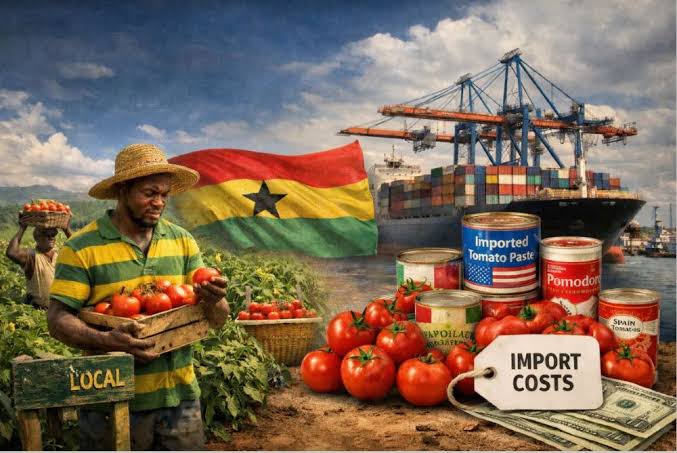
Ghana is losing at least US$168 million annually to tomato imports, researchers at the Council for Scientific and Industrial Research (CSIR) have revealed, highlighting the country’s persistent dependence on foreign food supplies and weaknesses in domestic agricultural production.
The findings were presented at the second session of the 2026 Ministry of Environment, Science, Technology and Innovation (MESTI) Research to Impact Working Series in Accra.
Researchers said Ghana’s annual demand for fresh and processed tomatoes exceeds 1.4 million metric tonnes, while domestic production supplies only between 10 and 18 percent of that requirement, leaving imports to fill the substantial gap.
Ghana’s Tomato Import Bill Rises
Dr Michael Kwabena Osei, a Principal Research Scientist at the CSIR Crop Research Institute, said Ghana imports between 100,000 and 120,000 tonnes of fresh tomatoes annually, with much of the supply coming from Burkina Faso.
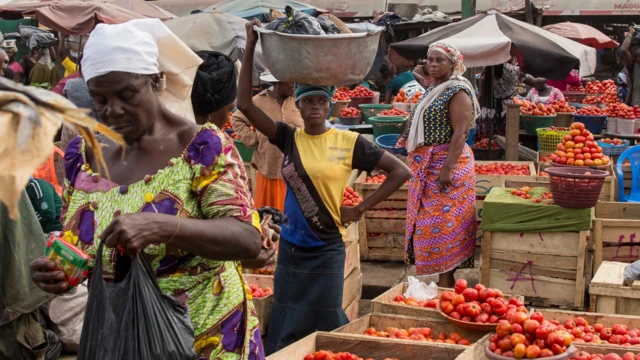
According to the researchers, the fresh tomato trade alone costs Ghana approximately US$18 million every year. The cost rises significantly when processed tomato products are included, with imports from China, Italy and other countries equivalent to about 400,000 metric tonnes of raw tomatoes.
“When you put both together, Ghana is spending roughly US$168 million every year just to keep tomatoes on our markets; that is money leaving the country that could be used to support our own farmers and build our local economy, approximately US$150 million annually”.
Dr Michael Kwabena Osei, a Principal Research Scientist at the CSIR Crop Research Institute
The figures underscore the scale of Ghana’s dependence on imported tomatoes despite the country’s potential to expand domestic production and develop a stronger horticultural value chain.
Researchers said more than 60 percent of fresh tomato imports enter Ghana between November and April, coinciding with the dry season when domestic production declines sharply because of inadequate irrigation and limited storage capacity.
Irrigation and Seed Constraints Limit Production
The CSIR findings attributed Ghana’s low tomato production to several structural challenges affecting farmers across the value chain. These include inadequate access to quality and certified seed, declining soil fertility, high pest and disease pressure, limited irrigation infrastructure, and weak extension services.
Researchers said Ghana has more than 600,000 hectares of land suitable for tomato cultivation. However, less than 9,000 hectares are currently under irrigation for tomato production.

The limited access to reliable water means many farmers remain dependent on rainfall and cannot sustain production throughout the year. This creates a seasonal supply gap that is filled by imports, particularly during the dry season.
The researchers said Ghana’s average tomato yield currently stands between seven and 10 tonnes per hectare. With improved inputs, irrigation and farming practices, however, yields could rise to between 20 and 30 tonnes per hectare.
Such an improvement, they argued, could significantly reduce the country’s dependence on imported tomatoes while creating opportunities for farmers and local agro-processors.
Low-Quality Seeds Weigh on Tomato Yields
The quality of planting material also emerged as a major constraint to Ghana’s tomato production. According to CSIR, less than 35 percent of tomato seed planted in Ghana consists of commercial hybrid seed.
Much of the remaining seed is recycled or of low quality, contributing to poor yields and increasing crop vulnerability to pests and diseases. Researchers therefore called for greater investment in certified seed production and the development and distribution of disease-resistant varieties.
They also stressed the need to improve soil fertility, strengthen agricultural extension services and expand mechanisation. Protected cultivation systems, including greenhouses, were identified as another option for reducing farmers’ exposure to seasonal production shocks.
The researchers said investment in irrigation and water-efficient technologies would allow farmers to produce more tomatoes during the dry season, when imports traditionally surge.
Ginger Imports Expose Wider Agricultural Challenge
The concerns over tomato imports formed part of a broader warning about Ghana’s dependence on foreign agricultural products. Researchers at the MESTI forum said Ghana’s dependence on imported ginger has exceeded 99 percent, while demand for the crop has increased sharply.
In 2020, Ghana required approximately 18,000 tonnes of ginger. Current demand is estimated at between 40,000 and 50,000 tonnes. The effect of the supply gap has been particularly severe for consumers and traders. A 100-kilogramme sack of ginger that sold for around GH¢250 in 2022 rose to approximately GH¢4,000 in 2025.
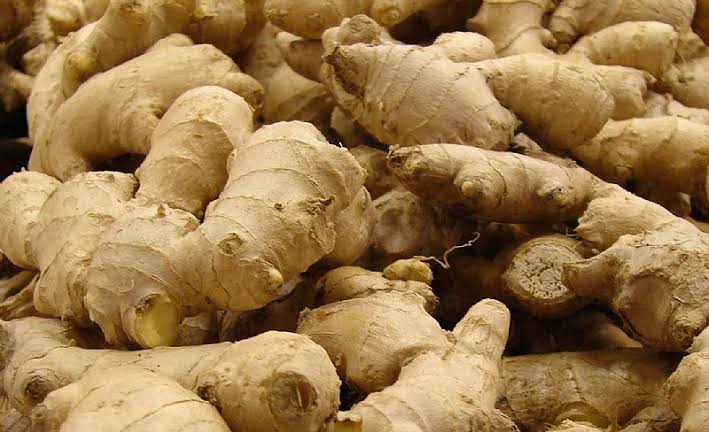
During periods of peak shortages, prices reached GH¢6,000 or more per sack. Much of the ginger sold on the Ghanaian market now comes from China and Burkina Faso.
Researchers said the developments in the tomato and ginger sectors reflect a broader problem within Ghana’s agricultural economy, where substantial production potential exists alongside low productivity and heavy dependence on imports.
CSIR Calls for Greater Investment in Horticulture
Dr. Osei said government and private sector stakeholders must redirect investment towards the areas that constrain agricultural productivity. He called for increased investment in certified seed production, irrigation infrastructure, soil improvement, mechanisation and protected cultivation systems.
He also proposed two institutional reforms aimed at strengthening Ghana’s horticultural sector. These include the establishment of a Tomato Board by 2028 and a dedicated Horticultural Research Institute by 2030.
According to Dr. Osei, the proposed institutions would coordinate research, seed development, processing, financing and market integration for key horticultural crops. “The objective is very clear,” Dr. Osei said.
“We need to convert Ghana’s agricultural potential into commercially viable production. That is the only way to reduce the import bill, strengthen local value chains, and retain more foreign exchange within the economy.”
Dr Michael Kwabena Osei, a Principal Research Scientist at the CSIR Crop Research Institute
Local Processing Must Meet Market Standards
The researchers stressed that increasing agricultural investment alone would not resolve Ghana’s dependence on imported food products. Farmers need access to disease-resistant varieties, particularly in ginger production, alongside stronger disease surveillance and improved extension services to support the adoption of better farming practices.
Researchers also identified consumer and processor preferences as another factor sustaining imports. Many food processors prefer imported tomato paste because of its consistency in quality and packaging.

They argued that local processors require support to improve product quality, packaging and consistency so they can compete more effectively with imported alternatives. The researchers said Ghana’s agricultural strategy must therefore address production, processing, storage, financing and market access as interconnected parts of the same value chain.
Economic Cost of Tomato Imports
The annual US$168 million tomato import bill represents a significant foreign exchange outflow, while the country’s heavy dependence on imported ginger adds further pressure to the food import bill.
CSIR researchers argued that greater domestic production could allow more of this expenditure to circulate within Ghana’s economy through farmers, agro-processing companies, storage operators, transporters and other businesses along the agricultural value chain.
They warned that Ghana’s growing population and increasing demand for processed foods could further widen the import gap if domestic production does not expand. Dr. Osei urged policymakers to treat the findings as a warning about the need for coordinated and sustained agricultural investment.
He argued that Ghana possesses the land, climate and domestic market required to become more self-sufficient in tomatoes and ginger, but needs coordinated policy, long-term investment and political commitment to translate that potential into commercial production.
He maintained that the US$168 million spent annually on tomatoes and Ghana’s more than 99 percent dependence on imported ginger should not be treated as normal.
According to him, addressing the gaps could help Ghana develop a stronger horticultural sector capable of improving food security, creating jobs, strengthening local value chains and retaining more foreign exchange within the economy.
READ ALSO: Entrench OSP In Constitution To Avoid Repeal, Osae-Kwapong Urges