
Political scientist Dr. John Osae-Kwapong has called for the Office of the Special Prosecutor (OSP) to be entrenched in the 1992 Constitution, warning that the Supreme Court’s decision upholding the Office of the Special Prosecutor Act, 2017 (Act 959) leaves the anti-corruption body exposed to repeal by the same Parliament that created it.
The Democracy and Development Fellow at CDD-Ghana made the argument in an exclusive interview with The Vaultz News following the unanimous judgment on the constitutionality of the Act.
Dr Osae-Kwapong, who is also the Project Director of The Democracy Project, said the Constitution Review Committee had recommended writing the Office into the Constitution, and that the government’s position paper rejected the recommendation on the ground that the court had already settled the question.
He treats the ruling and entrenchment as answering different questions, since one confirms that Parliament acted lawfully while the other would place the Office beyond ordinary legislative reach.
A good ruling that settles only part of the question
Dr Osae-Kwapong began by acknowledging what the judgment achieved before explaining why he regards it as incomplete. “The court has said the Act that created the Office is constitutional, and that is a good thing,” he said.

The concern he raises is durability rather than validity. A statute that survives judicial scrutiny remains a statute, subject to the ordinary legislative process that produced it, and that distinction sits at the centre of his case for constitutional protection.
He pointed to the constitutional review process as having already offered the stronger safeguard. “I believe the Constitution Review Committee recommended that we actually enshrine the Office of the Special Prosecutor in the Constitution,” he said.
That recommendation did not survive the government’s response. “If I am not mistaken, that is one of the recommendations rejected in the government’s position paper, with the explanation that the court has ruled and upheld its constitutionality, so there is no need to put it in the Constitution,” he said.
The government’s reasoning treats the ruling as a substitute for entrenchment. Dr Osae-Kwapong reads the two instruments as protecting against different threats: one against a constitutional challenge and the other against repeal.
What the ruling implies about Parliament’s powers
His argument rests on a proposition he reads into the judgment concerning the scope of parliamentary authority to build institutions. “The court’s ruling also appears to say that Parliament has the power to establish independent offices to deal with whatever issue arises,” he said.
The body before the court was an anti-corruption agency, but he argued that the principle the judgment establishes reaches further. “It happened to be an anti-corruption agency that brought this matter before the courts, but in ruling to uphold the constitutionality of the Act, the court is implicitly saying that Parliament does have the power to establish independent bodies of that kind,” he said.
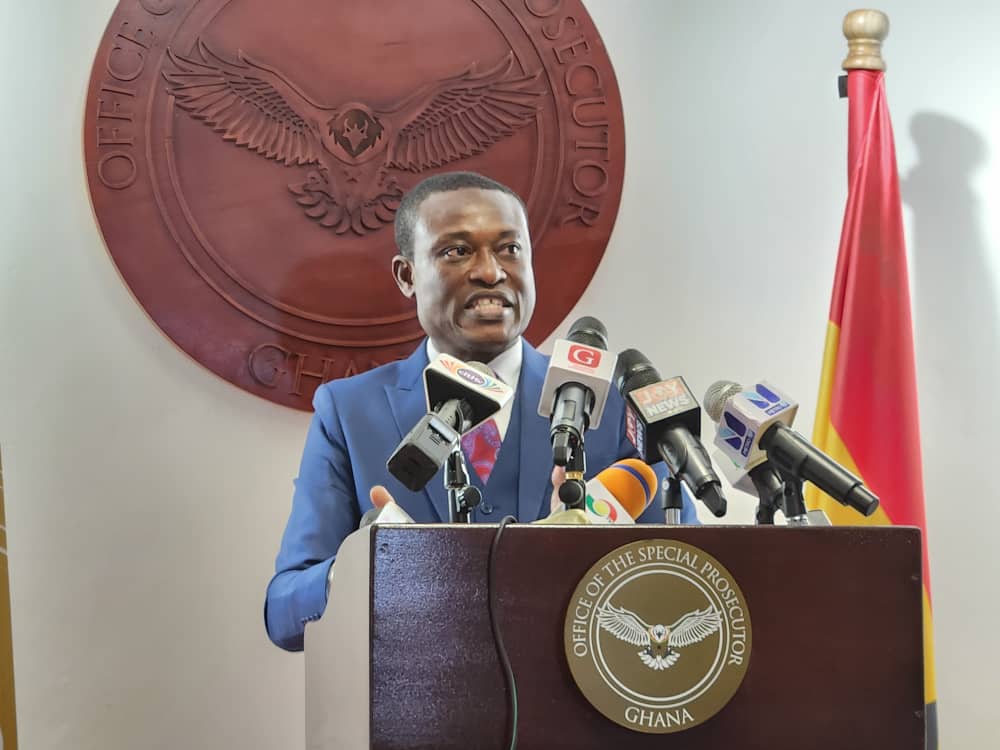
That reading produces the consequence he finds troubling, and he stated it as a matter of logic rather than speculation. “Well, if Parliament has the power to establish such bodies, then by the same logic Parliament also has the power to dissolve the agencies it creates. It can reverse its own decision,” he said.
The symmetry is difficult to escape. Act 959 passed through Parliament and can be amended or repealed by the same route, requiring a legislative majority rather than the far heavier procedure that constitutional amendment demands.
An office built to investigate people in government therefore depends for its existence on the continued goodwill of the chamber where government commands a majority.
What entrenchment would protect against
Dr Osae-Kwapong closed by weighing the two forms of protection against each other, and he did not dismiss what the court has delivered. “That is why, for me, giving the Office stronger constitutional grounding matters. A Supreme Court ruling is strong. But actually placing the Office in the Constitution would have safeguarded it much more,” he said.
The difference lies in what each instrument resists. A ruling settles the law as it stands and binds courts hearing similar challenges. Entrenchment would lift the threshold for removal to the level required to amend the Constitution, placing the Office beyond the reach of a single parliamentary term and beyond the calculation of any government that finds its work inconvenient.
The constitutional review remains live, which leaves the question open rather than settled. The government published its position paper on the recommendations of the Constitution Review Committee chaired by Professor Henry Kwasi Prempeh in July 2026, sorting the proposals into those it accepts, those it accepts in principle and those it declines.

A Constitution Review Implementation Committee will drive the accepted changes alongside the Attorney-General’s office, working through legislation and, where entrenched provisions are involved, a referendum.
Whether recommendations the government rejected can still travel that route is itself contested, and Dr Osae-Kwapong has argued elsewhere that the executive’s position should compete with other views rather than close the question.
For the Office of the Special Prosecutor, the stakes of that procedural argument are concrete. The court has confirmed that Parliament acted lawfully in creating an independent prosecutor. It has not, on Dr Osae-Kwapong’s reading, done anything to stop a future Parliament from unmaking one.
READ ALSO: ACEP Says Ghana’s Electricity Crisis Is a Failure of System Planning