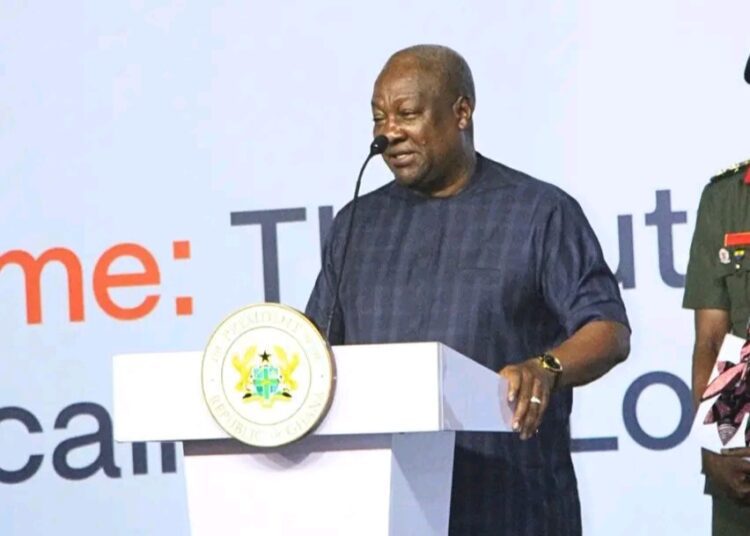
Ghana tomato production boost plans have been unveiled as the government moves to develop 60 hectares of irrigated farmland to ensure year-round tomato supply and reduce post-harvest losses. President John Dramani Mahama announced the initiative on Saturday, April 4, 2026, at the Kwahu Business Forum held in Mpreaso in the Eastern Region.
The project, which combines irrigation and processing infrastructure, is aimed at addressing seasonal shortages, stabilising prices, and eliminating the recurring problem of tomato glut in the country.
Irrigation and Processing to Drive Year-Round Production
The government’s plan centres on the development of 60 hectares of irrigated farmland equipped with reliable water systems to support continuous tomato cultivation throughout the year.
President Mahama emphasised that increasing production alone would not be sufficient without addressing storage and processing challenges.
“It’s not enough to grow tomatoes; it is necessary to put in place processing capacity so we won’t have tomato glut like other products.”
His Excellency John Dramani Mahama
The integration of processing facilities is expected to help absorb excess produce during peak harvest periods, preventing losses and ensuring a steady supply of tomato products on the market.

This approach aligns with broader agricultural strategies focused on value addition and reducing post-harvest waste, which currently accounts for significant losses in Ghana’s food system. Studies indicate that up to 30 percent of tomato production is lost due to inadequate storage and processing capacity.
Addressing Ghana’s Tomato Supply Gap
The initiative comes at a time when Ghana continues to face a significant shortfall in tomato production. Despite being a staple in local diets, domestic output remains below national demand, forcing reliance on imports from neighbouring countries.
Recent estimates show that Ghana’s tomato production falls far short of demand, with structural challenges such as seasonal farming, poor irrigation systems, and limited processing capacity affecting output.
Experts have also pointed to the importance of irrigation in closing this gap, noting that year-round production is critical to achieving self-sufficiency. By introducing irrigated farming systems, the government aims to reduce dependence on rainfall and ensure consistent production across all seasons.
Trade and Industrialisation Agenda Highlighted
At the forum, the Minister for Trade, Agribusiness and Industry, Elizabeth Ofosu-Adjare, underscored the broader economic significance of the initiative, linking it to Ghana’s industrialisation and trade ambitions.She highlighted the role of the African Continental Free Trade Area (AfCFTA) Secretariat, which is headquartered in Ghana, in creating new opportunities for local businesses.
“Underpinning all of this is our Africa Continental Free Trade Area Secretariat. Ghana carries a particular responsibility to demonstrate what intra-African trade can deliver in practice,” she said.
Elizabeth Ofosu-Adjare, Minister for Trade, Agribusiness and Industry

The Minister explained that the government is working to equip Ghanaian enterprises with the tools needed to compete effectively within the African market.“We are working to ensure that Ghanaian enterprises have access to rules of origin certification, tariff intelligence, and market linkages necessary to compete and win in the continental market,” she added.
She further stressed that policy interventions alone would not be enough without active private sector involvement.“None of these policies will deliver their intended outcome without private sector partnership with government,” she noted.
Strengthening Agribusiness and Local Enterprise
The theme of the 2026 Kwahu Business Forum, “The Future of Business: Scaling Up Local Enterprise,” reflects what the Minister described as a critical stage in Ghana’s industrial development. She noted that Ghanaian entrepreneurs have demonstrated the capacity to build viable businesses across sectors such as agro-processing, manufacturing, services, and trade.

As part of this effort, the Ministry is advancing the revitalisation of special economic zones, repositioning them as active industrial hubs focused on agro-processing and light manufacturing. The tomato production initiative is expected to complement these efforts by supplying raw materials for processing industries and creating value along the agricultural supply chain.
Outlook for Food Security and Economic Growth
The Ghana tomato production boost initiative represents a strategic step toward improving food security, stabilising market prices, and reducing reliance on imports. By combining irrigation with processing infrastructure, the government aims to tackle two of the sector’s most persistent challenges: seasonal production and post-harvest losses.
If successfully implemented, the project could enhance farmer incomes, create jobs, and strengthen Ghana’s position in regional agricultural trade. As the country moves to operationalise the initiative, its long-term success will depend on effective implementation, sustained investment, and strong collaboration between government and the private sector.
READ ALSO: Mahama Rejects Political Victimization, Vows Fair Support to Power Private Sector Growth