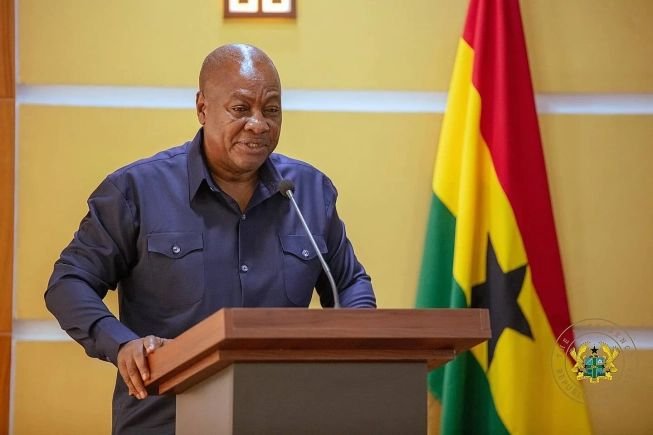
President John Dramani Mahama has identified the rapid expansion of Ghana’s urban centers as the primary driver behind recent power supply challenges, citing a mismatch between current infrastructure and growing residential demand.
In his speech at the 2026 Kwahu Business Forum, the President noted that while the Electricity Company of Ghana (ECG) is often criticized for outages, these “lights off” periods are frequently the result of technical interventions required to upgrade the grid.
He emphasized that the transition to a more resilient energy future requires moving away from superficial procurement, such as excessive street lighting, and focusing on the core hardware of the distribution network.
“So today, the exercise ECG is doing is replacing transformers and they are having to procure additional transformers to replace the old transformers. Because when you put a transformer here, you put it based on the size of the location itself. After several years, you find that more people finish their houses and they connect, and suddenly, the transformer is not powerful enough to provide electricity to the whole area.”
President John Dramani Mahama
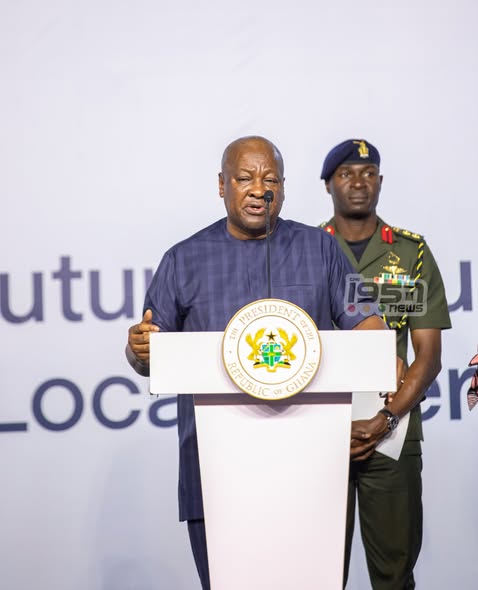
Dwelling on this vision for energy reform, the President detailed how historical procurement lapses at the Ministry of Energy and ECG led to a surplus of street lights enough to “light from Accra to Burkina Faso” while critical components like transformers were neglected.
This imbalance has left many growing communities reliant on outdated transformers that were originally sized for smaller populations. As new houses are completed and connected to the grid, these units become overstretched, necessitating a nationwide replacement exercise.
The current strategy involves upscaling transformer capacities from standard sizes to larger units capable of handling the increased load of Ghana’s burgeoning middle class and expanding commercial districts.
The Infrastructure Gap: From Street Lights to Transformers

The shift in policy highlighted by the President marks a pivot toward “demand-side infrastructure management.”
For years, the focus remained on visibility installing street lights that offered a public sense of development but did little to stabilize the actual flow of electricity into homes.
By “tweaking ECG a bit” and changing management structures, the administration aims to redirect capital expenditure toward high-capacity transformers.
Recent data indicates that many urban transformers are currently operating at 120% of their rated capacity during peak hours.
This overload leads to frequent tripping of circuit breakers, which residents perceive as unannounced power cuts, or “dumsor.” Replacing a 20/26 MVA transformer with a 30/39 MVA unit is not just a repair; it is a structural necessity for the green transition.
Urban Sprawl and the Physics of Power Distribution
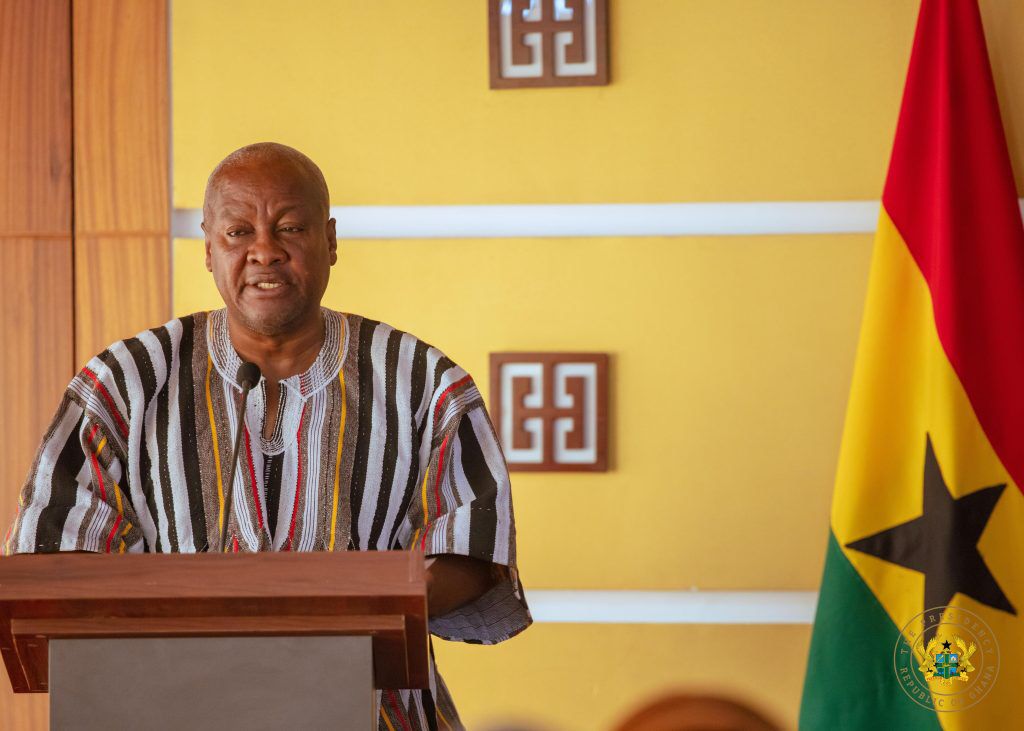
The impact of rapid infrastructure growth on power supply is a matter of both physics and planning.
In cities like Accra and Kumasi, the rate of residential “infilling” where new homes are built in already established neighborhoods exceeds the original design limits of the local distribution network.
When a transformer is installed, its capacity is calculated based on the number of households it is expected to serve.
However, as the President noted, “you find that more people finish their houses and they connect,” creating a surge in demand that the existing hardware cannot meet. This results in voltage drops and thermal stress on the equipment.
The current ECG exercise, therefore, involves “taking that transformer out and putting a bigger transformer in its place” to ensure that the “size of the location” matches the power available.
Achieving Stability Through Planned Interventions

To achieve long-term energy reliability, the government is framing current outages as “necessary labor.”
President Mahama urged the public to understand that “sometimes when your light goes off, it’s because of the work they are doing to improve the power supply in your area.”
This transparency is part of a broader effort to manage public expectations during the “Urban Intensification Initiative.”
By modernizing the procurement process and prioritizing the replacement of overstressed equipment, the administration seeks to eliminate the technical losses that have historically plagued the utility provider.
This reform is expected to reduce the frequency of equipment failure and provide a stable foundation for the integration of renewable energy sources into the national grid.
READ ALSO: Mahama: Business Confidence is Back, Credits Improved Macroeconomic Stability