
President John Dramani Mahama has shifted the focus of his diplomatic mission to the Republic of Belarus toward the country’s high-tech manufacturing base, arriving in the historic industrial city of Brest on the second day of his official state visit as a direct intervention to support Ghana’s domestic food security agenda.
Accompanied by his senior administrative team, the President’s exploration of established, large-scale agricultural models emphasized a commitment to shifting toward highly mechanized, tech-driven food production and processing networks in Ghana.
“The Ghanaian executive delegation was formally received in Brest by the regional Governor, Piotr Alexsandrovich Parkhomchik, alongside senior diplomats from the Belarusian Ministry of Foreign Affairs. The state-backed itinerary immediately moved into an extensive, hands-on facility tour of one of the largest and most automated agro-processing hubs in Eastern Europe”
The Presidency
For Ghana, the engagement served as a practical benchmarking exercise to study how a foreign nation can build an internationally dominant food export market while protecting its domestic agricultural reserves from post-harvest vulnerabilities.
The center of the President’s field evaluation was a sprawling, ultra-modern agro-processing factory that dominates the regional dairy sector. President Mahama, alongside his Advisor and Special Aide, Joyce Bawah Mogtari, and Ghana’s Ambassador to Moscow, Dr. Jehu-Appiah, observed first-hand the multiple, integrated stages of high-tech production.
The facility utilizes advanced, closed-loop processing systems to manufacture specialized baby food, liquid milk, cheese, and high-grade milk powder destined for highly competitive global retail markets.
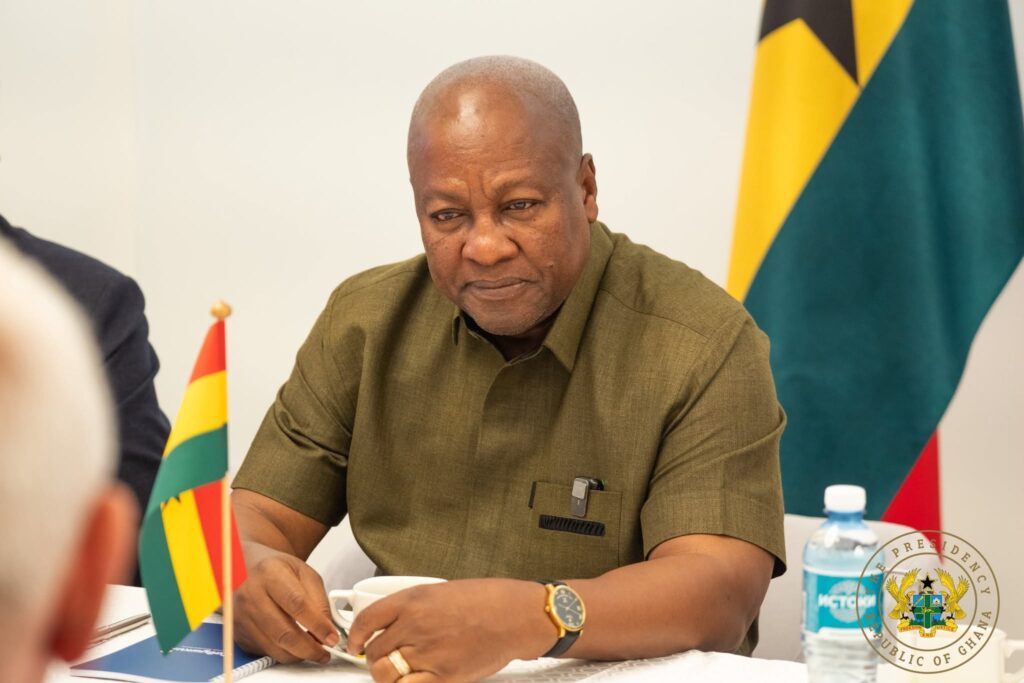
The scale of the operation was underscored by the company’s Managing Director, Aleksandr Savchits, who revealed during an executive briefing that the corporation recorded an impressive profit exceeding $1.4 billion during the previous fiscal year.
This massive financial metric illustrated the immense profitability and economic viability that can be unlocked when a nation shifts from raw agricultural extraction to value-added industrial processing.
For the Ghanaian delegation, observing this level of automation provided a clear layout of the technical infrastructure required to convert perishable farm outputs into durable, globally tradable consumer commodities.
Commercial Farming and Trade Dynamics
A primary focus of President Mahama’s trade mission was finding modern answers to the persistent structural challenges that limit the growth of Ghana’s domestic food supply.
The local agricultural landscape is dominated by smallholder farmers who, despite their hard work, face significant limitations due to a lack of mechanized harvesting technology, reliable cold-storage facilities, and modern processing plants.
This technical gap leaves the local economy highly vulnerable to seasonal supply shortfalls and fluctuating market prices. Studying the advanced systems deployed in Brest, President Mahama highlighted Ghana’s firm commitment to adopting modern processing techniques to bridge this industrial gap.
In his post-tour address to state media and factory executives, President Mahama framed the necessity of the mission, noting that the administration’s goal is to orchestrate a systematic transition from fragmented smallholder farming to large-scale, highly integrated commercial agriculture.
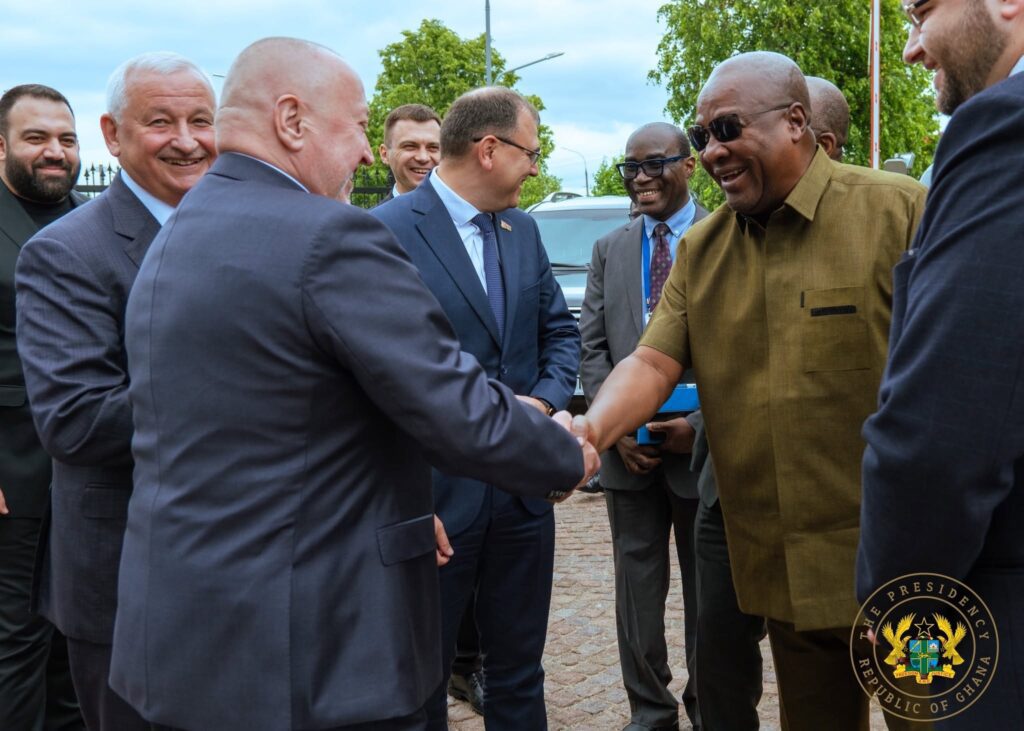
The diplomatic engagement also shed light on shifting trade relations between the two nations, with Managing Director Aleksandr Savchits revealing that the Belarusian agro-industrial giant has recently commenced direct exports of its dairy products into the Ghanaian consumer market.
While these inflows help meet immediate domestic demand for dairy commodities, both leadership teams expressed a strong shared desire to expand bilateral trade volumes under a more balanced, investment-driven framework as diplomatic and commercial ties continue to strengthen.
To achieve this balance, President Mahama extended an official state invitation to Belarusian agro-industrial investors and capital allocators to move past simple product exportation and instead establish direct, localized operations in West Africa.
He explained that partnering with Ghanaian private sector business associations, Belarusian firms can leverage their technical expertise within a mutually beneficial investment framework. This strategy aligns directly with Ghana’s goal of setting up local production lines to move the country from a passive consumer of foreign dairy goods to an active manufacturer.
Belarus currently stands as a global leader in the export of dairy products, including milk powder, butter, and cheese. Forging direct partnerships with such an established industrial power allows Ghanaian enterprises to rapidly absorb advanced processing methodologies.
This high-level state visit to Brest marks a vital step forward in Ghana’s ongoing push for industrial modernization and complete food self-sufficiency, as the government actively secures the technical solutions, corporate partnerships, and industrial templates needed to transform the country’s domestic farming landscape.
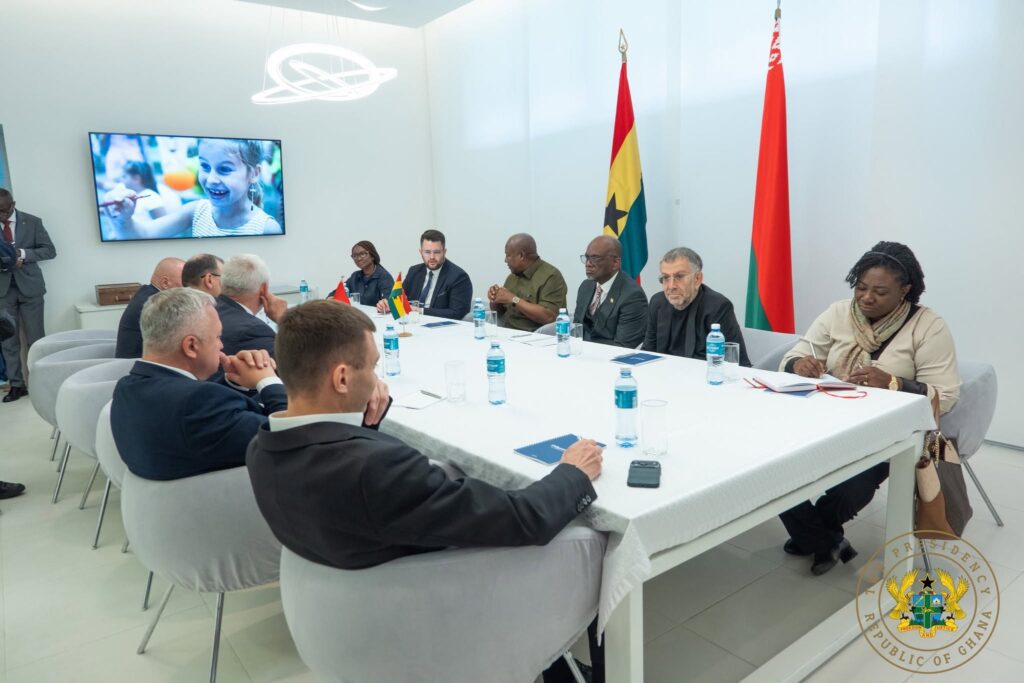
Moving forward, the true impact of this diplomatic mission will depend on how effectively local business associations and state ministries can channel incoming Belarusian capital and engineering expertise into building modern, highly automated processing factories across Ghana.
READ ALSO: DBG Unleashes Bold Growth Plan at Five