In a landmark development for African cinema, Ghana is poised to welcome its first independent, purpose-built cinema dedicated exclusively to films from the continent and its diaspora.
The Falcon Cinema, a visionary community and arts center rising in Berekuso, north of Accra, promises not only state-of-the-art screenings but a holistic hub for preservation, education, and cultural exchange.
Designed by Berlin- and Lomé-based Studio NEiDA and commissioned by film curator Jacqueline Nsiah, the project represents a bold step toward reclaiming and safeguarding Africa’s cinematic legacy. Nsiah, the Founding Director, envisions The Falcon as more than a theater-it is a sanctuary for cineastes where scattered film reels from across the globe can finally find a permanent home.
The initiative comes at a pivotal moment. While Ghana boasts a rich film history dating back to the colonial-era Gold Coast Film Unit and post-independence efforts under Kwame Nkrumah, and despite the vibrant Ghallywood video industry, the country has lacked a dedicated independent venue focused on African storytelling, archival preservation, and critical discourse.
Streaming platforms have transformed viewing habits globally, making physical cinemas that offer unique communal experiences increasingly vital. The Falcon aims to fill this gap.
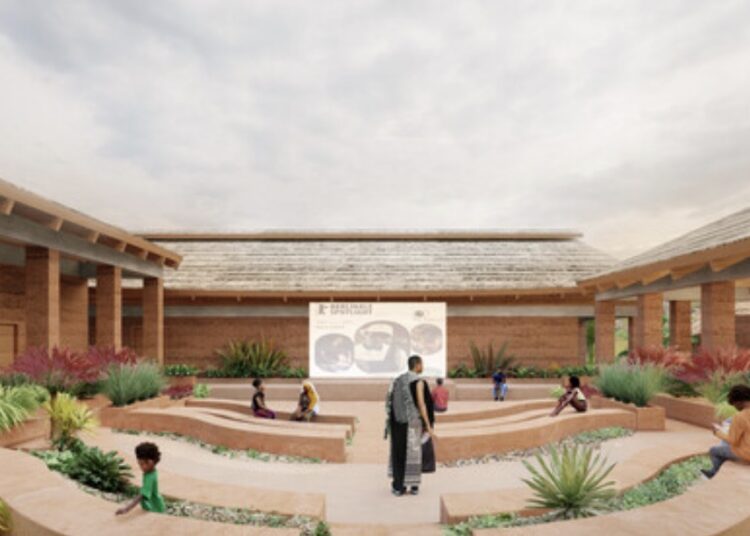
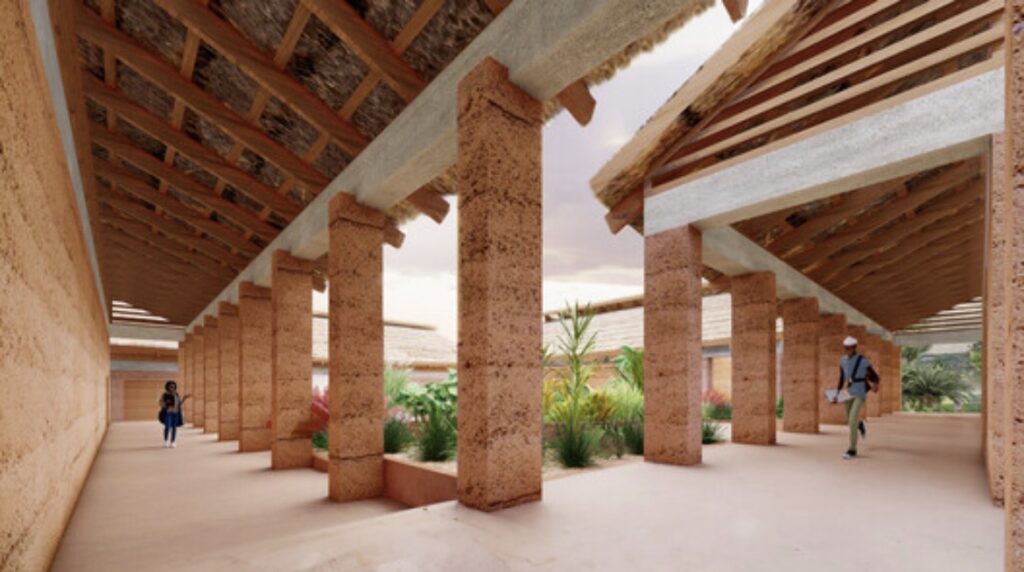
Architecturally, the project draws deep inspiration from traditional Asante communal compounds. Four earth-built structures will encircle a central courtyard, creating shaded walkways and natural gathering spaces protected from rain.
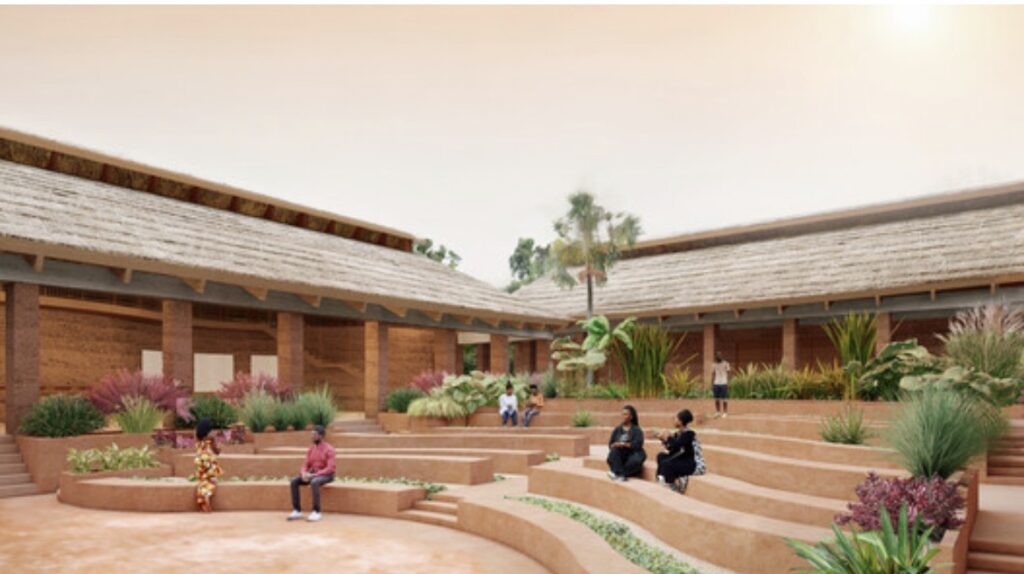
Palm-leaf thatch roofs, locally sourced earth materials, and passive ventilation systems ensure the design is climate-responsive and rooted in Ghanaian building traditions. Thermal mass from the earth walls will provide natural cooling, while a specially designed roof assembly channels hot air upward and directs rainwater into the courtyard to nurture vegetation.
“The choice of materials responds to Ghana’s constructive tradition while facilitating passive cooling and thermal comfort,” Studio NEiDA notes. Construction waste will be repurposed into undulating seating in the courtyard, minimizing environmental impact.
An outdoor planted amphitheater will serve as the main cinema space, blurring the lines between built environment and landscape.
Inside, visitors will find a 250-seat main screening room and a more intimate 150-seat theater, alongside a restaurant serving local seasonal dishes, an archive, communal areas, an education hub, and an outdoor cinema. A future phase will add a second compound with residences for filmmakers in residence, fostering creation alongside consumption.
Berekuso, home to Ashesi University and situated about an hour north of Accra, offers the perfect setting. At the edge of the capital’s urban sprawl yet connected by a planned road, the site provides a tranquil escape amid beautiful landscapes while remaining accessible.
The location highlights Ghana’s rapid growth and positions The Falcon to serve both local communities and visitors from further afield.
For Nsiah and the Studio NEiDA team co-founded by Jeanne Autran-Edorh (who previously worked with Pritzker Prize-winner Francis Kéré) and Fabiola Büchele-the project is deeply personal and pan-African. Programming will emphasize films from Africa and the diaspora, presented with historical context and opportunities for discussion.
The space is explicitly designed to be inclusive across ethnicity, gender, religion, and sexual orientation, creating a safe environment for diverse voices.
The project began in 2024 and remains in the design phase, with projected completion in 2027. It has already earned international recognition, winning the Europe 40 Under 40 Architecture & Design Award in 2026, highlighting the promise of its young architects.
This development arrives against the backdrop of broader efforts to revitalize cinema infrastructure across Africa. While commercial theaters exist and mobile cinema traditions persist from colonial times, dedicated cultural venues focused on independent and heritage programming are rare.
The Falcon could serve as a model for other nations seeking to strengthen their film ecosystems.
Relevance of the Falcon
Beyond screenings, The Falcon will function as a multifaceted cultural space. Organizers plan events, discussions, and educational programs that situate contemporary African filmmaking within a critical historical framework.
By repatriating and preserving archival materials, it addresses a long-standing challenge: many important reels from Africa’s cinematic past remain dispersed in foreign archives or private collections, at risk of degradation.
Economic and social benefits are also anticipated. The cinema and restaurant will create jobs, while the education hub and residencies could nurture a new generation of Ghanaian and African filmmakers, critics, and technicians.

In a country where film has long played a role in nation-building and cultural expression, The Falcon aims to amplify these contributions on a permanent, world-class stage.
Challenges remain, of course. Funding, construction timelines, and operational sustainability in a competitive entertainment landscape will require ongoing support. Yet the project’s foundation-strong local roots, international expertise, and a clear cultural mission bodes well for its success.
As renders circulate and excitement builds on platforms like Instagram and ArchDaily, anticipation is growing. For many, The Falcon symbolizes hope: a physical manifestation of pride in African stories, told by African voices, preserved for future generations.
When it opens its doors in Berekuso, The Falcon Cinema will offer more than tickets to a show. It will provide a space where audiences can gather under thatched roofs, engage with heritage on screen, and contribute to the continent’s ongoing cinematic renaissance.
In doing so, it promises to strengthen Ghana’s and Africa’s place in global film culture.
READ ALSO: Mahama Heads to Belarus, Eyes Strategic Partnerships to Boost Reset Agenda