
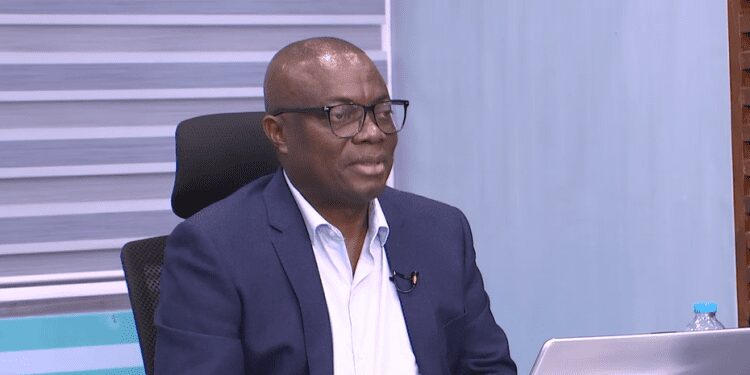
Executive Director of Global InfoAnalytics, Mussa Dankwah, has warned that the conduct and public lifestyle of politicians and public servants could significantly influence how Ghanaians perceive corruption within government institutions.
His remarks follow a review of data compiled by Global InfoAnalytics on public perceptions of corruption across various institutions and categories of public officials.
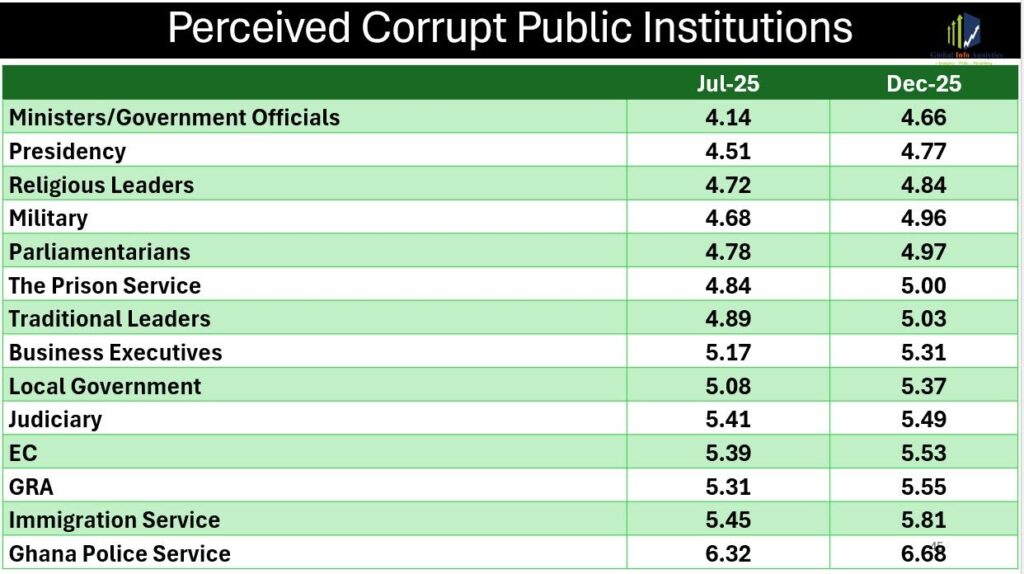
While the findings indicate that ministers and government officials continue to be regarded as the least corrupt group among those surveyed, Mr Dankwah noted that the underlying figures reveal a worrying trend.
According to him, the average corruption perception score for ministers and government officials worsened despite their relatively favourable ranking.
“A careful review of the data shows that overall, they continue to be viewed as the least corrupt; their average score actually worsened, increasing from 4.14 to 4.68 in December 2025”.
Global InfoAnalytics, Mussa Dankwah
The observation suggests that although government officials may still attract lower levels of perceived corruption compared with other institutions, public confidence in their integrity may be gradually weakening.
Public Behaviour Shapes Perceptions
Mr Dankwah argued that perceptions of corruption are often influenced by more than legal findings or official investigations. In many instances, the visible conduct of public office holders becomes a powerful factor in shaping public opinion.
He indicated that displays of wealth and extravagant lifestyles by politicians and public servants can fuel suspicions among citizens, regardless of whether the source of such wealth is legitimate.
“Actions, behaviours, show of opulence and public display of wealth by politicians or public servants, regardless of the source, will create a perception of corrupt practices, especially when these individuals were not known to have shown the same level while in opposition”.
Global InfoAnalytics, Mussa Dankwah
According to him, sudden lifestyle changes among public officials can create an impression that access to public office has led to personal enrichment, thereby undermining trust in institutions and public service.
He cautioned that the continued occurrence of such behaviour could further damage the reputation of government officials in future assessments. “If they keep behaving like this and the public gets to know, their score will deteriorate in due course. What will the score for June be? We wait to see,” Mr Dankwah added.
Debate Over Private Award Schemes
The comments come at a time of increasing public scrutiny over private award schemes involving ministers, chief executive officers of state institutions, and other government appointees.
Critics have questioned the legitimacy of some of these awards, citing allegations that organisers demand substantial payments from participants in exchange for recognition.
The controversy has given rise to concerns about so called cash for awards practices, with some observers arguing that such schemes lack credibility and objective performance evaluation standards.
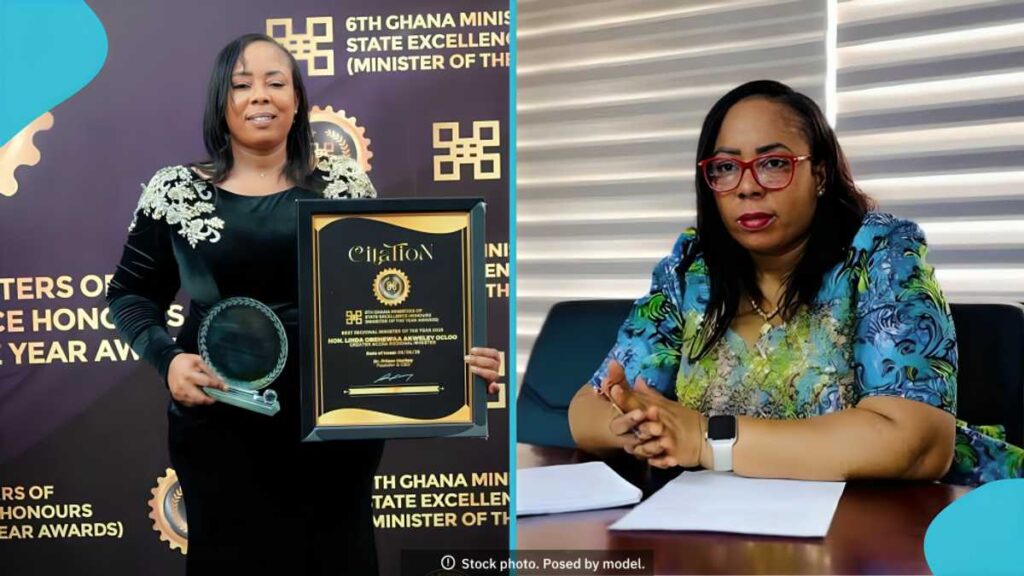
Questions have also been raised about the identities and qualifications of some of the organisations presenting these honours. Critics contend that several of these entities operate without transparent methodologies or recognised institutional backing.
There have also been concerns over the possible use of public resources by state institutions to sponsor participation in such events. Governance advocates argue that this practice could amount to a misuse of taxpayer funds while weakening public trust in official performance assessment mechanisms.
Presidency Steps In
Amid the growing debate, the Presidency has moved to regulate the participation of government officials in private award events.
The Secretary to the President, in a statement, directed ministers, chief executive officers of state-owned enterprises, and other political appointees to refrain from participating in, sponsoring, endorsing, attending, or accepting awards from privately organised schemes without prior approval from the Office of the President.

The directive cited concerns about credibility, transparency, and the need to preserve the integrity of public service. According to the Presidency, the increasing trend of government officials receiving accolades from private organisations with unclear credentials risks creating misconceptions regarding how public performance should be evaluated.
The government maintains that the performance of ministers and chief executive officers should instead be measured by tangible outcomes, effective service delivery, prudent management of public resources, and the successful implementation of national policies and programmes.
The directive also emphasised that future assessments of government appointees would be conducted through formal performance reviews undertaken by the Presidency.
Public Trust Remains Essential
Mr Dankwah’s observations reinforce a broader national conversation about ethics, accountability, and the standards expected of public officials.
While the Global InfoAnalytics findings indicate that ministers and government officials continue to fare relatively better in corruption perception rankings, the deterioration in their average score serves as a reminder that public trust cannot be taken for granted.

Analysts note that maintaining confidence in public institutions requires not only adherence to the law but also conduct that reflects modesty, transparency, and a commitment to service.
As Ghanaians await future perception surveys, attention is likely to remain fixed on whether public officials heed the growing calls for restraint and accountability.
For many citizens, the issue extends beyond statistics. It concerns the values demonstrated by those entrusted with public office and whether their actions strengthen or weaken confidence in democratic governance.
READ ALSO: GSE Sinks as Investors Wipe Out 66 Points