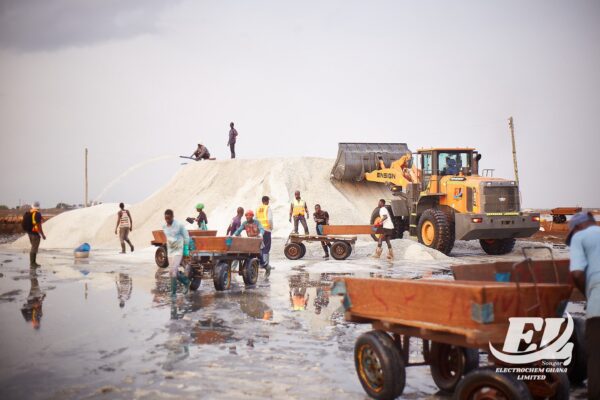
Civil Society Organisations (CSOs) have strongly urged the government and private sector stakeholders to prioritize increased equity investment in Electrochem Ghana Limited (EGL) to ensure the sustainable capitalization of the massive Ada Songor Salt Project.
This urgent call-to-action underscores a profound national consensus regarding the socio-economic milestones achieved by the project over the past five years.
Following a comprehensive multi-stakeholder facility assessment at Ada, a high-powered delegation of prominent civil society actors declared the industrial salt complex a foundational asset capable of anchor-funding West Africa’s industrial supply chains, reducing regional import dependencies, and generating shared fiscal prosperity.
“We’ve had investors from the United Arab Emirates, France, the United Kingdom and Austria who are interested in the salt business and see Ghana as a gateway to the African market.”
company’s Chief Executive Officer, Francis Buamah
Expanding on this advocacy, the coalition of non-state actors noted that strategic equity injection at this critical developmental juncture would secure the capital structure necessary to accelerate downstream linkages.
The civil society leaders met directly with EGL executive management, traditional authorities, and grassroots community networks to review operational metrics, assess structural growth parameters, and verify the localized socio-economic impacts of the venture.
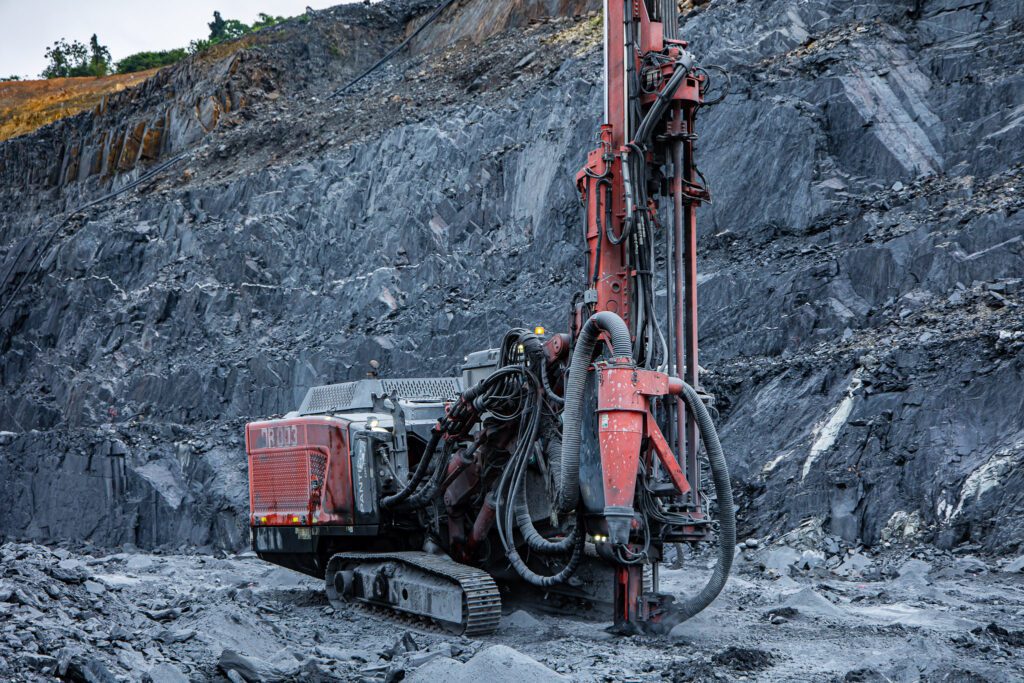
By formally endorsing the commercial scale and technical velocity of the Ada Songor development, the CSOs highlighted the initiative as a major structural catalyst for macro-economic transformation, rapid employment creation, and rural industrialization across the Greater Accra Region and the broader national economic space.
Technical Expansion and Global Investor Confidence
The call for heightened domestic and international capitalization coincides with growing global investor confidence in EGL’s operational template, as evidenced by incoming investment pipelines from the United Arab Emirates, France, the United Kingdom, and Austria.
These international sovereign and private entities are currently negotiating asset-backed equity positions within Electrochem’s comprehensive $500 million phased infrastructure expansion programme.
According to EGL Chief Executive Officer Francis Buamah, bilateral discussions with these global partners have intensified over the last six months to secure long-term, non-dilutive capital aimed at modernizing baseline infrastructure and scaling industrial output.
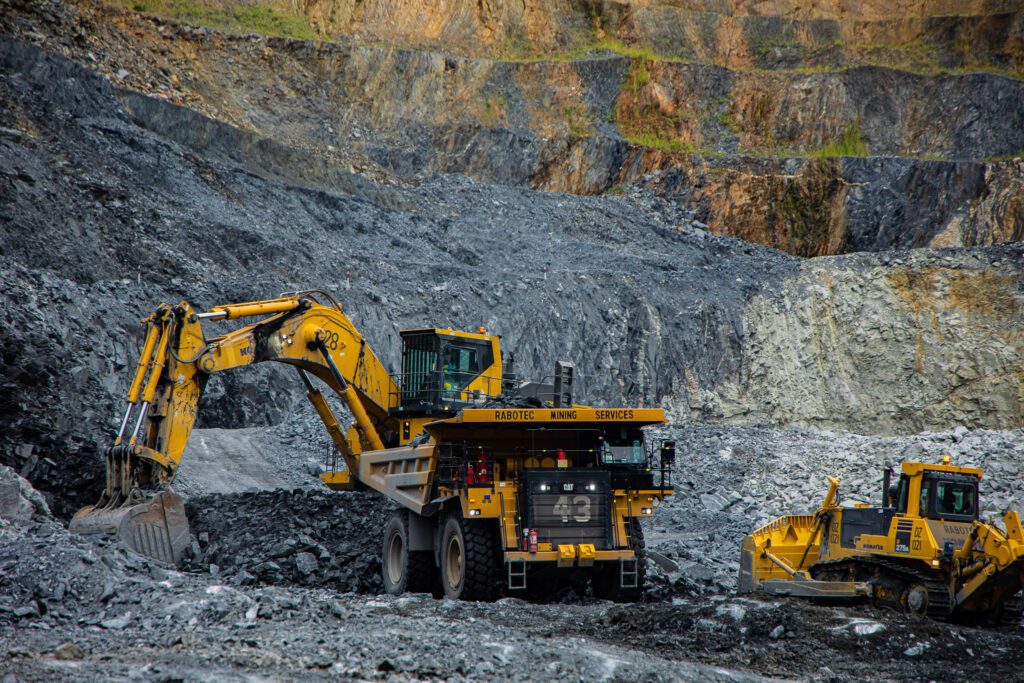
Mr. Buamah stated that the expansion programme would systematically finance major engineering works, the full automation of lagoon pump facilities, the construction of cross-concession distribution pipelines, and a dedicated maritime jetty.
Additionally, the capital layout will fund the procurement of deep-water vessels and barges, the completion of an industrial-grade salt refinery, the establishment of a caustic soda processing plant, the acquisition of heavy mining equipment, and the foundational funding for a specialized, research-oriented university.
Strategic Asset Realization and Community Trust-Building
Underscoring the socio-political dimensions of the project, the Board Chairman of Electrochem Ghana, Professor Kofi Abotsi, insisted that private capital allocation must remain tightly aligned with Ghana’s sovereign development objectives.
Professor Abotsi argued that large-scale natural resource extractions must create measurable, non-exportable value for local citizens through localized wealth creation, sustainable industrialization, and targeted corporate social investments.
He stated that aggressive, continuous stakeholder engagement is the primary mechanism ensuring that investment-driven growth delivers resilient advantages to host communities while protecting investor returns.
Concurrently, the Chief Executive Officer of the Consumer Protection Agency (CPA), Kofi Owusu Hene popularly known as Kofi Kapito implored management to operationalize deep, trust-based collaborative frameworks.
Mr. Kapito stressed that “stronger collaboration between the company and host communities would help build trust and ensure broad-based support for the initiative,” balancing technical progression with proactive social licenses.
Traditional authorities have mirrored this perspective, with the Vice President of the Ada Traditional Council characterizing the Songor Lagoon as one of Ghana’s most valuable natural assets, capable of yielding millions of metric tonnes of industrial-grade salt annually under optimal management.
Salt Exploitation as a Macroeconomic Imperative
The structural transformation of the Songor Lagoon reflects a long-overdue transition from artisanal, sub-critical extraction to a modern, capital-intensive chemical manufacturing base.
In industrial economics, sodium chloride is not merely a consumable commodity but a primary chemical feedstock required for chlor-alkali industries, which produce caustic soda, chlorine, and hydrochloric acid compounds fundamental to regional oil refining, soap manufacturing, bauxite processing, and pharmaceutical formulation.
For decades, West Africa has suffered from severe structural deficits in industrial salt, relying heavily on expensive imports from extra-continental sources, which drains sovereign foreign exchange reserves and inflates localized manufacturing cost structures.

By transitioning into an automated, high-purity production paradigm designed to hit an immediate target of one million metric tonnes annually, Electrochem Ghana positions the nation as a net exporter of vital industrial raw materials.
The historical validation for this centralized approach traces back to the 1991 Master Plan developed by international experts, which advocated for structured lagoon management and investor collaboration over fragmented extraction models.
Traditional leaders, including Nene Agudey Obichere III, have actively dispelled legacy misconceptions regarding the concession, highlighting EGL’s ongoing capital investments in potable water infrastructure, women’s empowerment credit lines, and ecological lagoon restoration as proof that large-scale industrialization can coexist harmoniously with community development, future-proofing the Songor Lagoon for subsequent generations.
REAAD ALSO: Tarkwa MP Pushes Multi-Billion Dollar Manganese Refinery At Nsuta