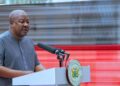
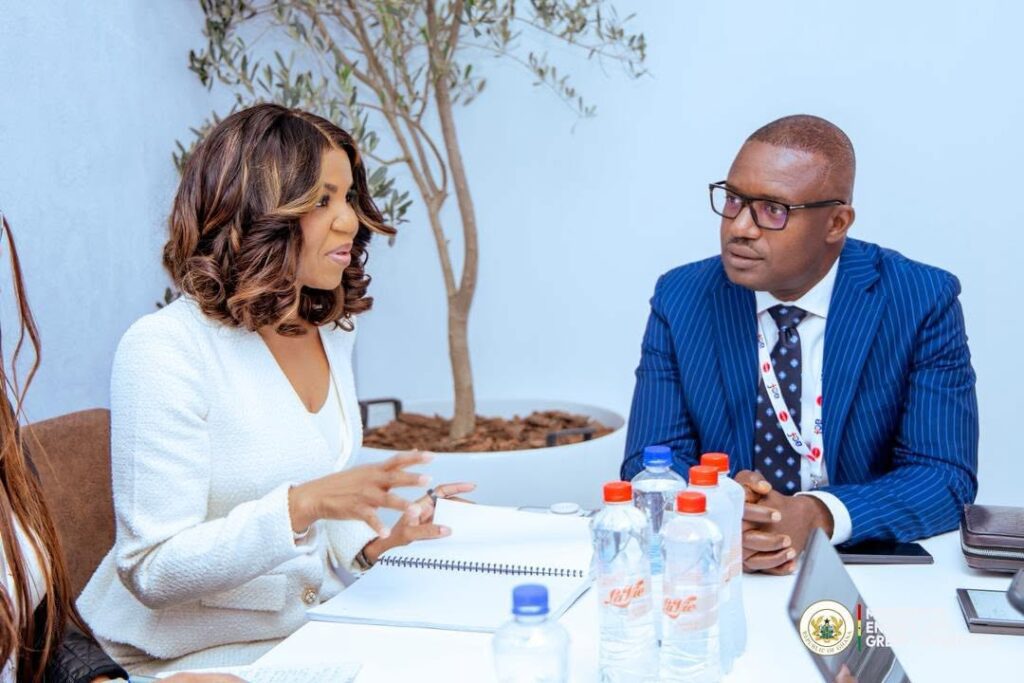
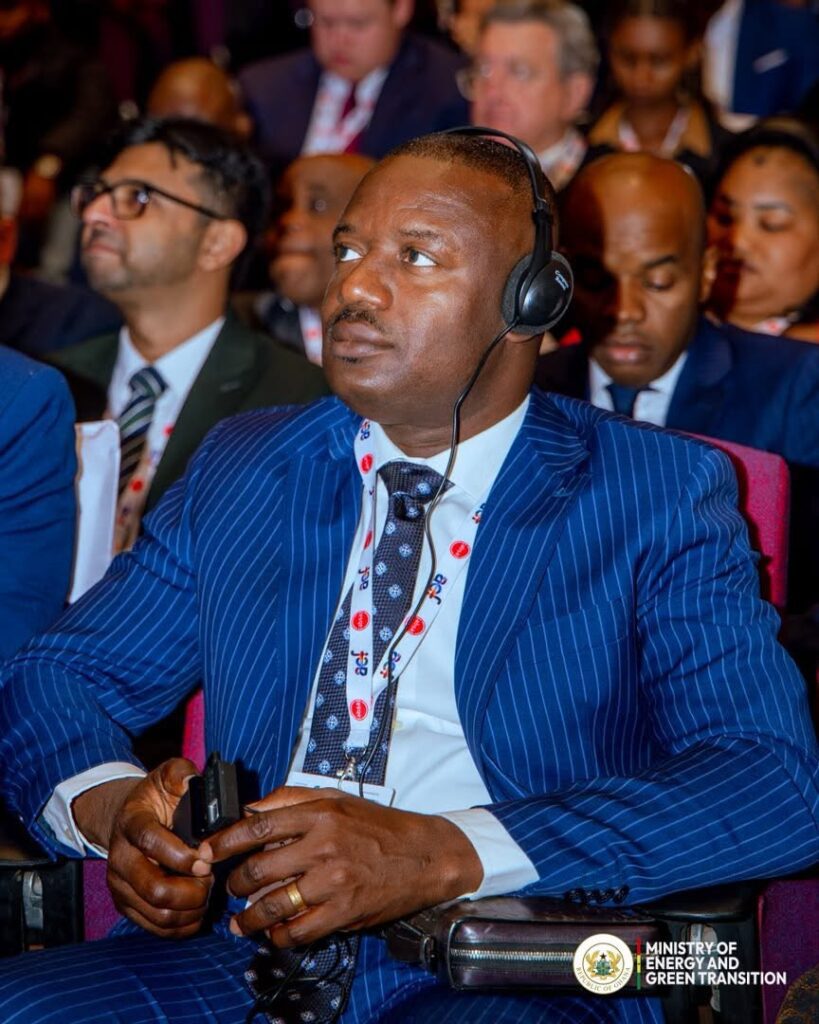
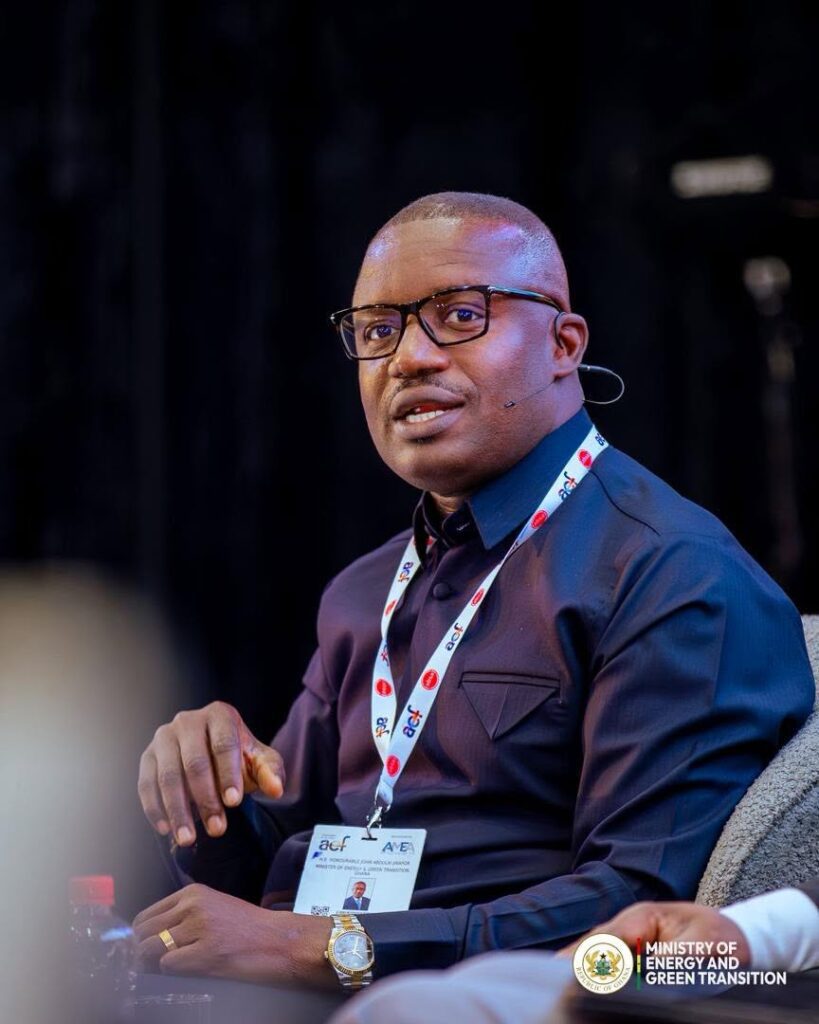
Minister for Energy and Green Transition, Hon. John Abdulai Jinapor, has held a highly productive bilateral meeting with Damilola Ogunbiyi, the Chief Executive Officer of Sustainable Energy for All (SEforALL), to discuss strategic partnerships for the nation’s electricity sector.
The high-level dialogue focused primarily on establishing a more robust collaborative framework between the global energy organization and the Republic of Ghana to fast-track domestic energy goals.
During the encounter, both leaders laid out plans to align international resources with Ghana’s national development frameworks, ensuring that future energy infrastructure meets the growing industrial demand across the country.
“Ghana greatly values SEforALL’s continued partnership and support in expanding energy access, promoting renewable energy solutions, mobilising investment, and driving sustainable economic growth. Our discussions focused on strengthening collaboration between SEforALL and Ghana as we advance our national energy and sustainable development priorities. We remain committed to working together to achieve universal, reliable power for our people.”
Minister for Energy and Green Transition, Hon. John Abdulai Jinapor
Mrs. Ogunbiyi, who also serves as the Special Representative of the UN Secretary-General for Sustainable Energy for All and Co-Chair of UN-Energy, brought global institutional backing to the table as the two sides explored immediate avenues for technical cooperation.

Hon. Jinapor took the opportunity to commend SEforALL for its steadfast global leadership in advancing universal access to affordable, reliable, sustainable, and modern energy.
The discussions particularly centered around SEforALL’s key role in supporting “Mission 300,” a monumental continental initiative aimed at connecting 300 million people across Africa to electricity by 2030, which is expected to catalyze inclusive economic growth and bridge sub-Saharan Africa’s widening energy gap.
Accelerating Renewable Energy Grid Integration
This strategic engagement comes at a critical juncture as the Ministry of Energy and Green Transition aggressively pursues its target of reaching 400 megawatts of solar capacity by 2026.
By deepening ties with SEforALL, Ghana stands positioned to secure the specialized technical expertise required to safely integrate large-scale variable renewable energy into the national grid without compromising transmission stability.
Furthermore, through programs like the Ghana Scaling-up Renewable Energy Program (SREP), the country is already rolling out 12,000 net-metered solar photovoltaic systems for residential use.
This collaborative pathway offers a mechanism to refine the billing and distribution architecture of local utilities, allowing excess green energy to be seamlessly fed back into the national pool.
Mobilizing International Capital for Green Transition
A primary bottleneck for West African green infrastructure remains the high cost of capital, making SEforALL’s investment mobilization frameworks immensely beneficial to the state.
The organization’s deep networks can help de-risk local clean energy projects, making them attractive to international independent power producers and climate financiers.
This financial facilitation directly complements Ghana’s National Energy Transition Framework, an ambitious roadmap designed to deliver affordable electricity while lowering generation costs below 4.5 cents per kilowatt-hour.
Accessing structured international funds will reduce the fiscal burden on the central government, driving the establishment of the new Renewable Energy Authority (REA) without stalling other critical socio-economic initiatives.
Unlocking Regional Industrialization and Export Potential
By embedding itself into the fabric of regional initiatives like Mission 300, Ghana can leverage its geographic advantages to become the primary clean energy hub for the West African sub-region.
Under the current “Accra Reset Agenda,” the government is transitioning the domestic economy from exporting raw commodities to value-added manufacturing, a shift that fundamentally relies on continuous, predictable industrial power.
A stabilized, green-powered transmission network allows local manufacturing plants to lower their carbon footprints, giving Ghanaian exports a distinct competitive edge in international markets.
Ultimately, this high-level diplomatic alignment ensures that the nation does not merely participate in the green transition, but actively dictates its pace across the continent.
READ ALSO: Millions Struggle as Afghanistan’s Humanitarian Crisis Escalates