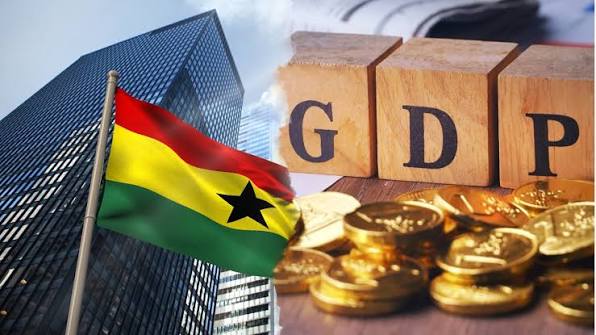
Ghana’s economy recorded a 6.4 percent year-on-year expansion in the first quarter of 2026, according to the Ghana Statistical Service.
This marks a modest acceleration from the 6.2 percent registered in the corresponding period of 2025. While the figure signals resilience and beats several market expectations, a closer examination reveals underlying vulnerabilities that could moderate growth in the second half of the year and beyond.
Services led the expansion, growing by 7.1 percent and contributing nearly half of overall GDP. Within this sector, information and communication technology surged by 25.2 percent, reflecting ongoing digital transformation, fintech expansion, and improved connectivity. Transport and storage added 13 percent, while trade grew by around 9 percent. These sub-sectors benefited from lower borrowing costs and recovering consumer confidence following years of stabilization efforts.
Industry followed closely with 6.9 percent growth, a notable improvement from 4.1 percent a year earlier. Mining and quarrying rebounded sharply to 10.7 percent, supported by robust gold production and global demand. Oil and gas posted 7 percent growth after a prior contraction, while manufacturing and electricity each expanded by 6.2 percent. Non-oil GDP grew by 6.3 percent, underscoring broad-based momentum beyond petroleum.
Agriculture advanced by 4 percent, with forestry and logging up 9 percent and crops by 4.7 percent, including cocoa at 3.8 percent. However, fishing contracted, highlighting sector-specific weaknesses. Overall, the data points to a recovery fueled by commodity strengths, policy easing, and structural reforms under the IMF-supported program.
Macroeconomic Stabilization Provides Tailwinds
Low inflation has been a key enabler. Headline inflation stood at 3.7 percent in May 2026, up slightly from 3.4 percent in April but dramatically lower than the double-digit rates of previous years.
This stability, combined with Bank of Ghana policy rate cuts, has eased financing conditions for businesses and households. The cedi has shown relative resilience, supported by strong gold exports and improved reserves.
Fiscal discipline under the IMF program has delivered primary surpluses, aiding debt restructuring progress. Public debt levels have declined as a share of GDP, restoring some investor confidence and reducing immediate financing pressures. These achievements have positioned Ghana as one of the stronger performers in sub-Saharan Africa amid global uncertainties, including geopolitical tensions.

Emerging Risks Point to Moderation Ahead
Despite the upbeat Q1 print, analysts forecast a slowdown in subsequent quarters. Fitch Solutions, for instance, revised its full-year 2026 growth projection upward to 5.7 percent following the strong start but anticipates moderation in the second half due to a higher statistical base and external headwinds. Growth could ease further toward 4.7 percent in 2027 as debt-servicing costs rise and divert resources from productive spending.
One major concern is the El Niño weather pattern, now forming with high probability. This could bring drier conditions to West Africa, threatening cocoa production for the 2026/27 season. Cocoa remains a vital export and fiscal revenue source. Any significant shortfall would hurt farmer incomes, foreign exchange earnings, and related industries, potentially reversing agricultural gains. Historical patterns show El Niño episodes often reduce regional cocoa output by 5 to 15 percent.
Fiscal sustainability poses another risk. While debt-to-GDP has improved, interest payments still consume a substantial budget share. Completing commercial debt restructuring remains critical. Any slippage in revenue collection or unexpected spending pressures could erode credibility and tighten liquidity. External buffers have strengthened, but reliance on commodity exports exposes the economy to price volatility, particularly if global gold demand softens.
Inflation risks, though subdued, could re-emerge. Recent modest upticks reflect pass-through from energy prices and slight cedi movements. Approved electricity and water tariff adjustments effective July 2026 may add upward pressure. Should global oil prices rise amid geopolitical events, imported inflation could challenge the central bank’s easing cycle.
Structural challenges persist. Unemployment, skills mismatches, and limited economic diversification constrain inclusive growth. Public investment remains constrained by consolidation needs, while private sector credit growth, though improving, has not yet fully translated into broad-based job creation. Aging mining infrastructure and vulnerabilities in large-scale operations also warrant attention.
Policy Implications and Strategic Outlook
The government must balance growth support with prudence. Continued fiscal discipline, enhanced revenue mobilization through digital systems, and investment in value-added agriculture and manufacturing could mitigate risks. Promoting ICT and services diversification aligns with long-term potential, but infrastructure gaps and human capital development require sustained focus.
Monetary policy retains room for cautious easing if inflation stays within the 8 plus or minus 2 percent target band. However, vigilance against second-round effects from commodity shocks is essential. Structural reforms in energy and cocoa sectors, alongside an improved investment climate, will determine whether Ghana converts short-term momentum into sustained medium-term expansion.
Ghana’s 6.4 percent Q1 performance demonstrates the payoff from stabilization measures. Yet it also underscores the fragility of recovery in a commodity-dependent economy facing climate and global risks.
Moderation appears likely without proactive measures to build resilience, enhance productivity, and broaden the growth base. Policymakers and stakeholders should treat this strong quarter as both validation and a call to address underlying vulnerabilities before they constrain future performance.
READ ALSO: Kasapreko Steals Spotlight with 15.8 Million Shares