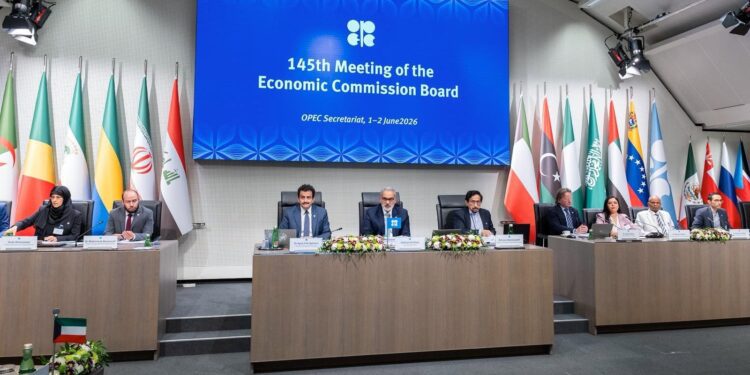
The OPEC Fund for International Development has launched two major financing initiatives aimed at climate-vulnerable and developing economies while advancing more than 2.8 billion dollars in new loans, partnerships, and development programs during its 2026 Development Forum in Vienna.
Marking its 50th anniversary, the development lender unveiled the Vulnerability to Viability Compact, known as V2V, alongside a 1.5-billion-dollar Digital Transformation Action Plan to support digital infrastructure through 2030.
These major capital commitments are specifically designed to bridge growing financing and technology gaps facing developing economies, ensuring that vulnerable nations can build long-term economic resilience on their own terms.
“The development landscape is changing profoundly, but the central challenge remains the same: ensuring that countries have access to the finance, technology and partnerships they need to achieve their development goals on their own terms. Climate-vulnerable countries need access to finance on terms that reflect their realities, while all countries need the infrastructure and capabilities to participate fully in a rapidly changing digital economy.”
OPEC Fund President Abdulhamid Alkhalifa.

Expanding on this landmark announcement, the initiative brings together 14 development finance institutions under the V2V compact to improve access to affordable, long-term financing for 74 climate-vulnerable nations, an effort spearheaded jointly with the Government of Barbados in its capacity as chair of the Climate Vulnerable Forum and its V20 Finance Ministers group.
Alongside this climate push, the Digital Transformation Action Plan formally positions digital development as the OPEC Fund’s third cross-cutting strategic priority, aligning it directly with climate action and food security to modernize critical infrastructure across partner nations through the end of the decade.
Transforming Energy Infrastructure Through Digital Integration
The OPEC Fund’s newly minted 1.5-billion-dollar Digital Transformation Action Plan will serve as a foundational pillar for modernizing the energy architecture of developing economies.
By financing robust digital infrastructure, capabilities, and applications through 2030, this initiative allows partner countries to transition from fragile, analog electrical grids to decentralized smart grids.
Digital integration enables real-time monitoring and data collection, which are critical for stabilizing grids that incorporate intermittent renewable energy sources like utility-scale solar and wind power.
Furthermore, upgrading digital capabilities allows local utilities to deploy advanced automated management systems and smart metering, reducing transmission losses that frequently plague sub-Saharan Africa and rural Latin American networks.
By embedding digital tech as a strategic priority alongside climate action, the lender ensures that the deployment of clean energy is paired with the software and digital networks required to manage modern power generation, preventing widespread blackouts and building technical self-reliance.
Enhancing Climate Resilience and Clean Grid Capacity
The Vulnerability to Viability Compact (V2V), targeting 74 climate-vulnerable nations, directly addresses the prohibitive cost of capital that routinely stalls clean energy projects in emerging markets.
By gathering 14 development finance institutions to lower borrowing costs, the V2V compact will help vulnerable economies insulate their energy sectors against extreme weather events, which often devastate fragile energy infrastructure.
Initial funding sectors such as water security are deeply linked to the energy-water nexus; improving water infrastructure directly stabilizes hydropower generation, a critical source of clean baseload electricity for many V20 nations facing unpredictable droughts.
Additionally, the compact provides the long-term, affordable financing required to construct climate-resilient power lines, secure decentralized solar microgrids for remote health clinics, and build ruggedized energy storage facilities.

This financial buffer ensures that when climate disasters strike, sovereign nations do not have to divert scarce resources away from their energy transition goals to pay off high-interest emergency debts.
Boosting Rural Electrification and Regional Energy Trade
The diverse regional financial packages signed at the Vienna forum provide targeted capital to stimulate local energy supply chains, cross-border energy trading, and rural energy access.
For instance, the 180-million-dollar partnership strategy for Mauritania explicitly targets climate-resilient infrastructure and rural value chains, providing the financial groundwork to expand off-grid solar solutions for agricultural processing and isolated communities.
In Nicaragua, the 31.5-million-dollar road rehabilitation corridor directly enhances the transport connectivity required to haul heavy equipment for geothermal and wind energy installations in rural provinces.
On a broader scale, the 65-million-dollar syndicated facility for the East African Development Bank offers essential liquidity to fund regional infrastructure projects and local SMEs, many of which operate as clean-tech startups providing pay-as-you-go solar home systems.
By backing regional development banks and introducing localized mechanisms like the first local currency loan in Azerbaijan to insulate local businesses from foreign exchange risks, the OPEC Fund is strategically empowering domestic private sectors to drive their own sustainable energy solutions.