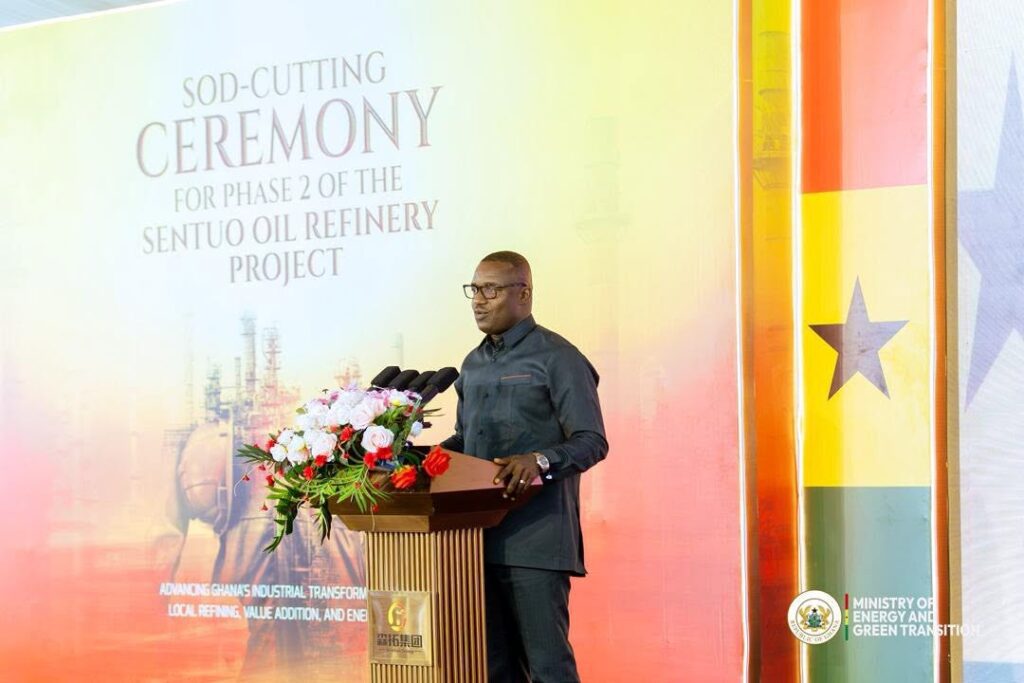
Hon. John Abdulai Jinapor, the Minister for Energy and Green Transition, has announced a massive resurgence in Ghana’s domestic petroleum refining sector, revealing that the nation has successfully achieved a production capacity of 28,000 barrels per day (bpd).
This remarkable turnaround follows years of total stagnation at the state-owned Tema Oil Refinery (TOR), an asset that had previously faced absolute abandonment and an impending near-giveaway sale under the previous administration.
The strategic operational revival, directly ordered by the Presidency, marks a fundamental structural shift in Ghana’s energy ecosystem, effectively rescuing the state asset from an initial valuation of just $22 million and placing it back at the center of the nation’s economic independence and industrialization drive.
“From 2021, the Tema Oil Refinery had been idling. It went to a state where the then government decided that they would give it out for $22 million. When we assumed office, Mr. President said, no, turn this refinery around. Today, we are producing about 28,000 barrels from our own refinery. And when you put Sentuo , and when Sentuo completes their work and the oil refinery peaks based on the work we are doing, not only are we going to be self-sufficient, we are going to export the excess that we produce here in this country. But to do that, we must increase oil production.”
Hon. John Abdulai Jinapor, the Minister for Energy and Green Transition

Hon. John Jinapor outlined that the current output of 28,000 barrels per day serves as the foundational phase of an aggressive, multi-tiered national energy expansion roadmap.
The government’s strategic focus is heavily reliant on completing ongoing upgrades, including the integrated integration of secondary processing components and Sentuo distillation facilities designed to push the facility toward its maximum peak.
Beyond reversing an alarming six-year streak of continuous domestic oil production decline, this operational turnaround is precisely calibrated to scale up domestic crude extraction and refining concurrently.
As the state-backed infrastructure hits its optimized peak output, the administration intends to completely eliminate the nation’s heavy reliance on foreign refined petroleum imports, systematically transitioning the West African nation into a dominant regional exporter of excess finished petroleum products.
Reversing the Six-Year Upstream Production Decline
The sudden resurgence of Ghana’s local refining capability addresses a critical vulnerability in the nation’s upstream oil sector, which had been plagued by half a decade of shrinking output.
By aligning domestic extraction directly with national refining assets, the Ministry of Energy and Green Transition is establishing a reliable, closed-loop value chain that maximizes the worth of every single barrel of Ghanaian crude.
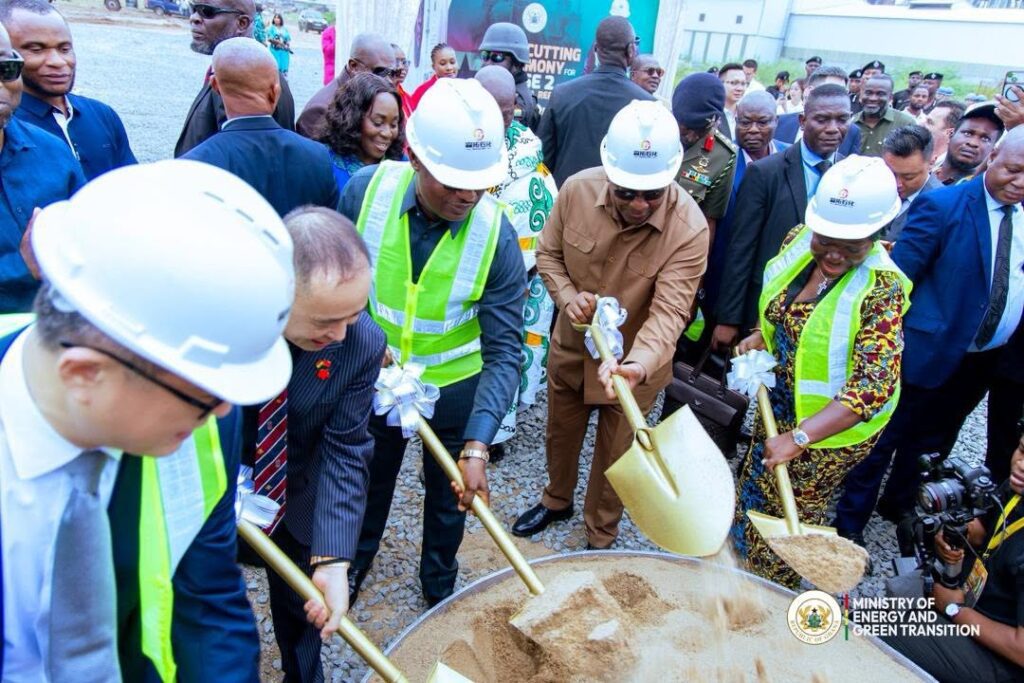
To witness this historic transition firsthand, the sector hosted His Excellency the President of the Republic of Ghana at a formal sod-cutting ceremony, which officially commenced the highly anticipated construction of the second phase of expansion.
This upcoming technical phase will seamlessly link existing distillation systems with a new fuel processing unit, effectively scaling the facility’s core capabilities beyond the current 28,000 bpd mark.
Minister Jinapor stated during the event that “following six years of continuous oil decline when it comes to production, this year we are turning it around,” adding that the state is on track to aggressively expand its sovereign footprint across the regional market.
Economic and Strategic Imperatives of Refining Sufficiency
Historically, the state has expended billions of dollars annually in scarce foreign exchange to import finished fuels like automotive gasoil and premium motor spirit, a cyclical layout that consistently drained central bank reserves and triggered severe domestic inflation.
By processing indigenous crude locally, the nation will effectively retain this massive capital layout within its boundaries, relieving pressure on the Ghanaian Cedi and retaining high-value industrial margins.
Furthermore, the expansion of the industrial complex acts as a major catalyst for direct job creation, technical capacity building, and downstream petrochemical industry growth.
The secondary and tertiary phases of the refinery layout are projected to double operational employment, absorbing engineering and administrative talent while fostering local technical expertise.
Strategically, localized refining capacity ensures absolute energy security, meaning vital economic sectors such as agriculture, manufacturing, and transport will remain fully insulated from global supply disruptions and geopolitical conflicts.
Projecting Ghana as an Energy Export Powerhouse
The ultimate goal of the current energy turnaround stretches far beyond satisfying domestic fuel consumption; it positions Ghana to become the primary energy hub for the entire West African sub-region.
As the local refining assets hit their optimized peak capacity, the resulting surplus of high-quality, refined petroleum products will be systematically funneled into neighboring landlocked and coastal nations.
This lucrative export framework is set to diversify the nation’s foreign exchange earnings, significantly bolstering state revenues through international trade.
The successful implementation of this state-led turnaround offers undeniable proof that proper policy orientation and decisive state intervention can breathe new life into struggling public infrastructure.
READ ALSO: Volker Türk Calls for Probe Into Rise in ICE Custody Deaths