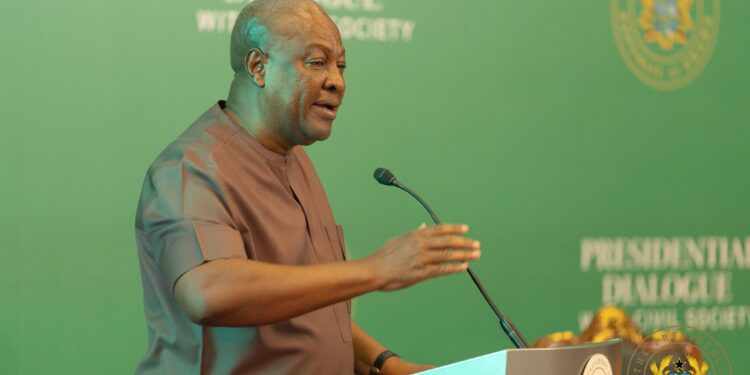
President John Dramani Mahama has declared a major turning point for Ghana’s energy fortunes, announcing that historic investments in the upstream petroleum sector have triggered a massive wave of fresh optimism across the industry.
Speaking during the high-profile commissioning ceremony for phase two of the Sentuo Oil Refinery in Tema, the President revealed that the government has successfully secured strategic capital injections totaling over $3.5 billion from major global oil partners.
This financial influx is explicitly engineered to aggressively expand drilling operations and boost domestic energy security.
By establishing strong, collaborative frameworks with international oil companies, the current administration has set the stage to reverse years of diminishing production capacity, transforming Ghana into a highly competitive and fully self-sufficient energy hub within the West African sub-region.
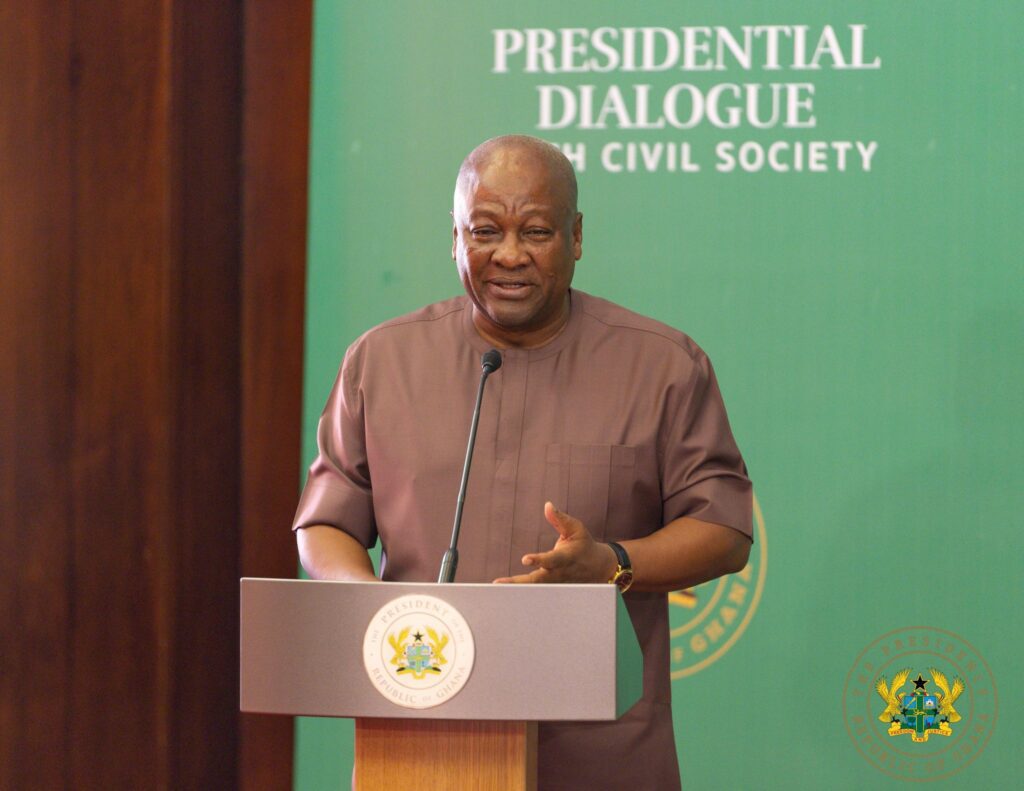
“Ladies and gentlemen, investments in our upstream petroleum sector also reflect this new optimism. In the upstream industry, we’ve secured commitments totalling more than 3.5 billion U.S. dollars. This includes approximately $2 billion from the Jubilee and TEN partners for drilling up to 20 new wells, as well as $1.5 billion from the OCTB partners to support additional field development and exploration activities.”
President John Dramani Mahama
The President detailed exactly how this multi-billion-dollar funding structure is being deployed to overhaul the country’s oil and gas architecture.
A substantial $2 billion commitment has been locked in from the Jubilee and TEN field partners, which will bankroll the complex engineering and drilling of up to 20 critical new production wells.
Simultaneously, an additional $1.5 billion has been committed by the Eni-led OCTP partners to aggressively finance deep-water exploration and support secondary field developments.
According to President Mahama, these targeted interventions which include amending the OCTP development plans, ratifying a new petroleum agreement in the offshore Tano West Basin, and pushing forward the commercialization of the long-awaited Afina Discovery represent the exact policy mechanism the Minister for Energy had envisioned to expand national crude reserves.
The bold regulatory modifications are already yielding unprecedented results, driving daily production at the flagship Jubilee field from a previous baseline of 60,000 barrels up to an impressive 85,000 barrels per day, while both the TEN and Sankofa fields log measurable output gains.
Strategic Growth and Sector Revitalization
The remarkable turnaround in Ghana’s offshore extraction rates provides an undeniable blueprint for how calculated policy alterations can reshape a developing economy.
By directly addressing the structural bottlenecks that historically discouraged active deep-water exploration, the state has effectively transformed a prolonged era of industrial stagnation into a period of high-yield productivity.
The President note that the operational “overturn” being celebrated by the administration rests heavily on their ability to compel active upstream operators to re-invest their profits directly back into Ghanaian soil.
Transitioning from passive resource management to aggressive, state-backed commercial partnerships has systematically de-risked the Tano Basin, inviting secondary investments from ancillary service providers and cementing long-term resource sustainability.
Macroeconomic Impact and Domestic Wealth Creation
On a macroeconomic scale, these massive increases in baseline crude production serve as an essential lifeline for Ghana’s balance of payments and foreign exchange stability.
For years, the country suffered from a crippling paradox where it exported raw crude only to import expensive, refined petroleum products, a cycle that constantly drained central bank reserves and subjected local consumers to volatile global pricing shocks.
By ramping up domestic extraction to feed the newly expanded Sentuo Refinery which is scaling its capacity from 40,000 to 100,000 barrels per day Ghana is successfully retaining millions of dollars within its domestic banking ecosystem.
The stabilization of the local currency, driven by decreased import reliance, reduces the localized cost of doing business, dampens inflationary pressures, and directly lowers the cost of living for ordinary citizens.

Furthermore, the expansion of these production fields creates thousands of highly skilled technical jobs for Ghanaian engineers, fostering localized capacity building and generating substantial royalty streams to fund critical public infrastructure.
Sustaining the Momentum of the Petroleum Turnaround
Sustaining this hard-won momentum will require the government to continuously refine its regulatory frameworks and protect the collaborative trust established with international financiers.
The successful reversal of the national production decline proves that when fiscal regimes are clear, transparent, and mutually beneficial, global capital naturally flows to where it can maximize developmental impact.
Moving forward, the strategic integration of the upstream production boom with downstream refining capacities will serve as the ultimate shield protecting the country from external macroeconomic vulnerabilities.
As the nation celebrates these measurable output gains, the primary objective remains clear: maintaining a steady, predictable investment climate that ensures Ghana’s hydrocarbon wealth continues to fuel sustainable industrial growth for generations to come.
READ ALSO: Growing Mineral Demand Fuelling Environmental & Human Rights Risks – Report