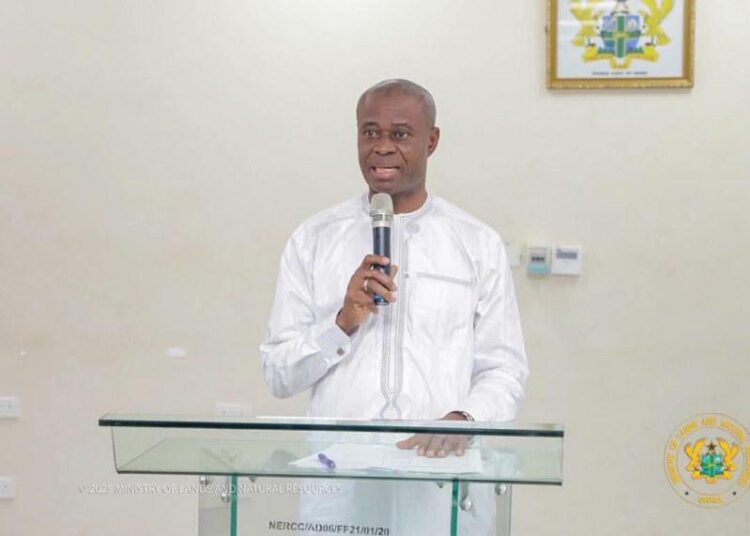
Deputy Minister for Lands and Natural Resources, Hon. Alhaji Yusif Sulemana, has called for a fundamental paradigm shift in Ghana’s mining sector that prioritizes direct community impact through binding Catchment Compacts over traditional Corporate Social Responsibility (CSR) initiatives.
Delivering a keynote address on behalf of the Minister for Lands and Natural Resources, Hon. Emmanuel Armah-Kofi Buah, at the National Mining Stakeholders Conference 2026 in Accra, the Minister argued that discussions around mining must move beyond macro-economic figures like revenue, export statistics, and investments to address the practical welfare of host host settlements.
He noted that host populations frequently question how mining activities directly benefit their everyday lives, making compulsory, needs-driven legal frameworks and localized frameworks essential to sustaining a social license to operate.
“What is important is that we should not sit down and allow companies to decide what they do in the form of CSR, but there should be a strategy to ensure that it becomes an obligatory on the part of these companies in order that they respond to the needs of the people. And I will just cite an example when I was talking to my colleague. A situation where in the form of a social responsibility to a community, you have a tennis court being built, and this tennis court is described as a social a corporate social intervention. I think that we need to move away from those interventions and touch the needs of the people.”
Deputy Minister for Lands and Natural Resources, Hon. Alhaji Yusif Sulemana,
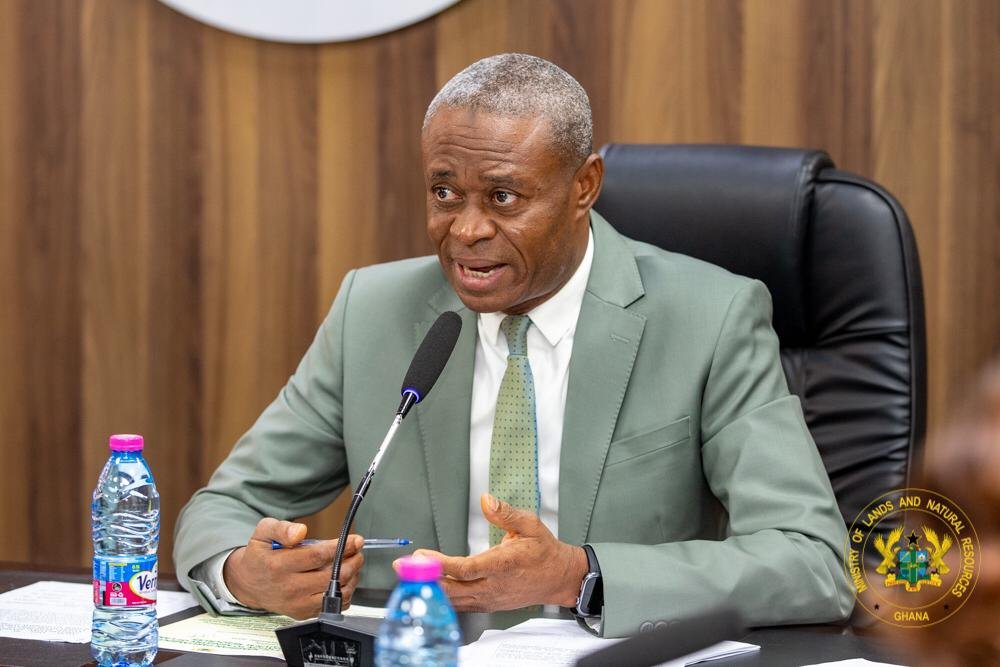
Expanding on the government’s vision, Hon. Sulemana explained that while the Minerals Commission has instituted policy frameworks to advance local content, institutionalize annual local procurement summits, and enhance domestic procurement, local content must extend well beyond basic payroll figures.
True local value retention, according to the Deputy Minister, requires sustained technology transfer, capacity building, and enterprise development that can survive well after a mining site changes ownership or ceases operations. He cautioned against superficial CSR gestures, such as building recreational infrastructure like tennis courts without consulting host communities, and urged stakeholders to construct obligatory framework strategies under a unified Catchment Compact that actively involves residents in project identification.
Redefining Local Content Beyond Payroll Metrics
Ghana’s current mining framework heavily emphasizes in-country expenditure, yet host communities often face severe structural deficits once resource extraction concludes. Hon. Yusif Sulemana emphasized that measuring local participation solely through the count of Ghanaian workers fails to capture the true health of host economies.
For local content policy to achieve long-term resilience, regulatory bodies like the Minerals Commission must enforce institutional mandates that compel multinationals to transfer critical operational technologies, build localized infrastructure, and integrate Ghanaian suppliers into higher-value nodes of the mining supply chain.
Transitioning from casual consultations to structured dialogue ensures that host populations gain skills and enterprise models capable of thriving independently of mine lifespans. This strategy aligns with the broader national agenda to maintain retainable wealth within the domestic economy, transforming resource-rich districts into sustainable commercial hubs rather than leaves of post-mining environmental degradation and economic abandonment.
Mandating Catchment Compacts over Voluntary CSR
Replacing voluntary corporate philanthropy with mandatory Catchment Compacts provides a binding mechanism to realign mining investments with genuine community priorities. Under traditional CSR setups, extraction companies retain sole discretionary power over social spending, frequently funding vanity projects that fail to address vital local necessities such as potable water, healthcare, educational facilities, or environmental restoration.
A formalized Catchment Compact legally binds regulatory institutions, traditional authorities, mining firms, and civil society into a shared governance agreement where local populations directly determine development projects.

By institutionalizing obligatory local investment quotas and structured consultation frameworks, Ghana reduces community friction, minimizes resource conflicts, and establishes operational stability for commercial miners. Moving toward compulsory social contracts enforces accountability on both public administrators and private investors, guaranteeing that local populations receive continuous, measurable benefits from the raw wealth extracted beneath their land.
Industry Implications and Strategic Economic Impacts
The enforcement of mandatory Catchment Compacts and broader local procurement demands will fundamentally reshape the operational dynamics of Ghana’s extractive industry. For large-scale multi-national mining corporations and medium-scale operators, compliance will necessitate a structural shift from transactional, short-term community relations to integrated, long-term development partnerships.
This policy realignment will require mining firms to reallocate capital toward sustainable supply chain integration, domestic human capital development, and co-designed community infrastructure projects, thereby reducing geopolitical risks and operational disruptions caused by community agitation.

On a broader macroeconomic scale, enforcing localized technology transfer and structured value retention will prevent capital flight, strengthen the Ghanaian Cedi through increased domestic retention of mining proceeds, and stimulate adjacent sectors such as manufacturing, fabrication, and engineering services.
Furthermore, by transforming traditional social licenses into legally grounded, binding compacts, Ghana establishes a predictable, transparent investment environment that protects vulnerable mining districts, upholds environmental stewardship, and ensures that non-renewable mineral extraction delivers long-term economic legacies for generation after generation.