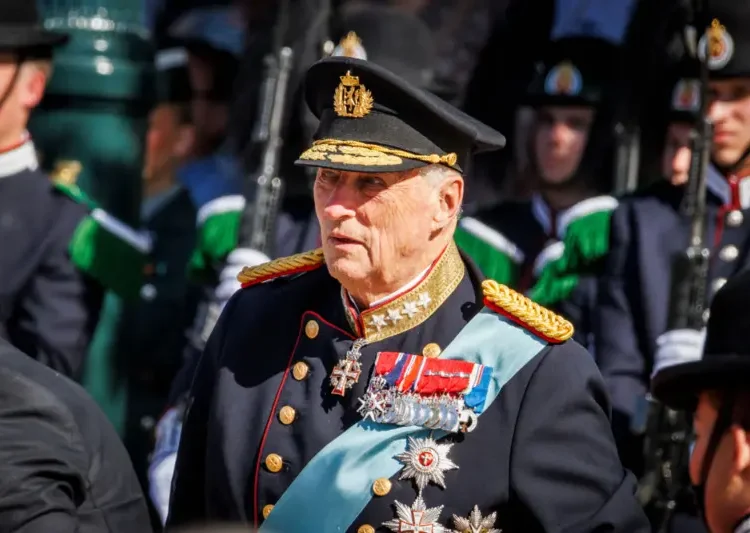
Norway has bid a final farewell to King Harald V as thousands of mourners lined the streets of Oslo for the funeral of the country’s long-serving Monarch, who was remembered for his popularity and approachable personality.
A 21-gun salute marked the beginning of the funeral procession from the Royal Palace to Oslo Cathedral, where a national ceremony was held in the late King’s honour.
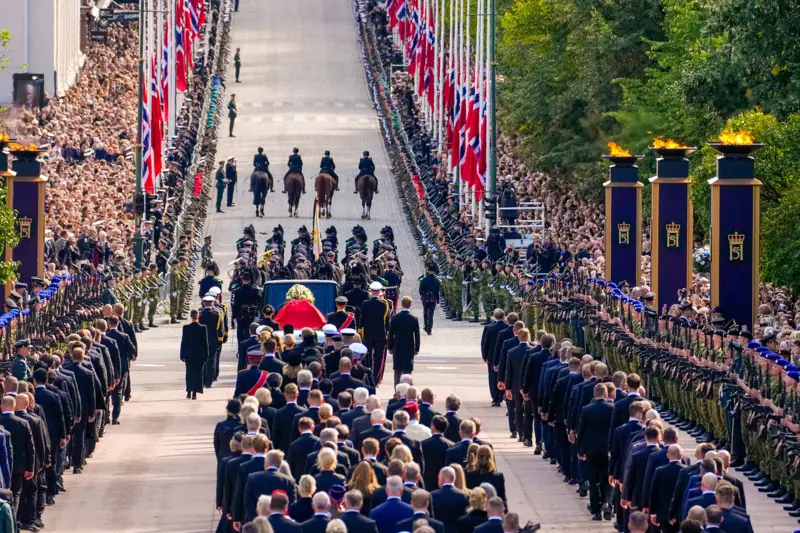
Harald’s son, the newly crowned King Haakon VIII, walked behind his father’s coffin alongside other senior members of the Norwegian royal family. The coffin was draped in the red Norwegian royal standard.
Queen Sonja, Harald’s widow, and Queen Mette-Marit, the wife of King Haakon VIII, followed the procession by car as Norwegian officials and foreign dignitaries gathered to pay their respects.
Among those attending were the monarchs of Sweden, Denmark, Spain, the Netherlands, Belgium, Luxembourg, Monaco and Jordan. Prince William, heir to the British throne, and Japan’s Crown Prince Akishino were also present.
Political leaders from more than 20 countries attended the funeral, including Ukrainian President Volodymyr Zelenskyy.
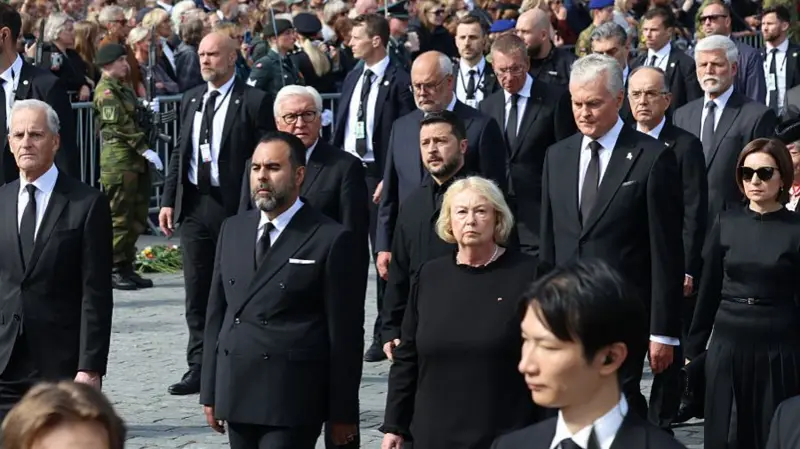
As the funeral service began at Oslo Cathedral, Norway observed a minute of silence in memory of the late king, bringing activity across the country to a pause.
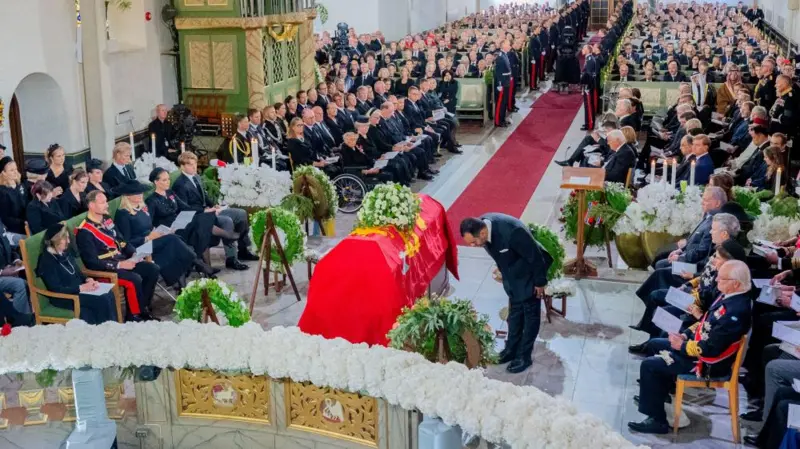
Harald died on August 28 at the age of 89. He was Europe’s oldest reigning monarch and had occupied the Norwegian throne for 35 years.
During his reign, Harald modernised the Norwegian royal household while maintaining a personal style that helped him remain popular among the public. Unlike several other European monarchs who have stepped aside in old age, Harald chose to remain on the throne until his death.
Royal observers say he was down-to-earth, respected and beloved, describing him as a “grandfather” of the nation and the “people’s King” – a title also used by his father King Olav V. However, more recently, King Harald and his family have faced personal challenges and scandal.
Marius Borg Høiby, the Norwegian crown princess’s son, was convicted of multiple offences in June including two counts of rape. Høiby is not a royal figure himself, but grew up within the family after his mother married King Haakon when he was four.
In another blow, documents were released days before the trial began revealed his mother Mette-Marit’s frequent contact with the late sex offender Jeffrey Epstein.
His death brought an immediate transition in the Norwegian monarchy, with his son taking the throne as King Haakon VIII.
Haakon formally affirmed his commitment to Norway’s constitution in parliament last week, beginning a new chapter for the Norwegian royal family.
King Harald’s death has formally transferred the responsibilities of Norway’s monarchy to his son, Haakon VIII, who succeeded him immediately following his death. Harald was remembered not only for the length of his reign but also for his efforts to adapt the royal institution to a changing Norwegian society. His approach helped maintain the monarchy’s public relevance while preserving its traditional role within the constitutional system.
For Norway, the funeral brought together the royal family, political leaders and representatives of monarchies from around the world to mark the end of Harald’s reign. It also served as a public moment of transition as the country begins the reign of his son, King Haakon VIII.
Harald V To Be Buried At Akershus Fortress
Following the public funeral service, Harald’s coffin was taken in a smaller procession to Akershus Fortress, where generations of Norwegian monarchs have been laid to rest.
Haakon walked behind the coffin alongside Sweden’s King Carl XVI Gustaf and Denmark’s King Frederik X.
The coffin was then taken to the Palace Chapel for a private service attended by members of the royal family and other invited guests.
Harald will be buried in the Royal Mausoleum beneath the Palace Chapel at Akershus Fortress, alongside members of Norway’s royal family.
He will rest near his father, King Olav V, his mother, Crown Princess Märtha, and his grandparents, King Haakon VII and Queen Maud.
The burial therefore places Harald among several generations of Norway’s royal family and provides a final resting place for a monarch whose reign spanned more than three decades. Harald’s burial also marks the conclusion of a 35-year reign that saw significant changes in Norway and within its monarchy.
READ ALSO: Zelenskyy Bemoans International Community’s Response To Russia’s Attacks