Federal judges in Massachusetts have cleared the way for the U.S. Department of Homeland Security (DHS) to begin deporting nationals from four African countries whose Temporary Protected Status (TPS) has been terminated, rejecting an emergency effort by immigrant advocacy organisations to keep the protections in place.
U.S. District Court Judges Allison Burroughs and Brian Murphy on Tuesday denied a request for a preliminary injunction that would have temporarily prevented the government from enforcing the termination of TPS for nationals of Cameroon, Ethiopia, Somalia and South Sudan. The judges also lifted a brief administrative stay that had temporarily restricted immigration authorities from carrying out deportations.
The rulings allow DHS to proceed with enforcement against affected individuals who no longer have another legal basis to remain in the United States.
Temporary Protected Status is a federal immigration programme that allows nationals of designated countries to remain temporarily in the United States when conditions in their home countries make their return unsafe. Qualifying individuals can also obtain work authorisation while their TPS remains valid.
The programme, however, does not provide a direct pathway to permanent residency or U.S. citizenship. Once the government terminates a country’s TPS designation and any applicable transition period expires, affected individuals can lose their protection from removal unless they have another valid immigration status or legal basis to remain in the country.
The latest court decisions form part of a broader effort by the Trump administration to end TPS protections for nationals of several countries. DHS has announced the termination of TPS designations for a number of countries in recent months, including Afghanistan, Haiti, Honduras, Nicaragua, Nepal, Sudan, Syria, Venezuela and Myanmar.
The termination of protections for Haitian nationals has already contributed to a broader expansion of immigration enforcement involving people who previously relied on TPS.
Immigrant advocacy organisations have argued that the administration’s decisions to terminate TPS are politically motivated and have challenged the measures in federal court.
In the Massachusetts case, advocates argued that President Donald Trump’s public comments about immigrants, particularly Somalis, demonstrated racial hostility that influenced the administration’s immigration policies. Trump has previously made disparaging comments about Somali immigrants, including describing them as “garbage” and saying they have “low IQ” and “contribute nothing.”
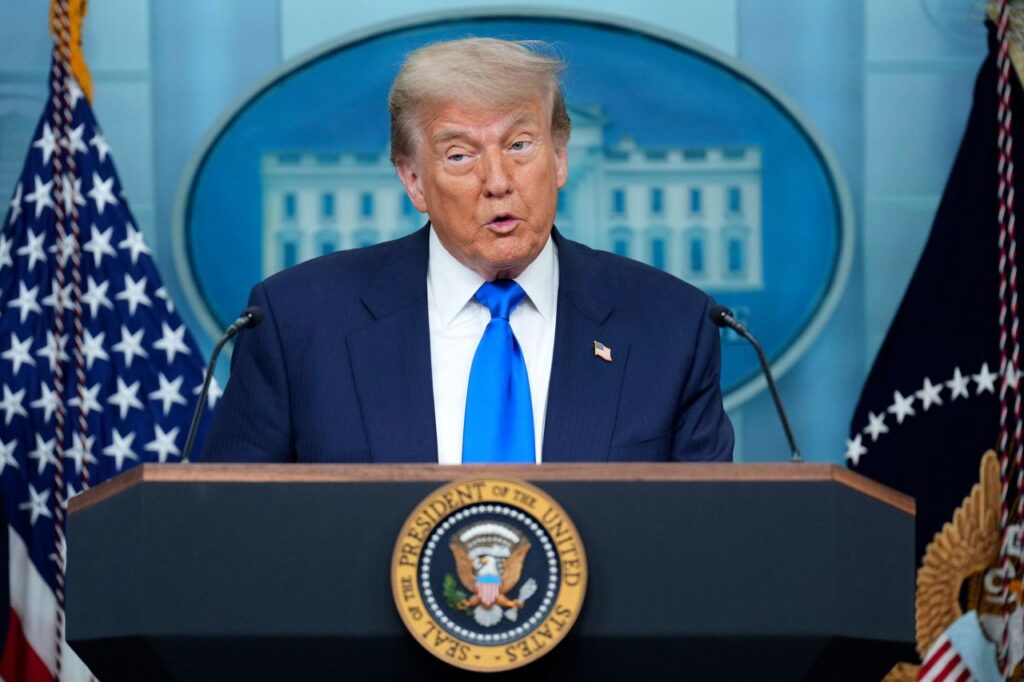
The advocacy groups argued that such statements provided evidence of discriminatory intent behind the government’s decision to end protections for certain immigrant communities.
The federal judges nevertheless declined to issue the requested preliminary injunction, allowing the government’s TPS terminations for the four African countries to take effect while the legal challenge continues.
DHS Warns Affected Migrants To Leave
In a social media post, the DHS welcomed the court decisions and issued a forceful warning to people whose TPS protections have ended.
“ALL TPS terminations are now IN EFFECT. Those with terminated TPS should leave NOW. If they don’t, we will DEPORT them.”
Department of Homeland Security (DHS)
The statement reflects the administration’s broader emphasis on immigration enforcement and its determination to remove individuals who no longer have legal permission to remain in the country.
For people affected by the TPS terminations, the consequences could include losing work authorisation and becoming subject to removal proceedings. Some may nevertheless be eligible for other forms of immigration relief or status, depending on their individual circumstances.
Although the Massachusetts judges rejected the emergency request, the legal dispute is not over. The advocacy organisations challenging the TPS terminations are appealing the decision to the First Circuit Court of Appeals.
The appeal could determine whether the administration’s decisions withstand further judicial scrutiny and whether additional restrictions are imposed on DHS’s ability to enforce the terminations while litigation continues.
The debate comes as immigration remains one of the most politically contentious issues in the United States. The Trump administration has made expanded deportations and stricter immigration enforcement central components of its policy agenda, while immigrant rights organisations have warned that aggressive enforcement could separate families and disrupt communities that have established lives in the United States.
For now, the rulings remove an immediate legal obstacle to deportations involving nationals of Cameroon, Ethiopia, Somalia and South Sudan whose TPS has ended. But with the advocacy groups pursuing an appeal, the legal status of the affected communities could continue to change as the case moves through the courts.
The outcome of the broader litigation may also have implications for other TPS holders as the administration continues its efforts to end temporary protections for nationals of countries previously covered by the programme.
READ ALSO: US-Iran MoU Expires Amid Stalled Peace Talks