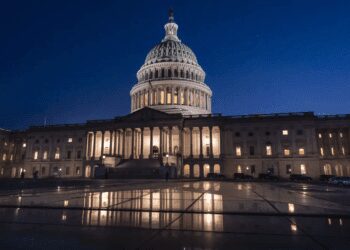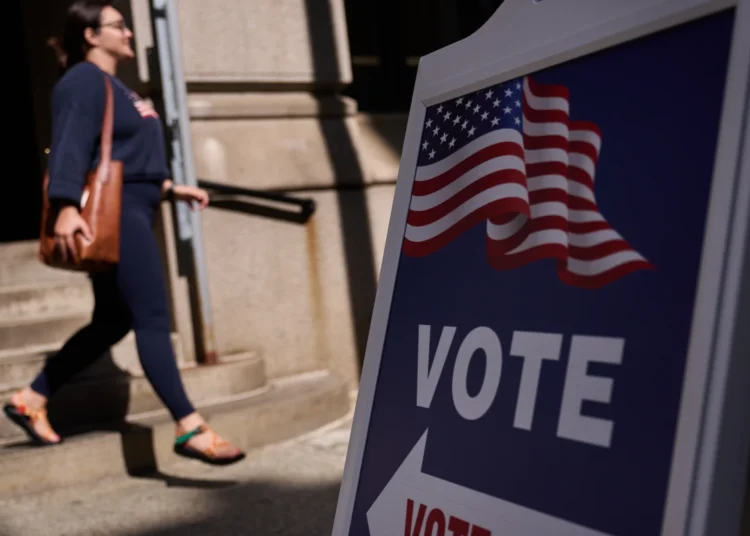
Early voting for the 2026 US midterm elections begins today, marking the start of an important stretch of campaigning as candidates compete for control of Congress amid concerns over the cost of living, the war in Iran and other issues shaping the political landscape.
Virginia begins early in-person voting, while voters in Minnesota, Idaho and South Dakota can cast absentee ballots in person, generally at local election offices or voting centres. More expansive early voting is expected to begin across those states and elsewhere in the coming weeks.
The November 3 elections will determine the composition of the US House of Representatives and Senate, where Republicans currently hold majorities. Voters will also choose governors and state legislators in most states.
The opening of early voting ushers in the final weeks of campaigning, giving Americans increasing opportunities to cast their ballots before the midterm election day. The election will be closely tied to questions about the direction of Congress and the issues that candidates believe matter most to voters.
Among the concerns shaping the campaign are rising grocery and gasoline prices, the continuing war in Iran, the risks associated with artificial intelligence and the Trump administration’s immigration enforcement policies.
The cost of living is expected to remain a central issue as candidates seek to persuade voters that their policies can address household financial pressures. At the same time, the war in Iran has added a major foreign-policy issue to an election already dominated by domestic concerns.
The outcome will have implications for the remainder of President Donald Trump’s term. A change in congressional control could significantly alter the relationship between the White House and Congress, including the scope of congressional investigations and oversight.
Supreme Court Leaves Mail-Voting Rules in Place
The start of early voting comes amid a legal dispute over mail ballots, with the US Supreme Court declining to lift a lower-court ruling that blocked new federal requirements for mail voting in the midterm elections.
The decision means states can continue using the mail-voting procedures they have relied on in previous elections, at least for the time being.
The Trump administration had sought to impose tighter requirements on mail ballots. Trump has argued that stronger controls are necessary to prevent election fraud and increase public confidence in mail voting.
Following the Supreme Court decision, Trump criticised the existing system in a post on Truth Social, describing it as a “Nation Destroying SCAM.”
Voting rights advocates, meanwhile, have encouraged voters who intend to vote by mail to submit their ballots early. Some have cited concerns over changes in US Postal Service operations that could affect the timely application of postmarks to ballots.
Hannah Fried, co-founder and CEO of the voting rights group All Voting Is Local, stated, “Voting early, whether in person or by mail, is good for all of our communities because it gives voters options, eases lines on Election Day and can even mean faster results.”
The dispute over mail voting adds another layer to the election season as states prepare to process millions of ballots through different voting methods.
Election officials have also sought to reassure voters about the integrity and reliability of the voting process.
In Minnesota, Secretary of State Steve Simon urged voters not to be influenced by reports or claims casting doubt on the state’s election procedures. Speaking at a press briefing Thursday, Simon said that voters would be able to participate in the election using familiar procedures. “They would be able to vote just like they always have,” he said.
Simon also sought to reinforce confidence in the state’s election administration, saying, “I just want to reaffirm that Minnesota’s elections are fundamentally free, fair, accurate, honest and secure.”
Election administrators across the states beginning early voting have said they are prepared for the election and confident that ballots will be accurately counted and securely processed.
The early voting period will now give voters multiple opportunities to participate before Nov. 3. While the intensity of campaigning is expected to increase during the remaining weeks, election officials are focused on ensuring that voters can cast their ballots through the methods available in their states.
With control of Congress at stake, the 2026 midterms will provide voters with a choice over the lawmakers who will shape legislation and conduct congressional oversight during the remaining years of the current presidential term.
The combination of economic concerns, foreign policy, immigration, technology and voting procedures is therefore likely to keep the election at the centre of national attention as early voting expands across the country.
Keywords: