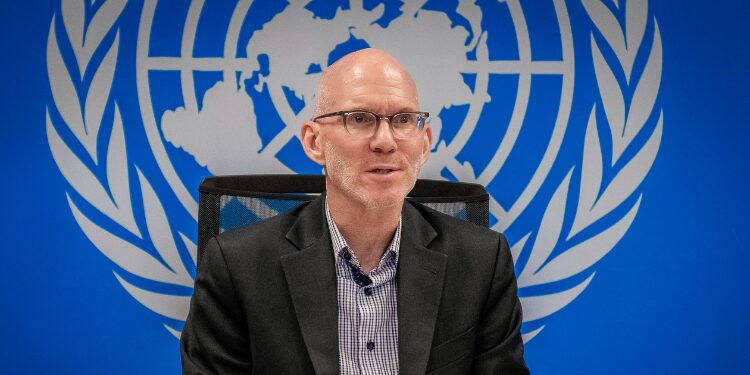
United Nations Envoy, James Swan has appealed for renewed commitment to peace efforts in the Democratic Republic of the Congo (DRC), warning that fragile diplomatic progress risks being undermined by persistent fighting, worsening humanitarian conditions and continued attacks on civilians across the country’s volatile eastern provinces.
UN Stabilization Mission in the Democratic Republic of the Congo (MONUSCO), Special Representative James Swan called on all parties involved in the ongoing peace initiatives to fully implement the commitments they have made under regional agreements aimed at ending one of Africa’s longest-running conflicts.
His appeal comes nearly a year after the Democratic Republic of the Congo and neighbouring Rwanda signed a peace agreement in Washington, D.C., an accord intended to reduce tensions between the two countries and lay the groundwork for stability in eastern Congo. The agreement has since been reinforced by the Doha Framework for a Comprehensive Peace Agreement, signed in Qatar, alongside mediation efforts spearheaded by the African Union.
According to Swan, these diplomatic initiatives have collectively established a credible pathway toward resolving the complex conflict that has destabilised eastern DRC for decades. However, he cautioned that agreements alone will not end the violence unless all parties translate their commitments into concrete action.
“It is now imperative that momentum be maintained, and that the commitments agreed to by the signatories be fully implemented.”
James Swan
Despite growing international engagement, the security situation across eastern DRC remains deeply volatile. Heavy fighting continues to rage in North Kivu, South Kivu and Ituri provinces, where civilians remain trapped between rival armed groups, government forces and foreign-backed combatants.
Swan noted that clashes persist between the Alliance Fleuve Congo/23rd of March Movement (AFC/M23), which the United Nations states is supported by Rwandan forces, and the Armed Forces of the Democratic Republic of the Congo (FARDC), which are allied with the Wazalendo armed coalition.
In some operational areas, Congolese government forces are also backed by the Democratic Forces for the Liberation of Rwanda (FDLR), an armed group largely composed of ethnic Hutu fighters linked to individuals responsible for the 1994 genocide against the Tutsi in Rwanda.
The conflict has been particularly intense near Rubaya, a major mining center in North Kivu, as well as the Rutshuru area and areas of South Kivu’s high plains. Swan warned that the growing use of offensive drones, heavy artillery, and other modern weaponry has dramatically increased the risks to civilians while also causing extensive damage to essential infrastructure.
Although the AFC/M23 has largely withdrawn from some areas, the group continues to establish alternative administrative institutions in territories under its control, prompting fears that the conflict may become even more entrenched.
To help preserve the fragile ceasefire process, Swan urged the rapid deployment of the monitoring and verification mechanism established under the Doha peace process.
He noted that MONUSCO has already prepared office facilities in Goma and supplied equipment and logistical support needed to enable ceasefire monitoring missions once the mechanism becomes operational.
Violence, Ebola and Humanitarian Crisis Grip Eastern Congo
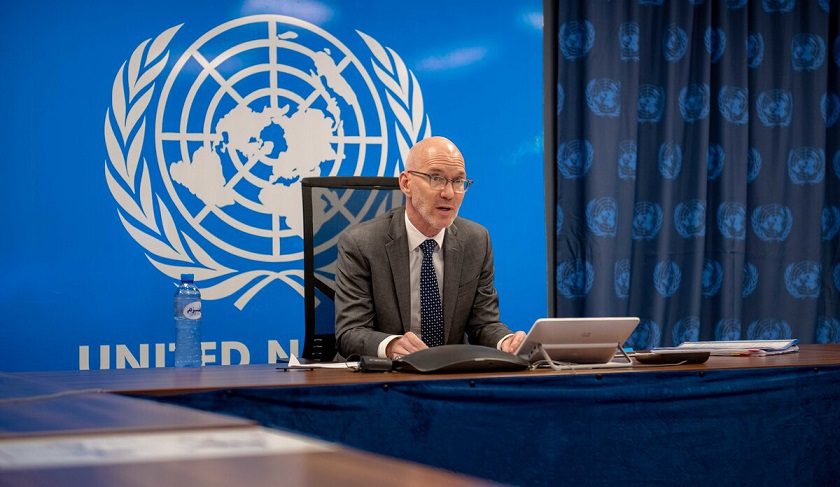
Beyond the frontline battles involving the AFC/M23 and government forces, eastern Democratic Republic of the Congo continues to face deadly attacks from numerous armed groups operating across the region.
Swan highlighted the continued threat posed by the Allied Democratic Forces (ADF), whose attacks have claimed hundreds of civilian lives in recent months.
According to Swan, the ADF has killed 287 civilians in Ituri province alone. Although violence temporarily declined earlier this year in North Kivu, attacks have resumed in Beni territory, where 66 civilians, including 17 women and three children, have been killed.
Moreover, the state of human rights generally keeps getting worse.
In North Kivu and Ituri, MONUSCO has recorded 632 civilian deaths that are directly related to armed violence since March 19. The United Nations documented 1,221 human rights violations during that time, including pervasive sexual violence related to hostilities perpetrated by armed groups and members of the security and defence forces.
These assaults have harmed 2,968 victims in total, including 392 women and 378 children.
As a result, MONUSCO has stepped up its security efforts by growing mobile operating bases and stepping up patrols around the locations of internally displaced people and villages that are frequently attacked. Over 2,000 coordinated patrols between the Congolese army and UN soldiers have been carried out since March with the goal of enhancing civilian security.
Alongside security operations, MONUSCO remains engaged in programmes supporting security sector reform, disarmament, demobilisation and reintegration. Between March and June, the mission facilitated the voluntary repatriation of 156 former Rwandan combatants and 163 dependants associated with the FDLR and other foreign armed groups.
Yet the worsening humanitarian situation extends well beyond the battlefield.
According to the United Nations, nearly 27 million people more than a quarter of the country’s population are currently experiencing food insecurity, underscoring the enormous scale of humanitarian need across the DRC.
A humanitarian response plan seeking US$1.4 billion to assist 7.3 million people this year remains only just over 53 per cent funded, leaving aid agencies struggling to meet rapidly growing needs.
An Ebola outbreak that is developing in a region already impacted by armed conflict and severely overburdened health systems is exacerbating the situation. Humanitarian agencies caution that if response efforts are hampered, insecurity, population displacement, and a lack of healthcare resources might hasten the disease’s spread.
Despite mounting operational pressures and an ongoing liquidity crisis affecting UN peacekeeping operations globally, Swan reaffirmed MONUSCO’s commitment to carrying out its mandate.
READ ALSO: Senegal Drub Iraq But Destiny Up in The Air