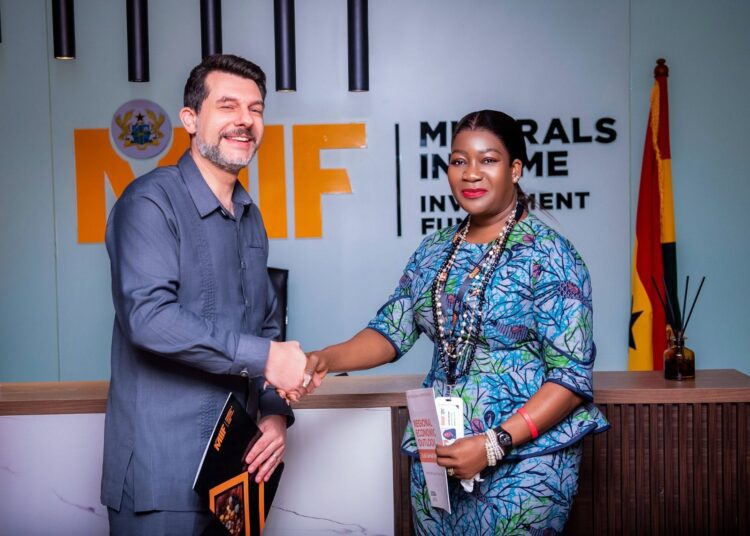
International Monetary Fund (IMF) Resident Representative, Dr. Adrian Alter, has urged the government and the Minerals Income Investment Fund (MIIF) to meticulously balance state domestic revenue mobilisation objectives with investor confidence within the newly rolled out Sliding Scale Royalty Framework.
Speaking at a high-level bilateral engagement, Dr. Alter highlighted that while maximizing state earnings during market booms is essential, maintaining a competitive fiscal environment is equally vital to ensuring that the long-term capital inflow into the mining sector is not jeopardized.
The IMF’s perspective focuses squarely on the direct linkage between its Policy Coordination Instrument (PCI) and MIIF’s strategic operations to anchor national financial health.
“On the Sliding Scale Royalty Framework, the IMF Resident Representative sought MIIF’s views on balancing government revenue objectives with investor confidence. MIIF supported the framework, describing it as a balanced mechanism linked to commodity price movements.”
Minerals Income Investment Fund (MIIF)
Dr. Alter stressed that macro-fiscal stability in resource-rich nations requires a holistic alignment between institutional policy and private sector realities.
He emphasized that the primary “IMF programme priorities” for Ghana revolve tightly around maintaining strict fiscal discipline, safeguarding debt sustainability, strengthening state-owned enterprises, and promoting long-term private sector-led growth.
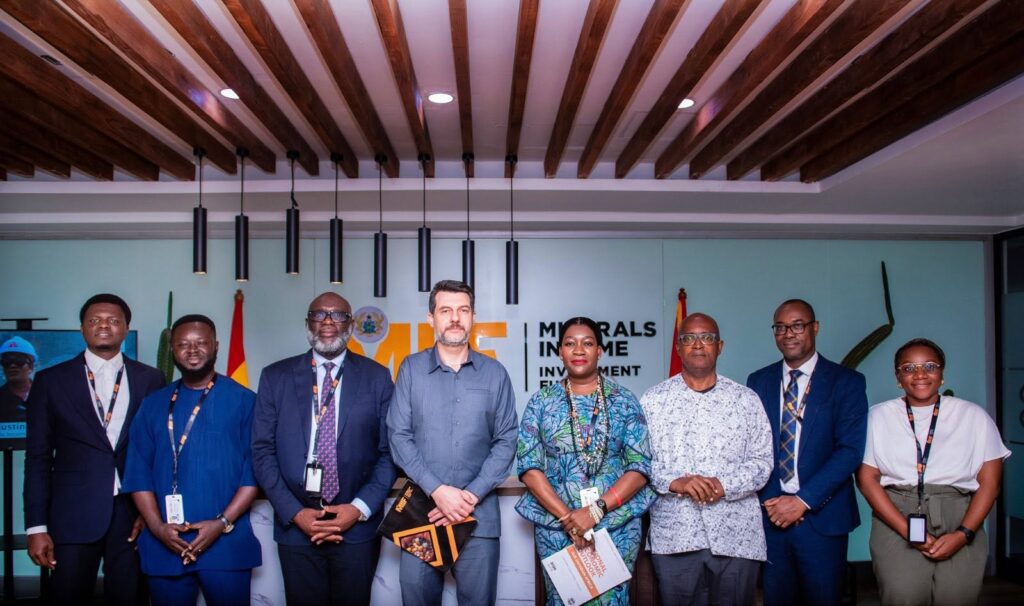
To prevent the domestic mining sector from stagnating under heavy regulatory burdens, the global lender views a flexible royalty structure as a necessary compromise, provided it remains predictable enough to protect investor sentiment.
MIIF formally echoed its support for the regime during the deliberations, describing the sliding scale framework as “a balanced mechanism linked to commodity price movements.”
The Economics of Fiscal Striking in Extractive Indutries
Global extractive sector indicates that setting an immutable, excessively high flat royalty rate often leaves capital-intensive mining operations vulnerable during prolonged market downturns, potentially leading to premature mine closures and deferred investments.
Conversely, a purely rigid low rate deprives the host nation of its fair share of economic windfalls when global commodity prices soar.
Implementing a progressive sliding scale model—where state royalties automatically adjust upward during price booms and scale back when prices plummet safeguards the industry’s baseline commercial viability while providing the state with an automatic revenue accelerator.
This dynamic balance ensures that the mining sector remains an attractive destination for foreign direct investment (FDI) without compromising the sovereign right to resource-rent collection.
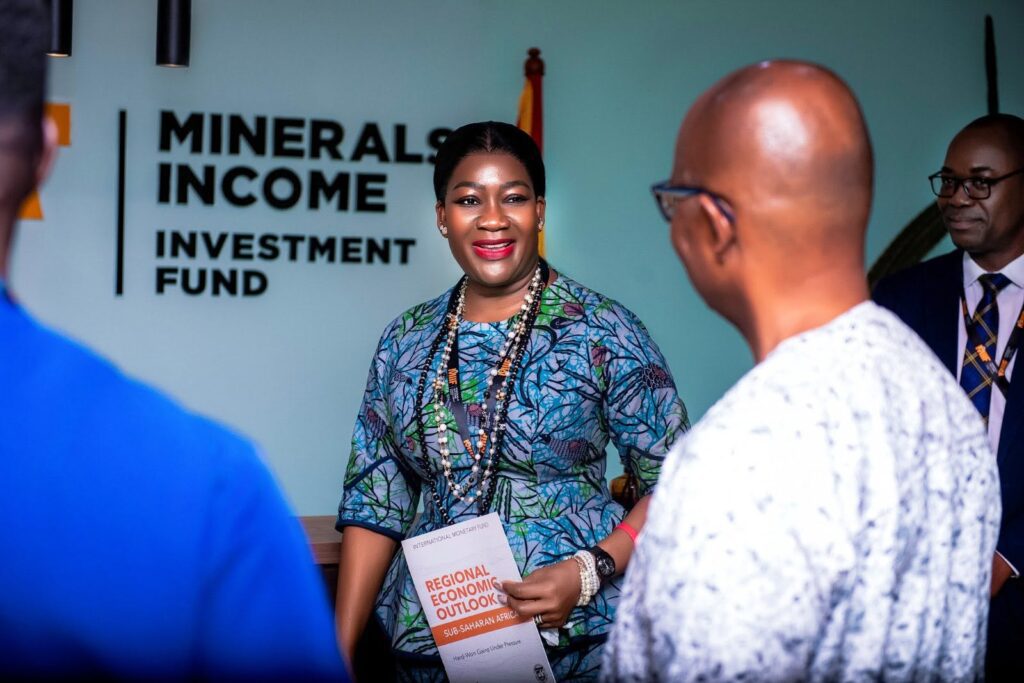
To achieve this structural equilibrium without causing industrial friction, the IMF representative highlighted that institutional strengthening must remain a top priority.
Dr. Alter placed a “strong emphasis on the governance of public institutions, transparency, reporting standards, and the management of fiscal risks associated with state entities.“
This institutional oversight is directly tied to mitigating mineral sector concentration risks, which leave national budgets acutely vulnerable to price volatility in a single commodity line.
Addressing these structural concentration risks requires absolute transparency, prompting the IMF to call for the “timely audited financial statements in alignment with national reporting frameworks” to build trust and strengthen public accountability across MIIF’s entire capital deployment pipeline.
Tackling Artisanal Leakages and Sector Risks
Beyond the large-scale formal concessions, the bilateral discussions turned heavily toward structural reforms needed within the artisanal and small-scale mining (ASM) landscape.

Regarding the small-scale mining sector, Dr. Alter noted that while the sector generates “significant production volumes, it records relatively low formal royalty capture,” a fiscal gap heavily compounded by severe concerns over environmental degradation and structural informality.
The IMF resident representative expressed optimism that MIIF would proactively take the lead in designing formalization frameworks to reverse this trend, thereby capturing vital revenues while mitigating environmental damage.
By systematically expanding the royalty net to encompass the informal sector and reinforcing institutional transparency, Ghana can build a highly resilient, diversified extractive regime that protects local ecosystems while keeping global investors securely anchored.
READ ALSO: UN Envoy Warns Against Derailing Eastern DR Congo Peace Efforts