
The Executive Chairman of the Energy Chamber Ghana, Mr. Joshua Narh, has outlined a compelling vision for the nation’s downstream sector, declaring that the landmark expansion of the Sentuo Oil Refinery directly harmonizes with Ghana’s overarching energy security and industrialization ambitions.
In an exclusive interview with The Vaultz News, Mr. Narh highlighted the planned capacity surge from 40,000 to 100,000 barrels per day (bpd) as a pivotal structural shift.
According to the industry chief, this massive 150 percent scale-up represents one of the most strategically significant downstream energy investments Ghana has attracted in recent years, serving as a critical pathway to transition the country from a major importer of refined fuels to a dominant regional hub.
“Overall, I view the expansion as a strategically important investment that aligns with Ghana’s long-term energy and industrialisation objectives. If executed efficiently and integrated into a broader downstream development strategy, it has the potential to enhance energy security, reduce import dependence, create employment, attract investment, and position Ghana as a leading downstream petroleum hub within the ECOWAS region. The real measure of success, however, will not simply be the increase from 40,000 to 100,000 barrels per day, but whether the expanded refinery operates consistently, competitively, and sustainably in a rapidly evolving global energy landscape.”
Executive Chairman of the Energy Chamber Ghana, Mr. Joshua Narh
Mr. Narh pointed out that the timing of the expansion is highly critical given the stark supply deficits facing the African continent.

Although Africa currently consumes approximately 4.5 million barrels of petroleum products every single day, its operational domestic refining capacity remains severely constrained.
This ongoing deficit forces West African nations to depend heavily on expensive foreign imports, despite the region being a premier global producer of crude oil.
By aggressively boosting local refining capacity, Ghana is strategically positioning itself to buffer its economy against global supply chain vulnerabilities, while simultaneously carving out a competitive market share across the sub-region.

Mitigating Macroeconomic Vulnerabilities and Securing Energy Independence
A primary benefit of the government’s refinery drive is the direct mitigation of macroeconomic shocks that have historically crippled local businesses and squeezed consumers.
Mr. Narh explained that “greater domestic refining capacity can reduce dependence on imported refined products, improving supply security during periods of global market disruptions.”
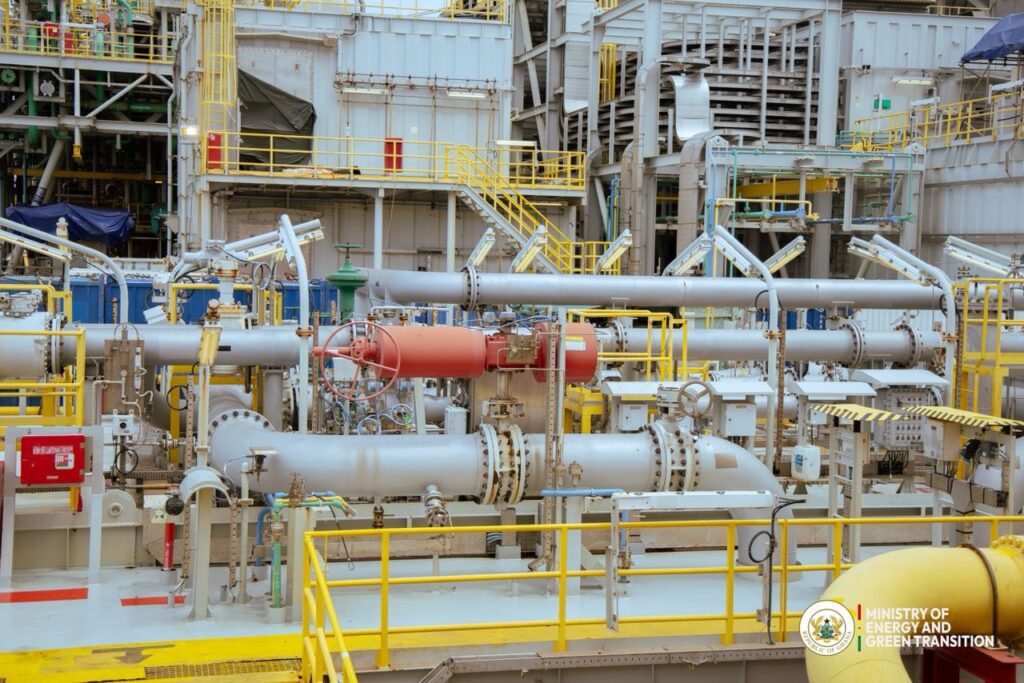
By processing crude oil locally, the state significantly lowers its exposure to international price volatility.
The severe energy shocks that characterized the post-COVID-19 recovery era and the geopolitical fallout from the Russia-Ukraine conflict proved how vulnerable import-dependent nations are to external pressures.
Securing energy independence through local processing stabilizes domestic fuel prices, relieves pressure on foreign exchange reserves, and ensures a reliable supply of petroleum products to power local industries.
Capitalizing on AfCFTA to Anchor Regional Trade and Logistics
The Sentuo expansion project also serves as a major catalyst for Ghana’s ambition to become a leading trading and logistics gateway within the Economic Community of West African States (ECOWAS).
With the Secretariat of the African Continental Free Trade Area (AfCFTA) permanently headquartered in Accra, Ghana possesses a unique geographical and political leverage.

According to the Energy Chamber boss, the operationalization of AfCFTA makes “the opportunity to supply refined petroleum products to neighbouring countries increasingly attractive.”
As West African nations continue to industrialize, experience rapid urbanization, and register growing vehicle ownership, regional fuel demand is set to skyrocket.
This local refinery expansion positions Ghanaian exporters to seamlessly capture these emerging markets, transforming the country into a net exporter of high-value energy products.
Stimulating Multi-Sector Investments and High-Value Job Creation
Beyond energy security, the industrial footprint of a 100,000-bpd refinery triggers a massive economic multiplier effect across several complementary sectors.

Mr. Narh emphasized that “large-scale refinery projects stimulate investment across multiple sectors, including storage infrastructure, pipelines, marine services, engineering, maintenance, transportation, and petrochemicals.”
This extensive value chain generates thousands of sustainable livelihoods, with the Chamber noting that “every major refinery typically supports thousands of direct and indirect jobs during both construction and operations while creating opportunities for local suppliers and service providers.“
Ultimately, this capital-intensive development ensures that a larger share of petroleum wealth is retained domestically, driving technological transfer, upgrading local labor skills, and revitalizing host communities.
READ ALSO: Renewed Iran Conflict Could Trigger Cascading Economic Consequences for Ghana