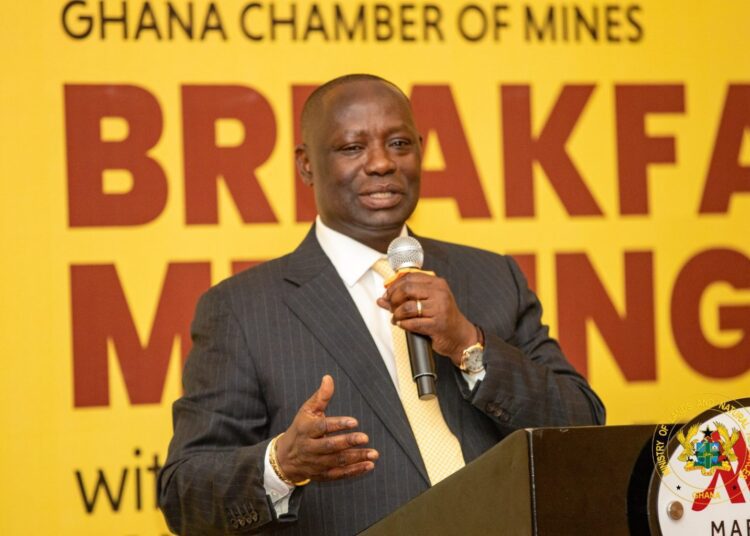
Minister for Lands and Natural Resources, Hon. Emmanuel Armah-Kofi Buah, announced that the government is rolling out a massive industrialization drive centered on establishing a two-million metric tonne alumina refinery and expanding the country’s downstream aluminum value chain.
Speaking at the Government Accountability Series, the sector minister revealed that the Ghana Integrated Aluminium Development Corporation (GIADEC) has finalized the creation of the Tema Industrial Park to serve as the structural anchor for this industrial evolution.
This specialized enclave, situated within the Tema heavy industrial area, is designed to modernize domestic raw material processing and position the West African nation as a primary hub for advanced metal manufacturing and export-oriented trade.
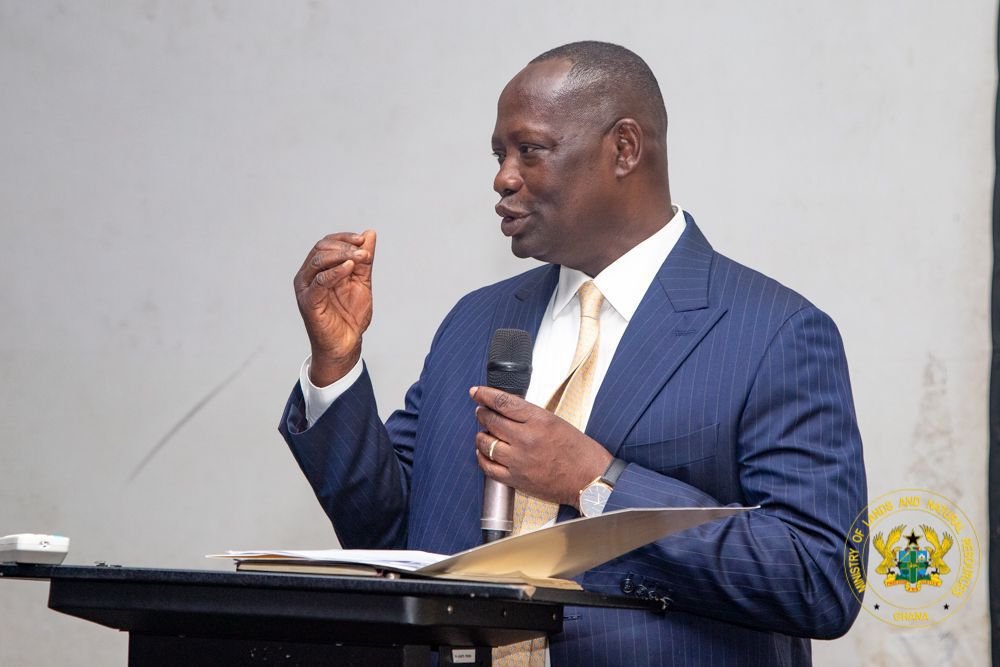
“With respect to aluminium refinery, GIADEC has intensified its engagement with key investors for the establishment of a two-million metric tonne per aluminium refinery in Ghana. Further, GIADEC is also engaging investors to develop the aluminium fault plant within the industrial park. Facilities expected to produce between 45 and 50,000 tonnes of high-quality aluminium for once completed.”
Minister for Lands and Natural Resources, Hon. Emmanuel Armah-Kofi Buah

To accelerate the project, GIADEC has formed a joint venture with the Tema Development Corporation (TDC) and the Volta Aluminium Company (VALCO), alongside Arise Integrated Industrial Platforms (ARISE IIP), to set up the Tema Industrial Parks Limited.
This joint venture entity is legally tasked with developing a world-class manufacturing eco-zone, with complete project execution expected within the next 36 months.
Beyond the foundational park infrastructure, state planners have initiated high-level negotiations with global investment consortia to fund and build the multi-billion-dollar alumina refinery.
Simultaneously, GIADEC is securing developers for a dedicated aluminum foil plant within the park, projected to produce between 45,000 and 50,000 tonnes of high-quality aluminum annually.
Strategic Economic Benefits and National Industrial Transformation
Transitioning from exporting raw bauxite to manufacturing high-value refined aluminum is vital for protecting Ghana’s economy against volatile global commodity pricing.
Currently, exporting unprocessed bauxite yields only a fraction of the mineral’s potential value, whereas domestic smelting and refining allow the state to retain the maximum wealth generated along the supply chain.
By localizing the entire processfrom bauxite extraction to the manufacturing of consumer-ready aluminum foils, structural cables, and industrial materials—Ghana can save hundreds of millions of dollars annually in import substitution.
Additionally, the establishment of the refinery and downstream manufacturing plants will act as a major catalyst for job creation and infrastructural growth.
Developing this integrated value chain is estimated to generate thousands of direct and indirect jobs for local engineers, technicians, and construction workers while fostering specialized technical skills.
The presence of a world-class industrial park adjacent to the Tema Port will also attract ancillary manufacturing companies, boost foreign exchange reserves through high-value metal exports, and ultimately accelerate the country’s transition toward a fully industrialized economy.
Integrated Mineral Estimation and Steel Industry Progress
Hon. Emmanuel Armah-Kofi Buah explained that the state’s integrated industrialization agenda is not limited to the aluminum sector but extends to the iron ore value chain.
The minister noted that the Ghana Integrated Iron and Steel Development Corporation (GIISDEC) continues to record outstanding milestones toward establishing a globally competitive iron and steel industry.
According to the sector minister, “a major milestone during the period of the review was a successful completion of the Advanced Mineral Resource Estimation on the ion ore block in the Oti region.”
This mineralogical assessment has officially confirmed the presence of highly concentrated, commercial-grade iron ore deposits in the Oti enclave.
The resulting “bankable feasibility reports” have successfully positioned the country as a highly credible and secure destination for multi-million-dollar international investments in bauxite, iron, and downstream mineral beneficiation.
Armed with these estimations, the state is poised to build a dual-engine heavy industrial framework where both steel and aluminum production drive domestic manufacturing, construction, and infrastructure development for generations to come.