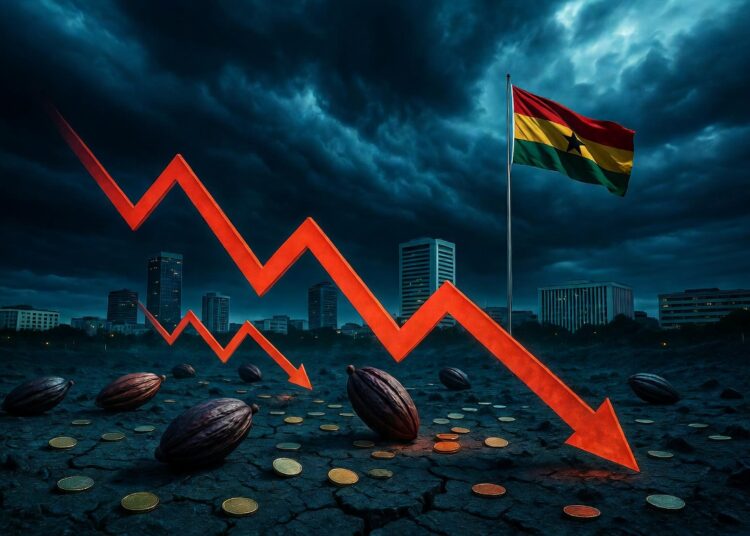
Ghana stands as a stark example of how liquidity pressures can push sovereign borrowers toward default.
After its 2022 debt default, the West African nation continues to navigate high debt burdens, elevated borrowing costs, and fragile access to financing.
A renewed liquidity crunch could exacerbate these vulnerabilities and trigger further defaults or prolonged economic distress.
Ghana’s Debt Trajectory and Recent Default
Ghana’s public debt has climbed dramatically in recent years. External debt burdens for low and middle-income countries reached record levels, with Ghana among those hit hardest by post-pandemic shocks, commodity volatility, and currency depreciation. The country defaulted on its foreign debt in 2022, marking the first such event in its history and triggering a severe economic contraction.
High fiscal deficits, fueled by energy subsidies, public wage bills, and infrastructure spending, combined with external shocks such as the COVID-19 pandemic and the Russia-Ukraine war’s impact on food and fuel prices. By the time of default, international reserves had dwindled, the cedi depreciated sharply, and debt service costs consumed a growing share of government revenue.
Restructuring efforts with creditors, including under the G20 Common Framework, provided some relief but left the country with elevated debt-to-GDP ratios and ongoing refinancing needs. Interest payments have reached all-time highs across developing economies, straining fiscal space. For Ghana, this means limited room for essential spending on health, education, and infrastructure, perpetuating a cycle of low growth and revenue shortfalls.
Liquidity Crunch Dynamics in Emerging Markets Like Ghana
A liquidity crunch occurs when investors withdraw from sovereign bond markets, repo financing tightens, or foreign exchange reserves prove insufficient to meet obligations. For Ghana, which relies heavily on external borrowing in foreign currencies such as the US dollar, euro, and Chinese yuan, these pressures manifest acutely.
Domestic banks and pension funds hold substantial government securities. A drop in bond prices erodes their capital, reducing lending to the private sector and deepening recessionary forces. Foreign investors, sensitive to global risk sentiment, often exit en masse during periods of tight liquidity, widening spreads and making new issuance prohibitively expensive.
Recent global conditions compound these risks. Higher US interest rates, quantitative tightening by major central banks, and reduced appetite for emerging market assets have made dollar funding scarcer.
Ghana faces a maturity wall on restructured debt and new borrowing needs amid volatile commodity exports like cocoa, gold, and oil. Any sudden stop in capital inflows or spike in risk premia could render refinancing impossible.

Mechanisms That Link Liquidity Shortages to Default Risk
Liquidity problems quickly translate into solvency concerns. Without access to fresh financing, governments must either cut spending sharply, raise taxes, print money (fueling inflation), or default. Ghana experienced this firsthand: reserve depletion forced import restrictions, currency collapse, and eventual default. The banking-sovereign nexus is particularly dangerous. Banks’ heavy exposure to government paper creates a doom loop.
Default or restructuring imposes losses on domestic financial institutions, triggering credit crunches that reduce economic activity and tax revenues. Historical parallels in Argentina (2001), Russia (1998), and more recent cases like Sri Lanka (2022) illustrate how sovereign stress spills into banking crises.
Currency mismatches amplify the threat. Ghana issues debt in foreign currencies while revenues are largely cedi-denominated. Depreciation raises the local-currency cost of servicing external obligations, creating a vicious feedback loop. A liquidity crunch that forces fire sales of assets or accelerates outflows can rapidly deplete reserves, making default nearly inevitable without external support.
Current Risks Facing Ghana in 2026
As of 2026, Ghana’s recovery remains fragile. While debt restructuring provided breathing room, underlying fiscal imbalances persist. Global liquidity conditions are tighter than in the low-rate era, with investors demanding higher premiums for emerging market exposure amid geopolitical tensions and uncertain commodity outlooks.
Key vulnerabilities include: High debt service-to-revenue ratios that limit fiscal flexibility; Dependence on a few export commodities subject to price swings; Political pressures that complicate austerity measures or revenue reforms; and Potential contagion from other stressed African or emerging market sovereigns.
A global liquidity shock, perhaps triggered by renewed advanced-economy tightening or a major market dislocation, could dry up Ghana’s access to Eurobonds, syndicated loans, or bilateral financing from China and other partners. Domestic markets may also seize up if confidence erodes.
Potential Economic and Social Consequences
A liquidity-driven default or near-default would carry severe costs. Growth would contract further, unemployment would rise, and inflation could reignite as the cedi weakens.
Essential imports, including fuel and medicine, would become scarcer, hitting the poor hardest. Social unrest, already a risk after previous crises, could intensify. Broader effects include reduced foreign direct investment, credit rating downgrades, and higher future borrowing costs even after resolution.
Neighboring West African economies might face contagion through trade and financial linkages. For Ghana specifically, prolonged distress could derail progress toward upper-middle-income status and sustainable development goals. On the positive side, successful implementation of reforms under IMF programs could rebuild credibility and attract patient capital. However, execution risks remain high.
Policy Recommendations to Avert Crisis
Ghana must prioritize credible fiscal consolidation, including broadening the tax base, rationalizing subsidies, and improving public financial management. Strengthening domestic revenue mobilization reduces reliance on volatile external borrowing.
Debt management improvements, such as extending maturities and promoting local-currency issuance where feasible, can mitigate rollover risks. Building foreign exchange reserves during favorable periods provides a buffer. Structural reforms to diversify the economy away from commodities, enhance productivity, and attract long-term investment are essential for sustainable growth that outpaces interest costs.
Internationally, Ghana benefits from continued engagement with the IMF, World Bank, and G20 initiatives for debt relief. Transparent communication with creditors and investors helps maintain market access.
Ghana exemplifies how liquidity crunches can precipitate or worsen sovereign defaults in vulnerable emerging markets. High debt stocks, external dependencies, and tight global financing conditions create a dangerous combination. While restructuring bought time, underlying fragilities persist. Proactive fiscal discipline, economic diversification, and prudent liquidity management are critical to prevent history from repeating.
Without these measures, another liquidity shock could once again push Ghana toward default, with painful consequences for its citizens and the wider region. Policymakers, investors, and international partners must remain vigilant. In today’s interconnected financial system, Ghana’s challenges serve as a cautionary tale for other emerging economies facing similar pressures.
READ ALSO: Ghana Gas Profit Surges 97% as Processing and LPG Output Rise