Minerals Income Investment Fund (MIIF) has emphasized that maximizing the long-term economic returns of non-renewable natural deposits across the continent necessitates robust regional partnerships and collaborative cross-border frameworks.
As global demand for transition minerals accelerates, Ghana’s sovereign mineral entity asserts that individual national efforts must be integrated into strategic alliances to prevent value leakage, harmonize fiscal regimes, and optimize collective bargaining power within global supply chains.
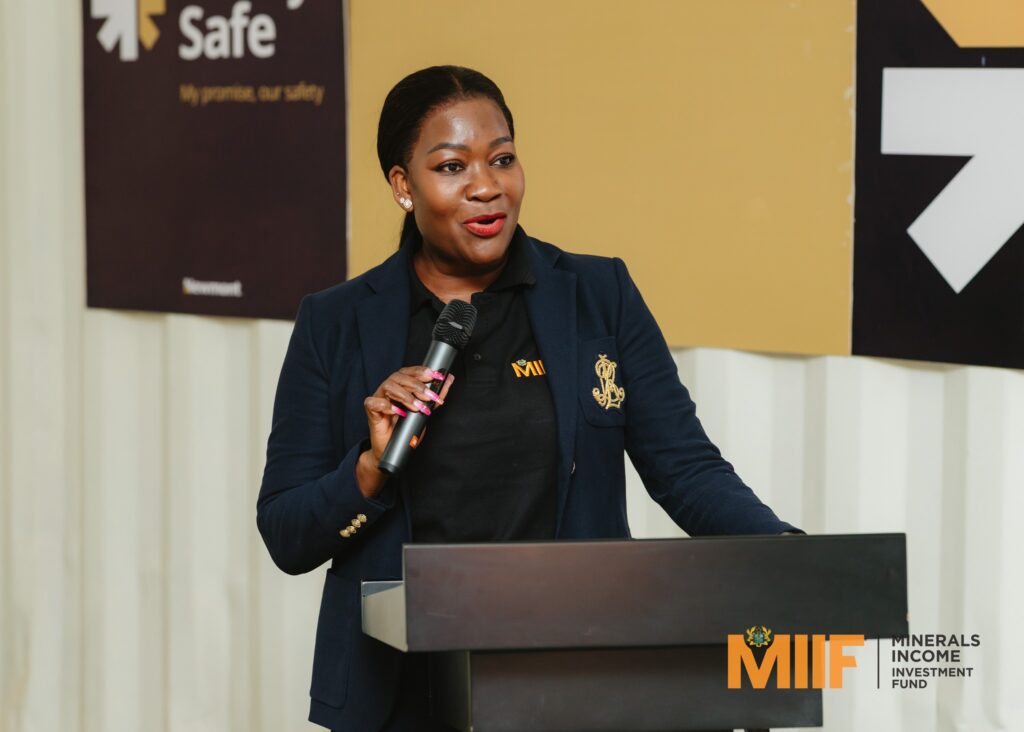
“Capitalizing on finite resources requires strong regional partnerships. We recently hosted a delegation from Zambia to share our sovereign investment blueprint. On this UN Day of Awareness for Landlocked Developing Countries, MIIF stands ready to collaborate with our land-linked peers to build shared mineral wealth across the continent!”
Minerals Income Investment Fund (MIIF)
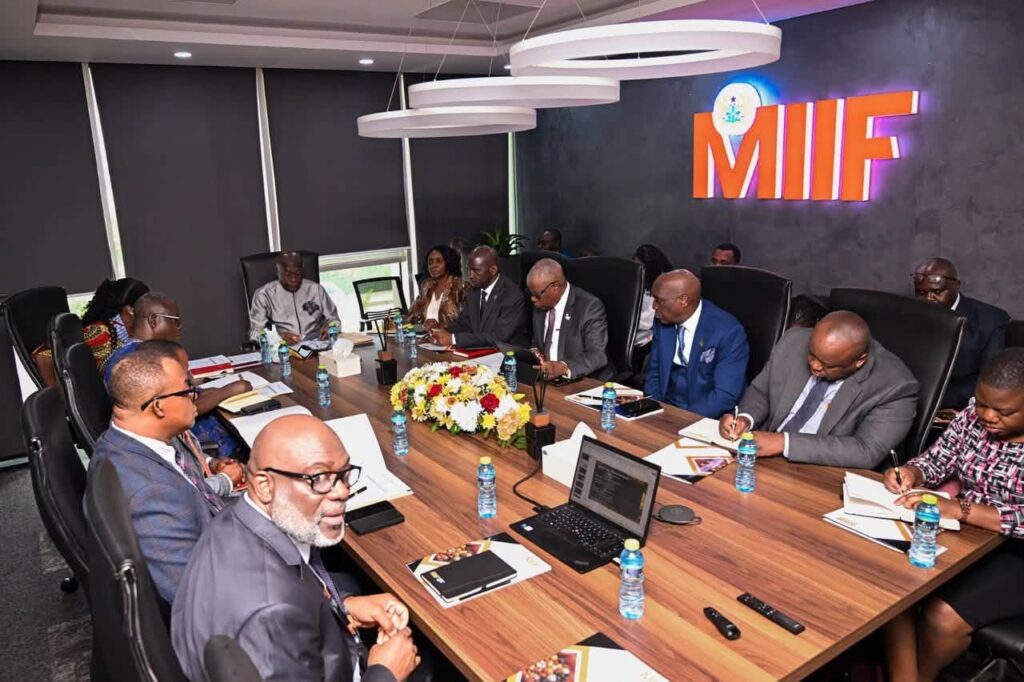
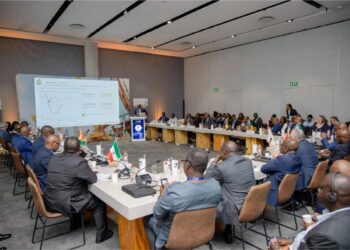
MIIF recently hosted a high-level executive delegation from the Republic of Zambia to share its sovereign investment blueprint and demonstrate practical mechanisms for converting mineral royalties into durable developmental assets.
Timed to coincide with the United Nations Day of Awareness for Landlocked Developing Countries (LLDCs), MIIF positioned this bilateral engagement as a catalyst for connecting coastal processing hubs with land-linked mining nations, thereby fostering integrated regional value chains capable of unlocking continental prosperity.
Strategic Sovereign Investment and Technical Synergies
The bilateral interaction between Ghana’s MIIF and Zambian mining authorities establishes a precedent for peer-to-peer knowledge sharing in sovereign resource management.
Ghana’s fund, which manages equity stakes and royalty streams from local gold, lithium, and industrial mineral concessions, offers a tested governance model for accumulating capital, financing local exploration, and securing direct equity participation in primary extractive projects.
By opening its operational playbook to Zambian delegates, MIIF reinforces the principle that “cohesive sovereign funds serve as the primary defense against raw material exploitation,” ensuring that resource revenues are reinvested into diversified economic infrastructure rather than absorbed by immediate fiscal pressures.
Zambia, as Africa’s second-largest copper producer, presents complementary strengths in heavy industrial mining, geology, and deep-level extraction technology.
Uniting Ghana’s financial structuring mechanisms with Zambia’s industrial copper expertise enables both nations to co-develop investment vehicles that lower capital expenditure risks.
Such bilateral exchanges allow participating states to standardize concession contracts, streamline local content enforcement, and establish baseline benchmarks for ESG compliance.
Consequently, this collaborative approach strengthens overall host-country leverage during complex negotiations with international mining conglomerates.
Bridging Land-Linked Nations and Coastal Processing Infrastructure
A critical barrier historically limiting African mining profitability is the geographical and logistical isolation of landlocked producers, whose export routes depend heavily on foreign transit networks.
MIIF’s proactive outreach to land-linked peers directly addresses this structural bottleneck by championing integrated corridor development and shared processing infrastructure.
By linking inland mineral deposits in countries like Zambia directly to maritime export portals and regional refineries in coastal hubs, West and Southern African trade corridors can significantly reduce transportation overheads, eliminate cross-border friction, and accelerate transit times for critical minerals.
Furthermore, establishing joint refining and smelting facilities creates economies of scale that individual landlocked countries might struggle to justify independently.
MIIF’s strategic intent aligns with the core tenets of the African Continental Free Trade Area (AfCFTA), promoting tariff-free movement of raw ores into specialized regional beneficiation zones.
This setup transforms traditional landlocked vulnerabilities into “land-linked strategic advantages,” allowing land-linked nations to capture localized value additions such as converting copper and lithium into high-value battery precursors before shipping finished components into global trade markets.
Accelerating Continental Value Addition and Critical Mineral Sovereignty
Beyond administrative collaboration, MIIF’s call for shared mineral wealth represents a decisive shift away from raw ore exports toward continental value addition.
Africa possesses over 30 percent of global mineral reserves, including critical deposits of cobalt, manganese, graphite, and lithium necessary for the global energy transition.

By forming sovereign equity alliances across regional blocs, African nations can aggregate their mineral supply, establish localized mineral pricing indexes, and collectively insist on domestic processing requirements as a mandatory prerequisite for mining licenses.
Ultimately, this strategic engagement creates a scalable framework for African mining resilience and economic sovereignty.
Through joint equity co-investments, shared geological survey data, and cross-border regulatory alignment, MIIF and its regional partners are laying the groundwork for an integrated African mining ecosystem.
This collaborative paradigm ensures that finite underground assets are transformed into permanent, multi-generational economic capital, positioning the African continent not merely as a raw materials supplier for global superpowers, but as a dominant, self-sustaining leader in global extractive industrialization.
READ ALSO: Liquidity Crunch Could Trigger Government Defaults: Ghana’s Precarious Position