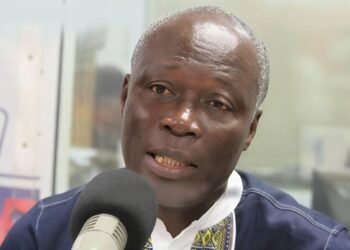
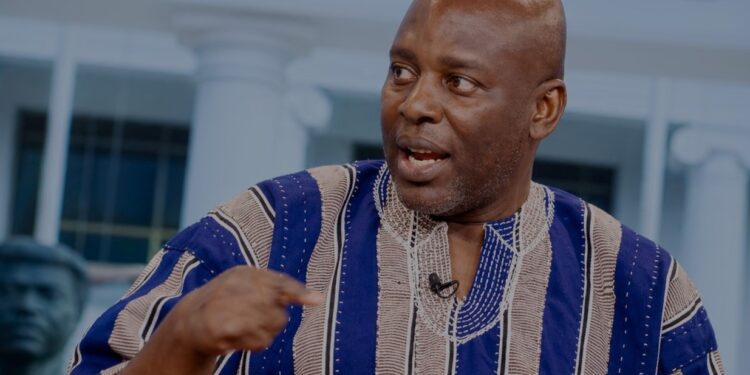
Political scientist Dr. John Osae-Kwapong has described the government’s proposal for electing Metropolitan, Municipal and District Chief Executives as a rearrangement that leaves Ghana’s decentralisation exactly where it has always been.
He delivered the assessment in an exclusive interview with The Vaultz News following the release of the Mahama government’s position paper on the recommendations of the Constitution Review Committee chaired by Professor Henry Kwasi Prempeh.
Dr Osae-Kwapong, a Democracy and Development Fellow at CDD-Ghana and Project Director of The Democracy Project, argued that the proposal transfers the final vote from district assembly members to citizens while leaving the President in control of who appears on the ballot.
That, in his reading, changes the identity of the voters without changing the location of the power, and it stops short of what supporters of local government reform have spent more than a decade demanding.

The same as the status quo
Dr Osae-Kwapong did not soften the verdict. Asked about the recommendations the government has accepted and rejected, he singled out the treatment of MMDCE elections as the clearest example of a reform that looks like movement and delivers very little.
“Like how the government position paper wants us to elect MMDCEs. For me, it really doesn’t get to how we want to do decentralization. It’s the same as the status quo”.
Dr. John Osae-Kwapong, Democracy and Development Fellow, CDD-Ghana, and Project Director, the Democracy Project
His objection rests on where the power of selection actually sits. As he described the arrangement, the President still nominates the pool of candidates, a vetting process narrows the field, and citizens then choose from names the executive has already approved. “So this time, obviously, instead of going to the assembly, it comes to the people to choose,” he said.
Why the ballot alone does not decentralise power
The distinction he draws is between who casts the final vote and who controls the field of choice. Under the current arrangement, the President nominates, and the assembly approves. Under the proposal as he understands it, the President still nominates, and the electorate approves.

Voters gain a ballot paper. They do not gain the ability to put a candidate on it, to reject the entire shortlist, or to elevate a local leader the presidency has not endorsed. The chain of accountability continues to run upward to Jubilee House rather than outward to the district.
That matters for the argument decentralisation campaigners have made since the last review cycle. Their case has never been simply that citizens should vote. It has been that a chief executive who owes the job to the district behaves differently from one who owes it to the President, and that the difference shows up in budgets, priorities and responsiveness.
Whose position moves the reform process forward
The MMDCE question feeds a larger concern Dr Osae-Kwapong raised about the architecture of the review itself. The government sorted the Committee’s recommendations into three categories: accepting some outright, accepting others in principle subject to modification, and declining the rest.
If only the accepted recommendations advance, the executive’s preferences become the filter through which the entire national review passes. “So does it mean that the only ones that move forward are going to be the ones that the government accepted?” he asked.
He offered an alternative he considers more faithful to the spirit of the exercise. The government is one stakeholder among many, and its verdict on any recommendation should compete with other views rather than settle the matter.
“I would have thought that the government’s position would be one of many positions that we subject to the process. So if the government doesn’t like a particular recommendation, maybe to bring the referendum, the government would sort of advocate against it to make sure that it doesn’t pass”.
Dr. John Osae-Kwapong, Democracy and Development Fellow, CDD-Ghana, and Project Director, the Democracy Project
Credit for the implementation structures
Dr Osae-Kwapong balanced the criticism with recognition of how far the process has travelled. He pointed to the implementation committee, the plan to craft legislation, the handling of entrenched and non-entrenched provisions and the published timeline as evidence of continuing commitment.
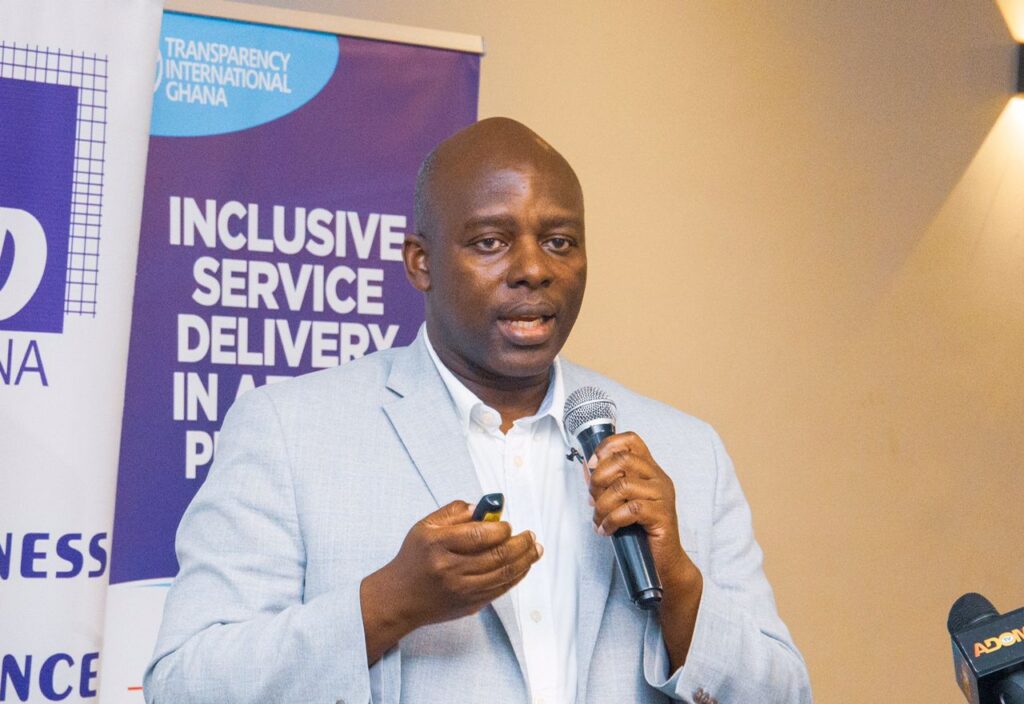
“So those, for me, I believe, are steps in the right direction. It shows that there’s really still some level of commitment to make sure that we get some constitutional reforms done”.
Dr. John Osae-Kwapong, Democracy and Development Fellow, CDD-Ghana, and Project Director, the Democracy Project
The Committee submitted its final report to the President in December 2025 and delivered the full document, running beyond five hundred pages with over one hundred and forty recommendations, in February 2026.
What else does the position paper propose
Beyond local government, the paper accepts extending the presidential term from four to five years, with a matching extension for Parliament. It accepts in principle a lower minimum age for presidential candidates, settling on thirty-five rather than the thirty the Committee recommended.
It proposes a ceiling of sixty Ministers of State and caps Parliament at three hundred members, of whom two hundred and seventy-six would be elected in constituencies and twenty-four through proportional representation covering women, persons with disabilities and the youth.
The government also accepts removing the bar on dual citizens by birth contesting parliamentary elections.
Rather than run separate referendums for the human rights provisions in Chapter Five, the government proposes a comprehensive and justiciable Human Rights Act under Article 33(5). A Constitution Review Implementation Committee will drive the accepted changes alongside the Attorney-General’s office.
Those structures settle how the reforms will be delivered. They leave open the question Dr Osae-Kwapong is pressing, which is whether decentralisation will finally mean what its advocates have long said it should.
READ ALSO: Ebola Outbreaks Go Beyond the Virus, Prof. Bolten Warns