The deadly Ebola outbreak in the eastern Democratic Republic of the Congo (DRC) has brought to light how the impact of the virus can go beyond the disease itself.
Prof. Catherine E. Bolten warns that viral mutation, poor health conditions and failures in public health can combine to turn an outbreak into a devastating humanitarian crisis.
In an interview with The Vaultz News, Prof. Catherine E. Bolten, Professor of Anthropology and Peace Studies at the University of Notre Dame stated that the presence of Ebola in an environment does not automatically mean communities will experience a deadly outbreak.
She argues that infectious diseases circulate naturally in different environments and may sometimes remain undetected among populations.
“On the African continent, many of these diseases are unknown. We know what some of them are, but humans developed extremely resilient to these diseases over time, and their bodies fought them off, possibly without them even realising the virus was present.”
Prof. Catherine E. Bolten
Her views come as DR Congo confronts a major outbreak of Bundibugyo virus disease in its eastern region, with more than 300 children reported to have died since the outbreak emerged.
The crisis has been particularly severe in Ituri province, where conflict has already displaced nearly one million people and left communities struggling with limited access to healthcare and other essential services.
For Prof. Bolten, the circumstances surrounding an outbreak are just as important to understanding its severity as the behaviour of the virus itself.
She pointed to historical evidence suggesting that people may have been exposed to Ebola without experiencing the kind of widespread disease associated with major outbreaks.

“A science historian named Monica Green looked back throughout medical journals and everything that had been written about infectious diseases in West Africa. She discovered that a serological study was conducted on persons in Liberia in the 1980s. It was for a completely different reason: they were investigating fertility issues.
“They found that something like 40% of people whose blood they tested had antibodies for Ebola in their blood in the 1980s, even tho there had never been any outbreak reported there.”
Prof. Catherine E. Bolten
Prof. Bolten revealed that such findings suggest that viruses could exist within communities without necessarily producing a deadly epidemic.
“Diseases are always circulating in any setting. People may develop resistance to them, and the virus may persist in a non-lethal form. Maybe they feel a little sick and then recover, and they have no idea they had Ebola or any of these other infections.”
Prof. Catherine E. Bolten
She explained that a major outbreak could occur when the virus acquires a mutation that changes its behaviour and makes it more capable of causing severe disease.
“An Ebola outbreak is essentially a case of bad luck, where the virus manages to acquire a fatal mutation while spreading from person to person. That is what ultimately spreads throughout the populace.”
Prof. Catherine E. Bolten
The explanation provides a broader context for the current DR Congo’s crisis, where the outbreak is unfolding among populations already weakened by conflict, displacement and inadequate access to essential services.
Prof. Bolten argues that the biological characteristics of the virus cannot be separated from the physical condition of the people it encounters.
“I believe that Africa was simply unlucky to have the Ebola virus, which 99 % of the time spreads in what is known as a subclinical form, where people do not even identify it as Ebola since it is not dangerous. It then acquires a single mutation that renders it lethal.”
Prof. Catherine E. Bolten
When Health Systems Fail, Women and Children Pay the Price
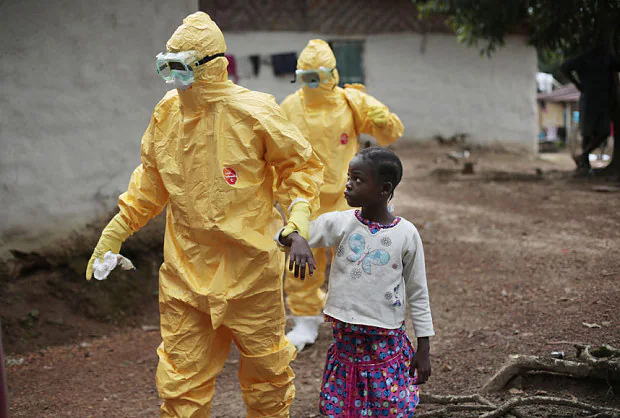
According to a UN report, more than 300 children have died as a result of the current Ebola outbreak in eastern DRC, accounting for about a quarter of confirmed cases but almost a third of deaths.
The outbreak is mostly focused in Ituri, where over one million people have been displaced by conflict. Women and children account for around 80% of the displaced population, making them especially vulnerable as the health disaster unfolds.
The outbreak has also caused disruptions in healthcare services unrelated to Ebola. According to UN reports, the utilisation of health services in the hardest-hit areas has dropped by more than 40% in recent months, as people avoid medical facilities due to fear of infection.
Pregnant women have had particularly devastating repercussions. The UN Sexual and Reproductive Health Agency has reported that maternal deaths in Ituri have nearly doubled since the outbreak began, with approximately six women dying each week from childbirth-related complications.
For Prof. Bolten, the strength of a country’s public health system and the general health of individuals can determine how severely an infectious disease affects a community.
She pointed specifically to people living in environments where poor nutrition, overcrowding, strenuous work and inadequate health services can leave communities vulnerable.
“What makes Ebola deadly is that one mutation, but also the combination with the fact that in a refugee camp or in a mining enclave where people are struggling, working too hard and their bodies are not well, that allows the virus to do more damage.”
Prof. Catherine E. Bolten
Those conditions are particularly relevant to eastern DR Congo, where prolonged conflict has displaced communities and weakened access to healthcare.
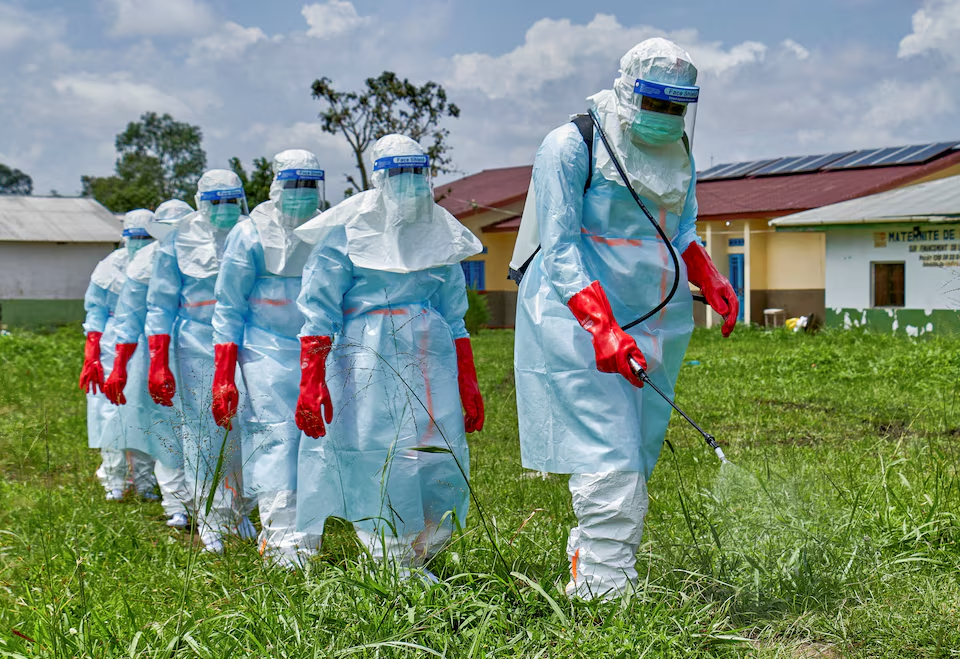
Humanitarian organisations have therefore placed community engagement at the centre of the response. Some 13,000 community workers have been deployed by the Congolese health ministry and partners, including UNICEF, the World Health Organization and the Africa Centres for Disease Control and Prevention.
The workers have reached more than 2.4 million people with information on Ebola prevention and early detection and conducted more than 500,000 household visits to counter misinformation and encourage people to seek treatment early.
At the same time, scientists are examining whether existing vaccines can offer protection against the Bundibugyo species.
The World Health Organization’s technical advisory group has recommended that Ervebo, the only licensed vaccine against the main Zaire species of Ebola, be prioritised for evaluation in a randomised clinical trial for Bundibugyo virus disease.
The recommendation followed preliminary animal studies suggesting that Ervebo could provide some cross-protection against Bundibugyo virus, particularly against death.
However, experts have stressed that its effectiveness against the species has not yet been proven.
READ ALSO: Malawi Stuns Ghana to Reach WAFCON Semi-final, Secures Historic World Cup Berth